Subtotal R0,00

Politics/ 11 November 2025, 06:52am/ GoodWill Mathebula
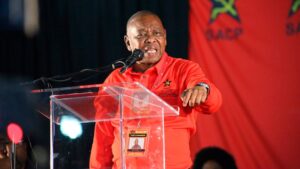
Nzimande calls for Special Congress to strengthen SACP unity and strategy. Image Supplied
By GoodWill Mathebula: The South African Communist Party (SACP) is set to hold a Special National Congress to reassess its strategy for the 2026 local government elections and strengthen internal unity, National Chairperson Professor Blade Nzimande has announced. The move comes as the Party reflects on its 2024 decision to contest elections independently of the African National Congress (ANC).
In a statement issued in his personal capacity, Nzimande said the SACP finds itself at a “decisive historical juncture” that requires careful reflection. He emphasised that reviewing the previous resolution is a political necessity rather than a bureaucratic exercise, highlighting the need to align strategy with changing realities in South Africa’s political and economic landscape.
Nzimande stressed that the Party must reaffirm its revolutionary role through “strategic consistency, analytical alertness and tactical flexibility,” avoiding both ultra-left and right-wing tendencies that could weaken the Tripartite Alliance. He warned that implementing the 2024 resolution without thorough analysis could undermine the principle of dual membership within the Alliance and risk internal confusion.
He noted that earlier congresses had instructed a “concrete analysis of the concrete situation” before pursuing electoral independence but said this had not been sufficiently undertaken. According to Nzimande, failure to do so risks detaching strategy from reality, likening it to “shooting in the dark.”
While the 2024 decision reaffirmed the Party’s political independence and sparked ideological debate, its implementation has revealed organisational weaknesses. Nzimande said the resolution was often misinterpreted as an anti-ANC stance, and that communication failures have caused confusion among Party members, particularly those holding dual membership.
He highlighted several internal challenges, including factionalism, personality-driven politics, and uneven application of democratic centralism — the principle of debate before decision and unity after decision. He also cited a lack of political training and limited resources as obstacles to effective implementation. Nzimande stressed the importance of revitalising political education to ensure tactical decisions serve strategic goals.
Regarding the broader Alliance, Nzimande said relations with the ANC have been strained due to ideological differences and a perceived rightward drift within the ruling party. He warned that refusal to engage could drive division, underscoring that electoral participation should complement, not replace, ongoing political struggle.
Nzimande proposed that the Special National Congress serve as a platform for debate, strategic repositioning, and renewal. The Congress is expected to adopt a “Programme of Revolutionary Renewal” focusing on strengthening grassroots structures, cadre development, and linking electoral participation to class mobilisation. Other proposals include developing a Socialist Municipal Charter, fostering a Popular Left Front with COSATU, SAFTU, and progressive movements, and enhancing digital communication to reach younger workers.
He emphasised that the Congress should embody “a festival of working-class democracy,” ensuring full participation from all Party structures and aligning strategies with the needs of workers and the poor. Nzimande concluded that the Special Congress is a matter of historical urgency, essential to restoring the Party’s vanguard role and reaffirming its commitment to the working class.