Subtotal R0,00

Free State/ 11 November 2025, 07:52am/Sipho Gumede
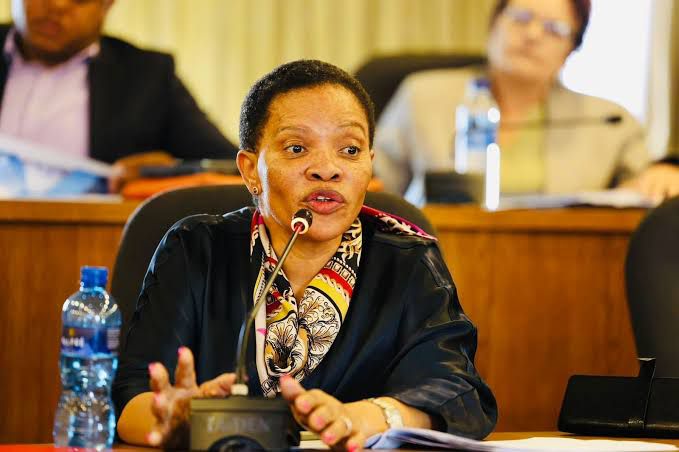
Mosa Masimene: Image Supplied
By Sipho Gumede: The Free State Provincial Government has concluded its disciplinary inquiry into Mosa Masimene, the province’s Head of Department for Public Works and Infrastructure.
After five intense days of testimony and careful weighing of evidence, the presiding chairperson found Masimene guilty on all three counts of serious misconduct and recommended dismissal from service.
The ruling, delivered against the backdrop of a province grappling with questions of governance, transparency, and integrity, marks a watershed moment in the province’s approach to holding senior officials to account.
The case began within the storied walls of the Office of the Premier, with the employer—The Free State Provincial Government—placing Masimene under disciplinary scrutiny for conduct that spanned procedural lapses, decisions affecting departmental discipline, and public communications that touched on the reputation of the administration.
The leadership landscape centers on Premier Maqueen Letsoha-Mathae, guiding a department where decisions ripple through thousands of lives and billions of rand in projects meant to rebuild roads, schools, clinics, and housing.
Masimene, who had risen to the top post in Public Works and Infrastructure after previously serving as HOD for Human Settlement, appeared before an enquiry panel from May 21 to 23, 2025, with continued proceedings on June 17 and 18.
The employer was represented by Advocate TL Manye, a practicing advocate of the High Court, while Masimene was defended by A. Botha of PEYPER ATTORNEYS, also a High Court practitioner.
The chair of the enquiry signaled from the outset a commitment to clarity, noting that while it would not quote every witness verbatim, it would pull out the passages most relevant to the charges and the applicable legal principles.
The charges themselves, grounded in the SMS handbook disciplinary code and procedure, Chapter 7, framed three serious misconduct allegations.
Charge 1 accused Masimene of allowing the prolonged stay of Ms. Tshehle beyond a 12‑month secondment from the Department of Social Development to the Department of Human Settlement, without ministerial approval as required by Regulation 62(b).
The gravity lay in the alleged violation of internal legislation and the duty to uphold proper ministerial authorizations.
Charge 2 alleged that Masimene prejudiced the administration, discipline, or efficiency of the department by irrationally withdrawing six serious misconduct charges against Khaya Radebe shortly after she assumed the HOD duties for Public Works and Infrastructure, despite prima facie evidence of wrongdoing.
Charge 3 claimed that on January 30, 2025 Masimene brought the Free State Provincial Government into disrepute by appearing on SABC national television and making false and dishonest comments about the withdrawal of charges against Radebe.
Masimene pleaded not guilty to all charges. The chair underscored the central question: did the employee’s conduct amount to misconduct under the disciplinary framework, and if so, what sanction would be appropriate in the circumstances? The employer bore the burden of establishing a prima facie case, while Masimene retained the right to defend and present evidence to rebut the allegations.
Over the course of the hearing, four witnesses for the employer testified to illuminate Charge 2 and Charge 3, with the sequence carefully arranged to foreground issues around governance, process, and accountability.
Ernest Mohlahlo, the former HOD of the Department of Public Works and Infrastructure, testified first about the six charges against Radebe, the former Director for Supply Chain Management.
He explained that the case centered on an irregular R17 million payment to a service provider and the associated interest and legal fees, highlighting how internal processes and documentation should have governed such payments.
The narrative continued with the account of how the decision to withdraw those charges was handled, with Mohlahlo recounting that correspondence suggesting a withdrawal existed even after he had left the department for the Provincial Treasury.
This, he argued, reflected an irrational action that amounted to misconduct, particularly given the ongoing work and the prima facie evidence of wrongdoing.
As the evidence unfolded, the chair emphasized the balancing act required by the SMS framework: to weigh testimonial evidence, documentary records, and the statutory requirements governing disciplinary action.
The weight of evidence, the chair noted, must be attached thoughtfully, with a focus on the integrity of the processes by which decisions are made and the consequences for governance and public trust.
A pivotal emphasis of the ruling rested on Charge 3, where Masimene’s own account of the SABC interview came under rigorous scrutiny. Masimene testified that SABC reporters, who were on the fourth floor of the Office of the Premier, approached her to discuss issues they had picked up.
She said she wished to decline but felt a responsibility as accounting officer to address concerns with the community. The chair, however, found her explanations unconvincing and suggested mala fides in her intentions, weighing heavily the potential reputational damage to the province and the administration.
In the end, the chair concluded that all three charges had been proven against Masimene. The findings, recorded in explicit terms, stated that Charge 1, Charge 2, and Charge 3 each met the employer’s case against the employee. The verdict—guilty on all counts—was accompanied by a stark sanction recommendation: dismissal from the Public Service.