Subtotal R0,00

News/20 November 2026, 07:00am/Linda Mgomezulu
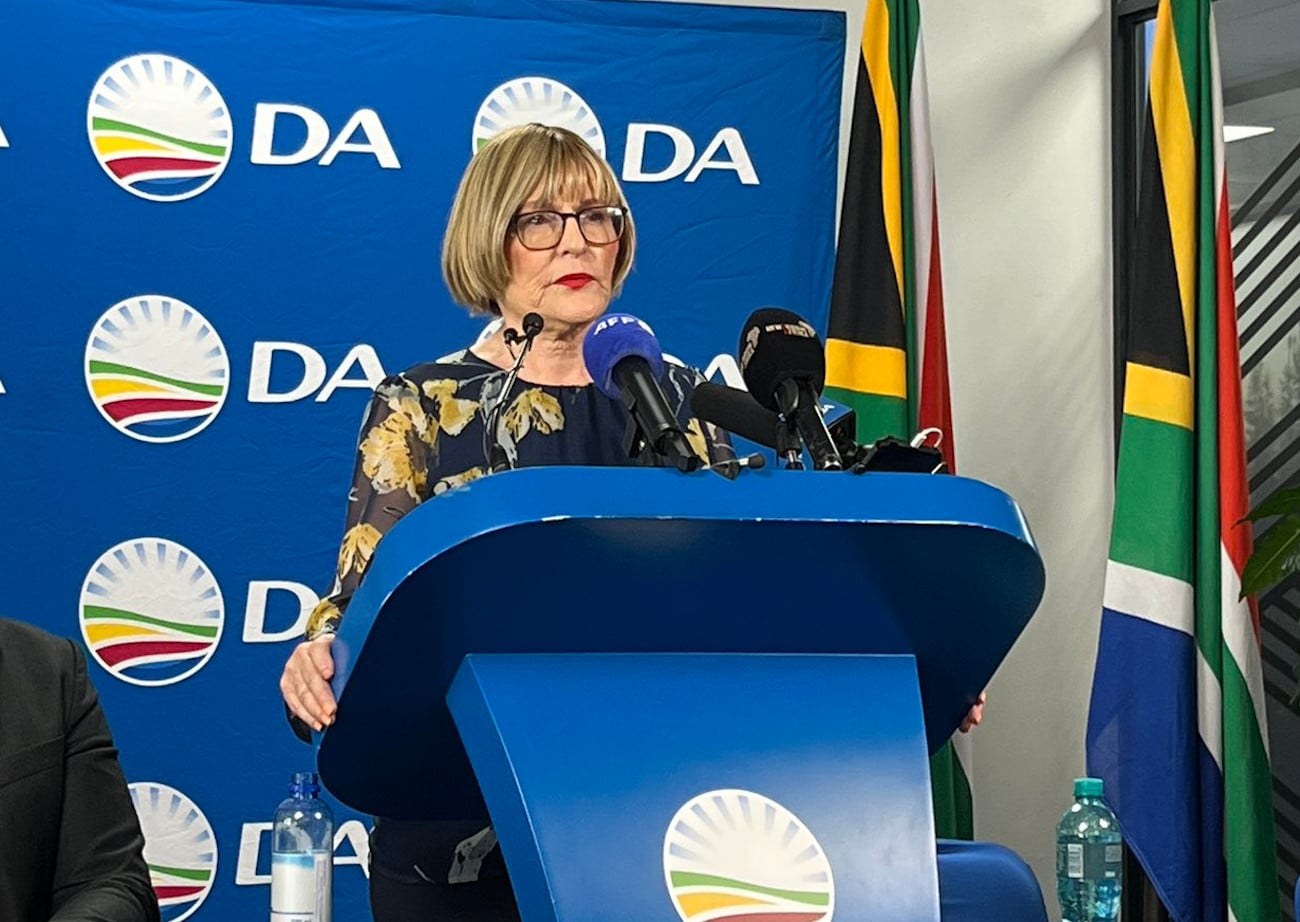
Helen Zille: Image Supplied
By Dakalo Mulaudzi: The battle for control of South Africa’s biggest municipalities may be decided not by the largest parties alone, but by a collection of smaller ones holding the seats needed to build governing majorities.
In Gauteng, proposed coalitions involving the ANC, ActionSA, EFF, MK Party and other parties could leave the DA outside power in all three metropolitan municipalities. Similar arrangements have been suggested for eThekwini and Buffalo City, although the reported talks and leaked messages do not establish that final agreements have been reached.
An alleged late-night message from DA federal council chairperson and Johannesburg mayoral candidate Helen Zille has sharpened speculation about the party’s prospects. One account of her message to the Gauteng caucus presented her assessment as: “It seems that the die is cast. We will be shut out of coalitions in Gauteng”.
A longer version of the message, said to have been verified by two DA caucus members who asked not to be named, reads: “It seems that die is cast. We will be shut out of coalitions in Gauteng. Instead, our cities will be run by ANC-ASA-EFF-MK and some others where necessary. The same in eThekwini and Buffalo City.”
If the proposed alliances hold, the consequences would extend beyond who occupies the mayor’s office. Control of municipal budgets, contracts and service delivery could shift towards parties campaigning for a greater direct role for the state.
In Johannesburg’s 270-seat council, the reported figures place the DA on 91 seats. A combination of the ANC’s 64 seats, ActionSA’s 42, the EFF’s 17, the MK Party’s 15, the PA’s five, and two each for the AMM and SACP would give that grouping 147 seats—enough for a majority.
That arithmetic would give the proposed bloc room to govern without the DA, provided the parties reach and sustain an agreement.
Zille, 75, moved from Cape Town to run for Johannesburg mayor, promising to “save Joburg from collapse.” DA insiders said she had expected to become mayor.
In the alleged message, Zille also indicated that she would remain in Johannesburg as a part-time councillor “to finish what we started”, despite previously saying she would not sit in opposition. In that role, she would be positioned to scrutinise the city’s finances rather than lead its administration.
ActionSA is also emerging as a pivotal player in Tshwane, where its leader Herman Mashaba reportedly insisted that Dr Nasiphi Moya remain mayor.
A leaked message attributed to Zille appears to suggest that Mashaba favoured an arrangement involving the ANC, EFF and MK Party over continuing with the DA. The proposed coalition could command more than 130 seats in the 214-seat council, compared with approximately 81 for the DA and its potential partners.
Such an outcome would block a return to the mayoralty for former mayor Cilliers Brink and leave the DA outside the leading coalition.
In Ekurhuleni, the ANC, ActionSA, EFF, MK Party, AMM and PA would together hold approximately 133 seats under the figures supplied—also a majority in the 224-seat council. Their respective totals are 59, 40, 14, 15, two and three seats.
Afrika Mayibuye’s Themba “Skeem GP” Nzimande reportedly delivered a further 12 seats, potentially strengthening the proposed bloc, although it is not clear from the available account how those seats fit into a final agreement.
The potential realignment is not confined to Gauteng. In eThekwini, the reported numbers suggest that an ANC–MK Party agreement, supported by several smaller parties, could produce a substantial majority.
The MK Party is listed with 86 seats and the ANC with 37. Adding the EFF’s four, ActionSA’s seven and one each for the PA, AMM and SACP would bring the grouping to 137 seats in the 223-seat council. The DA and IFP, with 57 and 15 seats respectively, would have 72 between them.
An agreement of that kind would give former rivals a path to sharing control of one of KwaZulu-Natal’s most important economic centres. It would also leave the DA–IFP grouping short of the numbers needed to govern.
In Buffalo City, the SACP could hold particular influence. The ANC is reported to have won 42 seats in the 100-seat council, losing its outright majority. The DA has 17, the EFF seven, the SACP five, the PA two, the AMM three and the MK Party one.
The SACP’s reported refusal to support a DA-led arrangement could help the ANC assemble a majority with smaller parties. The party, reported to have received 2.38% of the national vote, could therefore gain influence over a major metropolitan municipality.
SACP general secretary Solly Mapaila has previously called for parties backed by the African majority to work together against DA and Freedom Front Plus leadership in municipalities.
“We want to convince all organisations voted by African majority to work together and prevent DA and FF from leading our people,” Mapaila said.
A policy shift—or difficult negotiations ahead?
Supporters of the proposed left-leaning alliances argue that they could improve services and tackle inequality by bringing more municipal work in-house, reducing reliance on private contractors and changing procurement practices. Other ideas associated with the proposed direction include writing off Soweto’s municipal debt and reopening factories.
Whether those policies would be adopted—and whether coalition partners could agree on the details—remains uncertain. The proposals would nonetheless represent a potential departure from the DA’s preference for greater private-sector involvement in service delivery.
The possible shift has also raised questions about investor confidence in Gauteng, whose economy was put at approximately R3.4 trillion in the account of the negotiations. The rand was reported at R16.95 to the US dollar, although currency movements cannot be attributed to municipal coalition talks alone.
For now, the reported numbers offer a route to power, not proof of settled coalitions. Agreements would still need to survive negotiations over leadership, policy and the demands of smaller parties.
The DA’s federal council is expected to meet to discuss the possibility of losing out in coalition arrangements. One source described the alleged message as an attempt to prepare party members for that outcome.
“Helen’s message was meant to prepare caucus for bad news. Die is cast indeed.”
DA spokesperson Karabo Khakhau could not confirm the message.
“I do not know about the leaked message,” she said.