Subtotal R0,00

National News/ 25 March 2025, 13:15pm/ Lijeng Moruthane
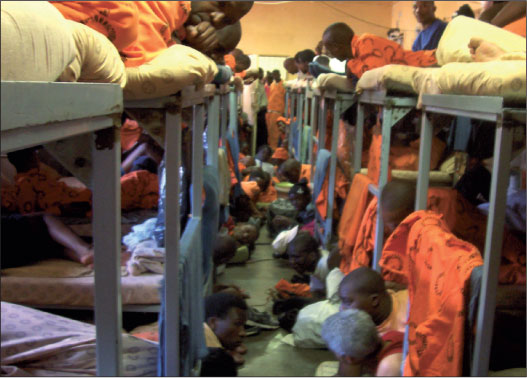
Overcrowded South African prison cells, highlighting the growing crisis: Image Supplied
By Lijeng Moruthane: More than 2,600 detainees in South Africa are currently unable to afford bail amounts under R1,000, a situation that has led to a drastic rise in prison overcrowding.
This financial barrier, affecting individuals accused of minor offences, has prompted the Judicial Inspectorate for Correctional Services to propose a new initiative that will see taxpayers’ money used to pay bail for those most affected by the crisis.
The inspectorate, which is responsible for monitoring prison conditions, revealed that in Gauteng, 742 remand detainees cannot afford bail under R1,000, and in the Western Cape, the number stands at 798.
These figures highlight the scale of the issue, where detainees are often held in prisons despite having been granted bail but unable to pay the required amount.
Retired judge Edwin Cameron, head of the Judicial Inspectorate, stressed that overcrowding is one of the most severe violations of human dignity in South African prisons.
“This morning, at Westville Medium B, we were informed that a facility designed for 1,500 inmates is currently holding around 4,000 people – an overcrowding rate of 157%. That is not just undignified; it is deplorable,” Cameron said, highlighting the urgency of the situation.
In response, the inspectorate has announced the creation of a bail fund aimed at assisting detainees accused of petty offences. The fund will cover bail amounts under R1,000 for individuals who otherwise cannot afford to pay.
However, it is expected that individuals charged with gender-based violence or intimate-partner assault will be excluded from the initiative.
“This fund will operate independently of government institutions such as the National Prosecuting Authority (NPA) or the Department of Correctional Services,” Cameron explained.
“The pilot phase will focus on one or two magistrate’s courts and prisons within a specific municipality, providing relief to those who have been granted bail but remain incarcerated due to financial constraints.”
While this initiative is seen as a necessary short-term solution, Cameron emphasized that it does not address the broader issues of cash bail or the root causes of overcrowding in the long term.
The South African Law Reform Commission is currently exploring legislative amendments to address both cash bail and minimum sentencing laws, which also contribute to prison overcrowding.
Lukas Muntingh, director of the Dullah Omar Institute at the University of the Western Cape, welcomed the plan but cautioned that it is only a partial solution to a much larger problem.
“This is a potential solution. We need to test its effectiveness and evaluate the costs. While it may benefit some individuals, the overall impact will be limited,” Muntingh said.
He also pointed out that the growing number of remand detainees is symptomatic of deeper systemic issues within South Africa’s justice system, including delays in court proceedings and the frequent postponement of cases before bail applications are even heard.
“There is no single solution to this issue. Bail is meant to ensure an accused person appears in court. It is not intended as a punishment,” Muntingh said. “We must address the larger systemic issues within the police, prosecution services, and judiciary that are contributing to this crisis.”