
Subtotal R0,00

News/ 06 January 2026, 09:34am/Linda Mgomezulu

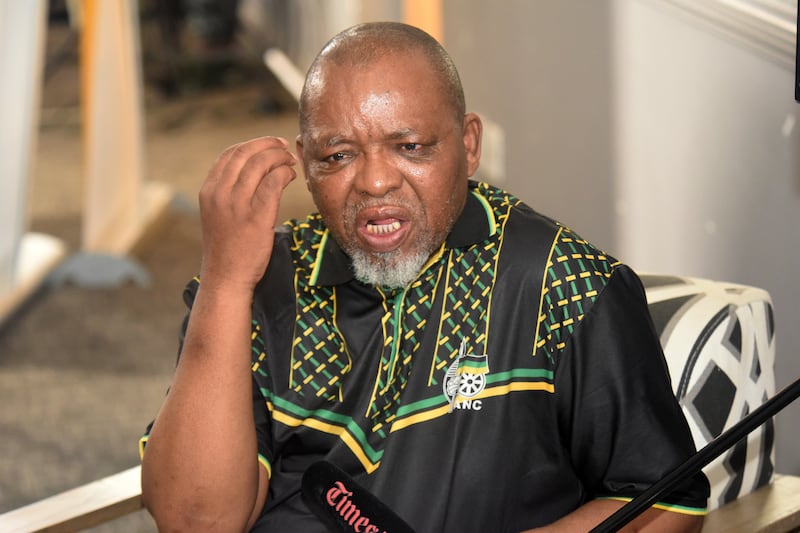
Mineral and Petroleum Resources Minister Gwede Mantashe: Image Supplied
By Linda Mgomezulu: As the ANC geared up to mark its 8 January birthday celebrations, Mineral and Petroleum Resources Minister Gwede Mantashe handed South Africa an unexpected headline: a blunt message that the country is drifting into a culture of waiting—waiting for government, waiting for rescue, waiting for delivery.
Speaking in a Sunday interview with SABC News, the ANC national chairperson said the governing party has not been loud enough about what it believes it has achieved since 1994—yet, in the same breath, he argued that some of those very gains have come with an unintended consequence: citizens becoming too dependent on the state.
Mantashe pointed to major interventions the ANC often lists among its successes, particularly the National Student Financial Aid Scheme (Nsfas), which has helped many underprivileged students access university and graduate, and the broader social security network designed to protect the poorest households.
“We don’t talk about that,” Mantashe told SABC News.
But his main contention was not about the programmes themselves—it was about what he says they have produced in society.
In remarks that have since ricocheted across social media, Mantashe suggested South Africa has internalised what he called “a theory of delivery,” where communities watch from the sidelines while expecting the state to fix everything.
Comparing South Africa to China, he claimed the ANC made an error by nurturing a “passive society.”
“The difference is that Chinese people put their skin in the fire.
“South Africa has developed a theory of delivery, which means you sit back, you sit in the sun and expect the state to deliver, and people are not involved,” the ANC national chairperson said.
He insisted that South Africa could move faster—if citizens became more active partners in solving local and national problems.
‘We have delivered’ — but the opportunities are not being used
Mantashe said he remains proud of what government has done, arguing that the country’s “outlook” has been fundamentally changed. Yet his frustration, he suggested, is with what he sees as a failure by many South Africans to translate state support into personal progress.
“I am happy that we have delivered. We have changed the outlook of the country.
“I am unhappy that many of our people don’t use the advantages of an ANC government. Instead, they expect that government to take them there.”
To illustrate the point, he recounted speaking to a young woman from the Eastern Cape who used Nsfas funding to study pharmacy but later struggled to find work. Mantashe said he used an analogy to make what he described as a hard truth: the state can provide tools, but it cannot live people’s lives for them.
“I said to her, ‘The ANC has given you a fishing rod; it must now catch fish for you,’ and she says, ‘No, I never looked at it from that angle.’”
The Cala farming project: “They refused”
Mantashe then reached for a more personal example—one he said played out in Cala, his hometown in the Eastern Cape. According to the minister, he attempted to run a community farming initiative, ploughing land and encouraging local youth to participate in growing maize. But he said the response was not what he expected.
“Many thought that was a government project, but it was my project. I was ploughing the land for villages and said to them, young people must participate in the production of maize.
“They refused. They wanted me to rent the piece of land. They didn’t want to be part of the project until after three years. I said, ‘If you are not part of the project, then I give up on the project.’ I gave up.”
He called the experience “a big disappointment”.
“They don’t want to be part of the improvement, and I’m unhappy about that. I would prefer a society that is doing things themselves.”
His prescription: South Africans must reframe their relationship with government—from recipients to participants.
“We must all be part of the solution and not depend on the state or the ANC for solutions. The more people get involved, the better the country will be.”
He also drew on his own work history to stress that employment cannot be delivered like a service.
“I am now over 70. I’ve never had a government looking for a job for me.
“The difference is that today, because there is a progressive government, people expect that government to go and give them jobs. They don’t look for jobs themselves, and that must change.”
“Let’s move out of being a parcel society and become an active society,” the ANC veteran added.
Online outrage: Mkhwebane calls it “irresponsible”
The remarks quickly collided with South Africa’s harsh economic reality—particularly mass unemployment and rising living costs—triggering swift backlash online.
Former Public Protector and MK party member Busisiwe Mkhwebane accused Mantashe of being disconnected from the daily grind facing millions of jobseekers.
“Gwede Mantashe, if you can know how many applications the unemployed graduates and those who are not qualified, you will never utter such irresponsible statement.
“Your family and those close to you are not exposed to the poverty and unemployment our families are going through.
“You are so distant to reality and it is sad. #unemployment #poverty and #inequality,” Mkhwebane posted on X.
Earlier in the same interview, Mantashe defended Black Economic Empowerment (BEE), a policy under renewed scrutiny over the past year. He argued critics were predictable—and, in some cases, motivated by a desire to preserve racial privilege.
“I’m not expecting a John Steenhuisen to be a fan of the ANC. I still expect them to say, ‘BEE is not right for us’ because they prefer white supremacy.”
He also rejected what he called “loose talk” that BEE beneficiaries are mainly politically connected.
“The loose talk that people who get benefits from BEE are connected politically, which is a farce, actually. Politics don’t create entrepreneurs,’ Mantashe remarked.
He said wealth cannot be handed out as if it were a reward, insisting that entrepreneurship must be built through skill and effort.
“Entrepreneurs are born, and they develop their own skills and develop into big empires, and we must do that as Black South Africans and not expect to be given gifts called wealth. That is not a gift.”
Mantashe’s intervention has opened a familiar national fault line: where personal responsibility ends and state responsibility begins—especially in a country where the promise of democracy has been repeatedly tested by unemployment, inequality and failing local services.
For supporters, his words are a push toward self-reliance and community initiative. For critics, they sound like blame-shifting from a government in power for three decades.
Either way, as the ANC celebrates another year of its existence, Mantashe has ensured the party’s birthday week begins not with nostalgia—but with a combustible argument about who, exactly, should be doing the heavy lifting to fix South Africa.







