
Subtotal R0,00

Politics/ 03 March 2026,11:34am/ Sipho Gumede
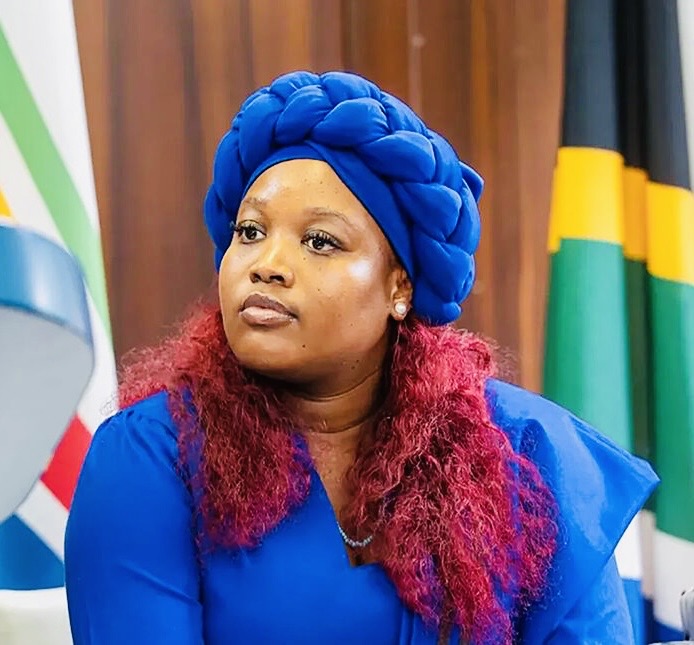
Karabo Khakhau: Image Supplied
By Sipho Gumede: Democratic Alliance national spokesperson and MP Karabo Khakhau has moved from being one of the party’s most recognisable public voices to becoming a central player in its internal succession battle, after joining the contest for a senior federal role ahead of the DA’s April congress.
In a leadership season already packed with heavyweight manoeuvring, Khakhau’s candidacy is being read by many inside the party as something more than a routine entry on an election slate: it is a bid to shape how the DA organises, communicates and grows in the long run — and, crucially, who the party prioritises as it looks toward 2029.
Khakhau has accepted nomination as first deputy chairperson of the DA federal council. In a letter circulated to delegates on Monday, she framed her campaign around tightening the party’s internal machinery and driving political energy among constituencies that will define the next election cycle: women and young voters.
“It is on this basis that I have accepted the nomination to be your 1st deputy chairperson of the federal council,” she wrote, urging delegates to back what she presented as a purposeful, organising-first vision.
While some candidates this season are selling themselves as administrators, executors, or electoral tacticians, Khakhau is anchoring her appeal on party-building — the less glamorous, often invisible work that determines whether a movement can sustain momentum beyond a single election or a single leader.
Her entry comes as other senior figures also set their sights on the DA’s senior structures. The federal executive — a separate body that manages the DA’s day-to-day political strategy and implementation — is expected to be fiercely contested, and the federal council itself remains one of the party’s most influential levers of power between congresses.
The federal council, chaired by Helen Zille, serves as the party’s highest decision-making body between congresses and operates separately from the federal executive. So far only Ashor Sarupen has raised his hand to replace Zille, who has indicated that she will not be running for any internal positions as she sets her eyes on the Johannesburg mayorship.
In the federal executive race, Basic Education Minister Siviwe Gwarube has confirmed she is vying for one of the three deputy federal chairperson positions — roles currently held by JP Smith, Solly Malatsi and Anton Bredell — setting up what is expected to be a hard-fought contest at the 11 April congress.
Launching her bid with a campaign poster, a manifesto titled A Growing DA for a Growing SA and a letter to delegates, Gwarube leaned on her experience in both party and government, and placed electoral expansion at the heart of her pitch.
“I am happy to announce that I have accepted the nomination for deputy federal chairperson. The truth is simple: we need to be the largest party in South Africa in order to bring the change so desperately needed in our country.
Gwarube added: “We must therefore elect leaders who will organise, build and expand our support in every province and every community.Only a growing DA can deliver a growing SA,” she said.
She also stressed activist-driven politics and organisational discipline: an empowered activist is an effective one. “Let us never forget the importance of activism. That is what has allowed our party to grow throughout these years.”
Malatsi has indicated he will seek another term, while Western Cape minister Anroux Marais has also declared her candidacy, taking the confirmed contenders for deputy federal chairperson to three.
But inside this crowded contest, Khakhau’s move is drawing special attention because of where she is choosing to land: the federal council — the forum that, between congresses, can shape strategic direction, make high-level decisions, and determine how effectively the party’s engine rooms actually function.
Her message to delegates signals that she wants the DA to prepare for the long haul: stronger structures, sharper mobilisation, and a more deliberate focus on the demographics that can either accelerate or stall the party’s growth.
All of it will come to a head when delegates gather in Midrand, north of Johannesburg, on 11 and 12 April to elect a new federal leader following John Steenhuisen’s decision not to stand again.
The leadership race for the top job has already begun to solidify. Last week Cape Town mayor Geordin Hill-Lewisaccepted nomination as the top party leader. He has positioned himself as a frontrunner in the contest and has already attracted endorsements from senior party figures.
Beyond the top post, the congress will also fill the positions of federal chairperson, three deputy federal chairpersons, chairperson of the federal finance committee, as well as the chairperson and three deputy chairpersons of the federal council — the very space where Khakhau is now making her play.







