Subtotal R0,00

Economy/ 24 February 2025, 11:10am/ Staff Writer

State-owned enterprises face financial challenges as government commits to no bailouts in upcoming budget: Image Supplied
By Staff Writer: The South African government remains steadfast in its commitment to avoiding bailouts for state-owned enterprises (SOEs) as the postponed 2025 budget is scheduled for delivery on March 12.
This decision comes despite ongoing financial challenges faced by these entities and the cancellation of the budget announcement last week due to disagreements over a contentious proposal to increase value-added tax (VAT) by two percentage points.
Dr. Elna Moolman, head of South Africa Macroeconomic Research at Standard Bank Group, noted that the section of the budget addressing SOEs is unlikely to see significant changes. She characterized the upcoming announcements as reflective of a “principled stance” from the government, underscoring its commitment to reform rather than financial support.
The Budget Review reiterates the government’s focus on enhancing governance and transparency within the guarantee framework, stating that support for critical capital investments will be facilitated through mechanisms such as credit guarantees and grant funding. This approach signals a shift away from direct bailouts, emphasizing a more sustainable financial strategy for SOEs.
However, the review also highlighted the persistent risks posed by SOEs to the fiscal position, primarily stemming from contingent liabilities. The total guarantee amount is projected to decrease from R498.9 billion as of March 31, 2024, to R491.9 billion by March 31, 2025. In contrast, exposure amounts are anticipated to rise by R2.7 billion to R414.3 billion during the same period, raising concerns about the financial stability of these entities.
The decrease in the total guarantee amount is largely due to the termination of the Land Bank’s R8 billion guarantee at the end of the 2023/24 fiscal year. In contrast, a R9.1 billion drawdown on the Transnet guarantee has contributed to the increase in exposure, despite offsetting factors such as the net repayment of SANRAL debt and the South African Reserve Bank Loan Guarantee Scheme.
Weak governance, financial pressures, and operational challenges continue to afflict SOEs, with many failing to meet the legal requirements for sustainable profitability and effective risk management. The review indicates that various turnaround initiatives are underway, yet progress has been inconsistent.
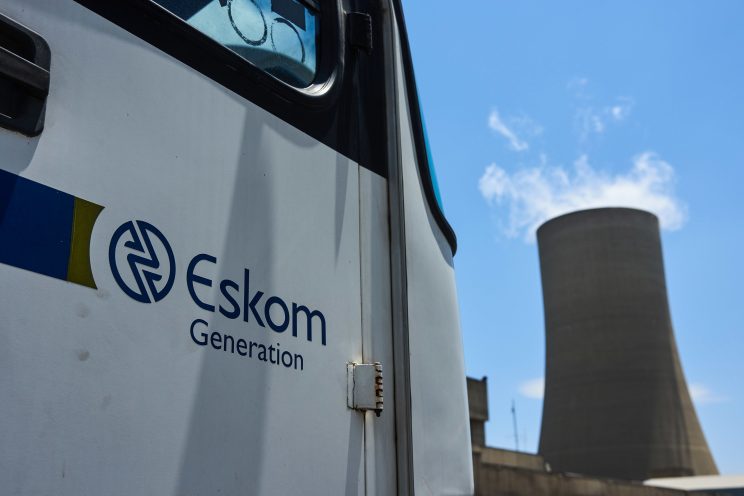
Eskom, for instance, is making headway on its recovery plan, but its financial health remains precarious, requiring significant operational improvements. Meanwhile, Transnet grapples with high debt levels and must accelerate its recovery efforts to stabilize its finances and operations.
The review forecasts that public entities will likely face cash deficits in the medium term, primarily due to increased capital spending by SANRAL, PRASA, and other public entities. Contingent liability risks from independent power producers (IPPs) are considered low, with government commitments to the Renewable Energy Independent Power Producer Procurement Programme projected to reach R277.9 billion by March 31, 2025.
Transnet’s recovery efforts, supported by Operation Vulindlela, have shown some progress, with estimates suggesting rail volumes could reach 165.4 million tons by the end of the 2024/25 fiscal year. However, a significant decline in rail volumes from 226.3 million tons in 2017/18 to 151.7 million tons in 2023/24 highlights ongoing operational inefficiencies.
In the 2023/24 fiscal year, Transnet reported a net loss of R7.3 billion, largely due to increased finance costs that surged to R14.3 billion. This financial strain has led to a shift in funds from capital expenditure to debt servicing, underscoring the need for improved debt management.
The government’s recent provision of a R47 billion guarantee to Transnet aims to refinance maturing debt while steering clear of general balance sheet support. Furthermore, Eskom continues to represent the largest guarantee exposure, constituting about 88% of the portfolio, although its exposure has diminished following the implementation of the Eskom debt-relief arrangement.