Subtotal R0,00

Kwa-Zulu Natal/ 24 February 2025, 11:40am/ Lijeng Moruthane
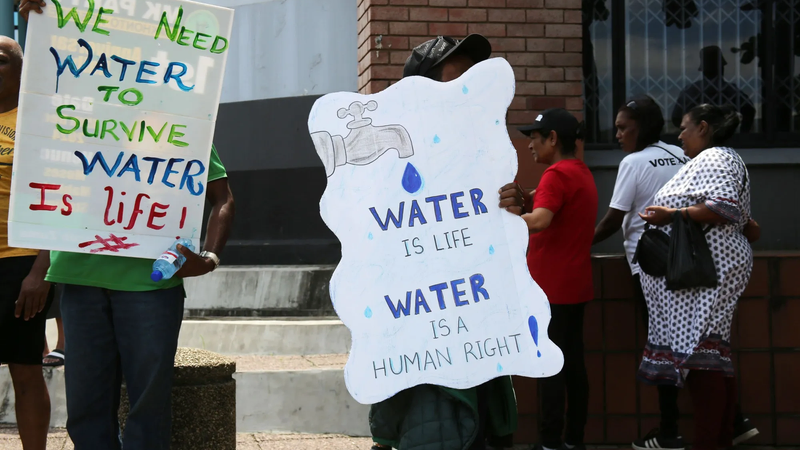
Residents held a protest last week outside the eThekwini Water and Sanitation department in Durban over ongoing water supply disruptions: Image Supplied
By Lijeng Moruthane: Despite recent rainfall, the eThekwini Municipality’s decision to implement water rationing highlights the severe water crisis affecting municipalities across South Africa.
This move underscores the urgent need for a comprehensive and coordinated response from all three tiers of government to avert widespread water shortages and prevent infrastructure collapse.
Residents in areas such as Umlazi, Westville, and Queensburgh have been facing water rationing due to a declining bulk water supply and aging infrastructure.
The curtailment measures by uMngeni-uThukela Water, which have been in effect since October 2024, have exacerbated the situation, leading to rotational supply restrictions as authorities struggle to maintain reservoir storage levels.
This crisis is not unique to eThekwini; municipalities nationwide are grappling with chronic water supply challenges.
Issues such as mismanagement, aging infrastructure, high levels of non-revenue water loss, and financial instability have intensified the situation. Reports reveal that eThekwini suffers a staggering 56% water loss attributed to leaks, illegal connections, and billing inefficiencies, mirroring similar crises in major metros like Johannesburg, Tshwane, and Nelson Mandela Bay.
The Democratic Alliance (DA) has called for an urgent intergovernmental approach to tackle these systemic failures and ensure sustainable water provision. Stephen Moore, MP and DA Deputy Spokesperson on Water & Sanitation, emphasized the need for action, stating, “South Africa cannot afford to wait for complete service collapse before taking action.”
Moore outlined key measures necessary to address the crisis, including:
- Establishing a National Water Infrastructure Recovery Plan: Government must develop and implement a structured national recovery plan focused on leak detection, pipeline replacement, and reservoir rehabilitation.
- Municipal Debt Reform and Revenue Collection Support: Stricter oversight mechanisms and debt recovery plans from the National Treasury are essential to stabilize water boards and ensure uninterrupted supply to municipalities.
- Enhancing Public-Private Partnerships (PPPs): The government should engage the private sector to co-invest in water security solutions, including desalination plants, advanced purification technologies, and borehole development.
- Water Conservation and Efficiency Programs: A national campaign to promote water-saving initiatives, such as incentives for households and businesses to adopt greywater systems, rainwater harvesting, and smart metering, is crucial.