
Subtotal R0,00

News/ 14 January 2026, 08:34am/Linda Mgomezulu
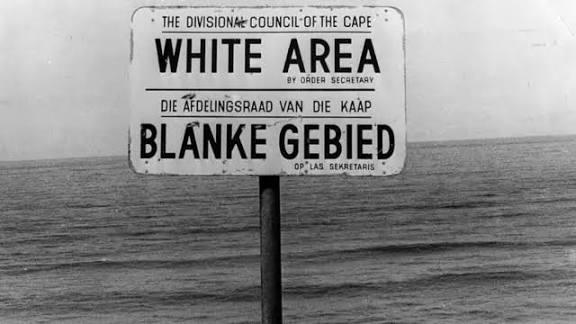
Apartheid laws privileged white South Africans and discriminated against Black South Africans: Image Supplied
By Linda Mgomezulu: A long trail of grief from apartheid’s darkest years is again in the spotlight — not only in the courts, but in Parliament — after government set out what it says it has already done to repair lives shattered by displacement, torture and political violence.
The disclosure lands as the Gauteng High Court in Pretoria recently dismissed President Cyril Ramaphosa and the government’s attempt to stay or postpone a R167-million constitutional damages claim brought by 22 families of murdered and missing anti-apartheid activists — a case that underscores how unfinished the country’s reckoning remains.
Against that backdrop, Justice and Constitutional Development Minister Mmamoloko Kubayi told Parliament that the state’s reparations to victims who came forward to the Truth and Reconciliation Commission (TRC) include a once-off cash payment and a suite of benefits meant to restore dignity and support families over time.
Her comments came in response to MKP MP Adil Nchabeleng, who asked whether the government intended creating a national reparations programme for apartheid crimes beyond the once-off amounts.
Kubayi pointed to a key post-TRC decision taken more than 20 years ago, framing it as “final reparation” approved by Parliament.
“In June 2003, Parliament approved the granting of reparations to TRC-identified victims in respect of final reparation in the form of a once-off grant of R30 000.00; medical benefits and other forms of social assistance; symbols and monuments; and rehabilitation of communities for purposes of contributing to healing the wounds of the past and restoring human dignity,” she said.
While the R30 000 grant is the most widely known part of the package, Kubayi said government spending did not end there — especially for children of those recognised by the TRC, where education assistance has run into the hundreds of millions.
“Thus far, the department has supported a total of 11 783 learners between Grades 1 and 12, and the payments made to the beneficiaries in respect of this reparation amount to R135 995 409.07. Furthermore, 1 896 students received funding to further their studies at higher education and training institutions, and the payments made to the beneficiaries in respect of this reparation are R129 174 450.05,” she said.
Another strand of the work, Kubayi explained, deals with the nation’s missing — those who vanished in political circumstances and were reported to the TRC. She said the TRC recommended a dedicated structure to pursue unresolved cases, prompting the creation of the Missing Persons Task Team (MPTT) inside the National Prosecuting Authority (NPA).
The MPTT’s mandate covers 477 cases of people who disappeared between 1960 and 1994, as recorded by the TRC. Kubayi noted the list excludes victims who were judicially executed for political reasons.
Reparation, Kubayi added, also comes in symbolic and community forms — with programmes aimed at restoring names, places and memory through exhumations and reburials, the renaming of streets and facilities, and the building of monuments and memorials.
In practical terms, she said, regulations provide for travel and subsistence to help relatives attend exhumations and ceremonies, and also set out specific once-off amounts linked to burials and rituals.
She added: “The regulations provide for travel and subsistence allowances for relatives of missing persons to attend the exhumation procedures, cleansing ceremony and handover ceremony, payment of once-off grant of R17 000.00 for the reburials of the remains of deceased victims, R8 500.00 for the symbolic burials of deceased victims, payments of an amount not exceeding R1 500.00 to purchase an animal to be slaughtered for the purpose of a cleansing ceremony.”
The same framework, Kubayi said, includes a provision for a coffin under certain circumstances, along with funeral items and accessories capped at R12 000.
For families of political prisoners who were executed by the apartheid state, Kubayi said government launched a separate initiative nearly a decade ago to help close a painful chapter.
To ensure closure and healing for the families of judicially executed political prisoners, the Gallows Exhumation Project was launched in March 2016, Kubayi said.
The project aims to enable the exhumation of the remains of 83 political activists who were judicially executed — and Kubayi said progress has been recorded in both handovers and payments.
“Thus far, the total number of deceased’s remains handed over for reburial is 180, and payments made to the beneficiaries in respect of this reparation is R5 196 035.36,” the minister said.







