Subtotal R0,00

Western Cape/ 10 April 2025, 11:20am/ Staff Writer
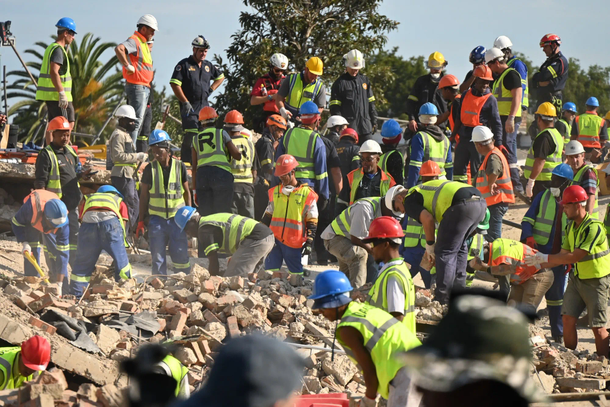
Rescue teams and construction workers removing rubble of the collapsed Neo Victoria building: Image Supplied
By Staff Writer: Serious breaches in construction protocols and failure to adhere to safety standards have been identified as the root causes of the deadly Neo Victoria building collapse in George, Human Settlements Minister Thembi Simelane revealed during a media briefing on Wednesday.
The residential complex, which collapsed on May 6, 2024, claimed the lives of 34 people and left many others injured. According to Simelane, the findings of the government-led investigation exposed glaring irregularities in the project’s execution, including the use of unaccredited professionals and poor oversight throughout the construction process.
“This tragedy was not just an accident—it was the result of negligence and failure to comply with basic construction regulations,” said Simelane. “Had protocols been followed, this disaster could have been avoided.”
The Minister said the collapse had highlighted the urgent need for tighter control measures in the country’s construction sector, especially in light of South Africa’s ambitious goal to house more than 2 million people currently in desperate need of accommodation.
In response, the Department of Human Settlements is rolling out a comprehensive reform plan to enforce higher standards across the industry. A key component of this plan involves strengthening the role of the National Home Builders Registration Council (NHBRC), which will now require developers and builders to undergo more rigorous vetting, training, and grading before registration.
“No construction will proceed without full NHBRC compliance. If a builder or developer is not registered or fails to meet the council’s standards, the project must stop immediately,” Simelane warned.
The new measures aim to ensure that only qualified professionals are entrusted with housing and infrastructure developments. Enhanced monitoring, improved transparency, and swift enforcement actions are central to the department’s strategy to prevent future tragedies.
Simelane also acknowledged the existence of similar structural collapses reported across the country and confirmed that these incidents are under review. Her department has been instructed to investigate each case and hold those responsible accountable.
“These failures are not isolated incidents—they point to systemic issues that we must address collectively,” she said.
Calling for greater collaboration, Simelane appealed to industry stakeholders to join efforts to build a safer and more accountable construction environment. “The law must be enforced, but enforcement requires partnership. We cannot succeed without the commitment of everyone in the built environment.”