
Subtotal R0,00

KwaZulu-Natal/ 07 January 2026, 15:00pm/ Sipho Gumede
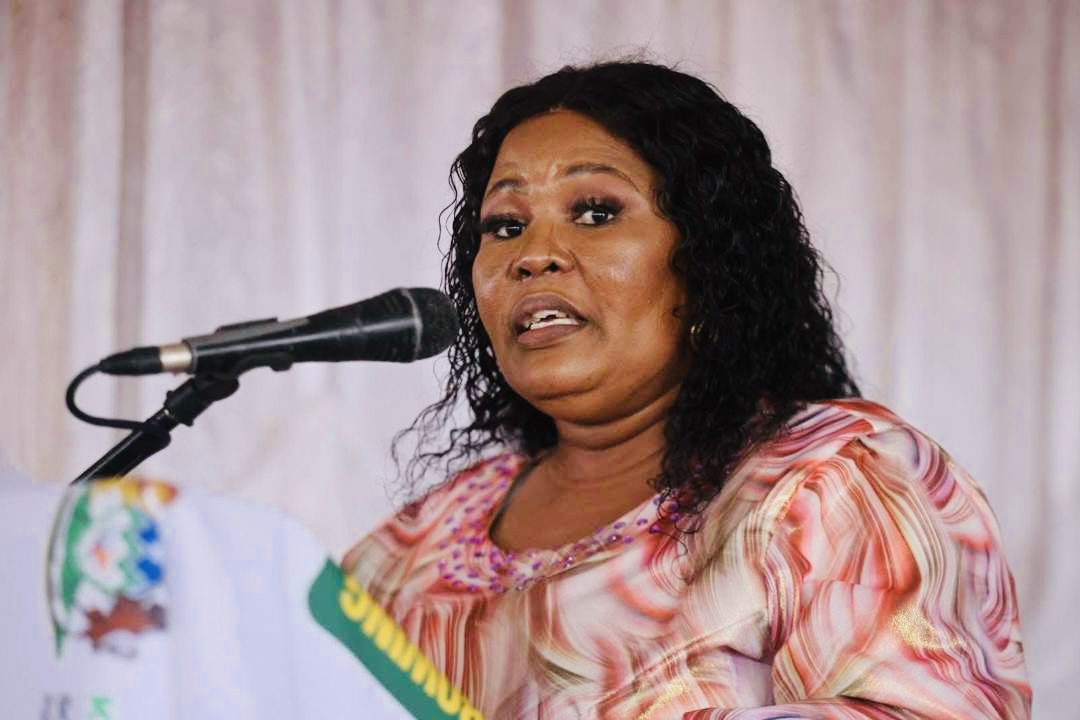
Mbali Shinga: Image Supplied
By Sipho Gumede: KwaZulu-Natal’s political stability is being tested not by a budget vote or a service-delivery crisis, but by something far more procedural: whether a suspended party leader can be pushed out of the legislature — and what happens to the province’s governing maths if she is.
Mbali Shinga, the NFP’s KwaZulu-Natal chairperson and Social Development MEC under the Government of Provincial Unity (GPU), is now at the centre of a disciplinary process whose consequences extend well beyond her party.
The case is, on paper, about gross misconduct — “insubordination and openly defying party directives” — arising from her refusal to support the party’s instruction to vote for the uMkhonto weSizwe Party’s motion of no confidence against Premier Thamsanqa Ntuli. In practice, it has become a live demonstration of how fragile coalition-era governance can be when one seat becomes contested territory.
After Shinga “openly defied the party’s directive to vote for Ntuli’s removal” on December 15, the party’s leadership moved swiftly. The NEC held a special meeting and resolved to suspend her. It then wrote to Speaker Nontembeko Boyce asking her to remove Shinga as a member of the legislature.
But the Speaker refused, pointing to a critical distinction: Shinga could only be removed once she had “ceased to be a member of the party,” not merely because she was suspended.
That decision effectively forced the fight into a different arena. If suspension cannot automatically translate into the loss of a seat, then the political battle becomes about what the party must prove — and what processes it must follow — to reach the threshold where a member is no longer a member.
When Shinga appeared at her disciplinary hearing on Wednesday, she did so with a new legal team, including “the instructing attorney and the advocate.” The strategy was immediate: her team asked for an adjournment until next Thursday to familiarise themselves with the case.
The NEC’s legal team pushed back hard, arguing there was “no reason for such a long adjournment since Shinga’s team would be provided with all the information it needed urgently.” The matter stood down and will resume on Thursday.
That timetable matters because every day of uncertainty keeps the political arithmetic of the legislature hostage to one unresolved question: does Shinga remain the NFP’s deployable representative, or does the party succeed in ending her membership and triggering the seat consequences it wants?
The NEC announced that its first witness would be the Deputy provincial secretary Zethembe Ngobese. Ngobese would not preview his evidence, saying he “refused to discuss his testimony before taking the stand,” but he confirmed he would speak to how internal directives and resolutions were handled after Shinga became MEC.
Ngobese said PEC resolutions adopted soon after her swearing-in required Shinga to present monthly reports to the PEC about her work — “which never happened.” Another resolution required monthly PEC meetings, and as chairperson Shinga was expected to call them — “which also never happened.”
He summarised the complaint in blunt terms:
“We never received a single report since she became MEC. The PEC held fewer than 10 meetings, and no one explained to us why we were not meeting, so since she became MEC, she also behaved like a free agent.”
Ngobese further said that after the NEC took a resolution to pull out from the PGU, Shinga was asked to convene a PEC meeting to discuss the NEC decision — but “she refused to call a meeting.”
Shinga did not respond to the questions sent to her about these claims.
The political symbolism of the Ntuli vote was amplified by who was watching. Shinga’s decision played out in full view of the party’s top leadership, including “President Barnes,” who “watched the proceedings from the chamber’s gallery.” That public break is now being used to justify the charge that she did not merely disagree internally, but “openly defied” instructions.
Why the province cares: a 40–40 cliff edge
The broader consequence is numerical, not rhetorical. “The GPU’s future hinges on the NFP,” and if the party succeeds in removing Shinga, the GPU “will collapse since all sides will have a 40-40 split in the number of seats in the legislature.”
So Thursday’s hearing isn’t only about whether Shinga followed party rules. It is about whether a party can translate internal discipline into legislative reality — and whether KwaZulu-Natal’s government can survive the outcome of that translation.







