
Subtotal R0,00

International/ 07 January 2026, 15:55pm/Mpho Mokoena
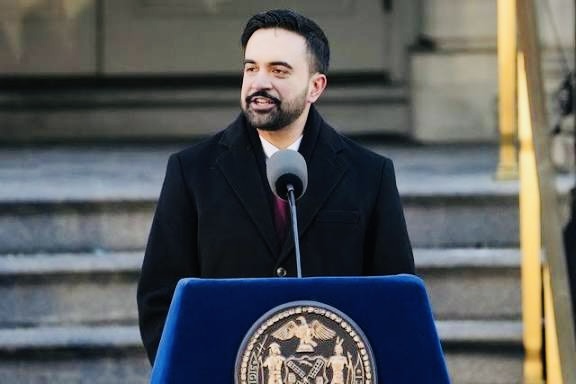
Zohran Mamdani: Image Supplied
By Mpho Mokoena: Zohran Mamdani’s first address as New York’s mayor was billed as a local blueprint for a city of 8.5 million. But the political aftershock landed thousands of miles away, where South African ruling-party officials treated the speech as an unexpected international endorsement of the country’s post-apartheid democratic project.
Mamdani, born in Kampala, Uganda, and raised in part in Cape Town, invoked Nelson Mandela and South Africa’s Freedom Charter in remarks that tied his new administration to liberation-era ideas about civic belonging. He attributed his political sensibilities to a childhood spent in a society he describes as visibly shaped by the legacy of apartheid, including time in Cape Town where his father held an academic post at the University of Cape Town. That period, he has said, showed him “what inequality looks like up close.”
In the speech, Mamdani posed what he called an “age-old question” about who controls urban life and who gets shut out, before offering his own answer: “New York belongs to all who live in it.” He said his government would resist elite capture of City Hall and avoid governing narratives that normalize social separation.
“This will not be a tale of one city governed only by the 1%, nor will it be a tale of two cities, the rich versus the poor,” he said, rejecting the idea that New York must be understood through a rigid divide.
He also aimed at what he portrayed as polite language used to disguise harsh policy outcomes. “For too long, those fluent in the good grammar of civility have deployed decorum to mask agendas of cruelty,” he said. And he framed his administration’s ethos as a shift away from individualism: “We will replace the frigidity of rugged individualism with the warmth of collectivism,” he said.
The most pointed political response came from African National Congress (ANC) Secretary General Fikile Mbalula, who posted on Facebook that South Africa—despite its difficulties—still demonstrates how a democratic society should function.
“This country [is] at the tip of Africa [and it] safeguards rights of the poorest, holds free and fair elections, protects the rights of the most vulnerable in society, women and children, provides basic social relief such as RDP housing, free basic education and NSFAS, a mandatory minimum wage and accessible healthcare,” he wrote.
Mbalula argued that it was therefore unsurprising that outsiders look to the country’s governance model with interest. “Without sounding exceptional, South Africa through the ANC’s resolutions and policies remain the shining lighthouse on a hill,” he added.







