Subtotal R0,00

News/ 18 October 2025,09:03am/Mpho Mokoena
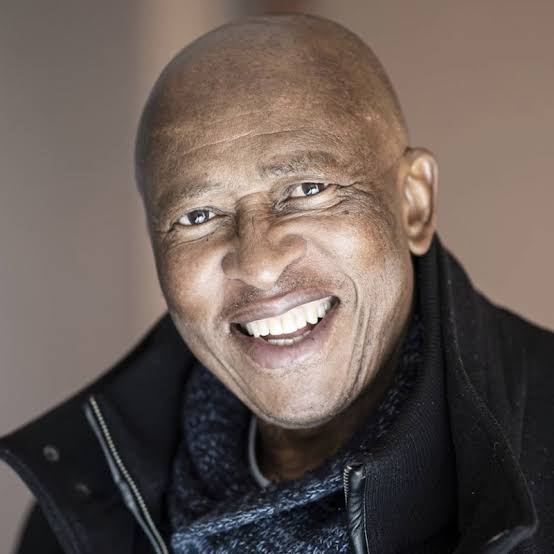
 Author Zakes Mda: Image Supplied
By Mpho Mokoena: South African novelist Zakes Mda confirmed he will be among a group of writers compensated in a landmark United States class-action settlement against the artificial intelligence company Anthropic.
The case, Bartz v. Anthropic, centers on claims that Anthropic trained its Claude language models using pirated e-books sourced from shadow libraries such as LibGen, without the authors’ consent.
The litigation brought together a constellation of writers, including Andrea Bartz, Charles Graeber and Kirk Wallace Johnson, who argued that Anthropic relied on unlawfully downloaded works to train its AI models.
After a lengthy legal battle, a settlement was announced in September 2025, with an estimated 1.5 billion dollars to be distributed among authors whose US publications had been used in training.
For Mda, a revered figure in South African letters, the news confirmed what his agents in London had hinted at: several of his works had been identified as part of the training corpus, a revelation that carries both personal significance and wider implications for rights holders around the globe.
Speaking with his London-based literary agents, Mda learned that the preliminary settlement agreement had been approved and that he—along with many fellow writers—would receive a share of the substantial fund.
The agents conveyed the core message: a major copyright lawsuit in the United States against Anthropic, brought by authors for using books without permission to train large language models, had culminated in a settlement.
The settlement would see authors whose US publications had been used by the company to train AI models receive a portion of the $1.5 billion pot, a sum the parties described as a meaningful acknowledgement of the creators’ rights in the age of powerful machine-generated text.
Among the works cited as part of the training, Mda’s six novels were named, including The Heart of Redness, The Madonna of Excelsior, The Whale Caller, She Plays with the Darkness, and Sometimes There Is a Void: Memoirs of an Outsider.
The revelation prompted reflection from Mda about the evolving landscape in which authors navigate digital technologies. “Damn! I didn’t know of my contribution in the development of AI.
But the only reason I am telling you this story is to ask the question: what about our South African writers?” he said, underscoring a broader concern that rights regimes in South Africa may not yet provide a clear path for authors whose works are used without permission, and highlighting the ongoing debate about whether the U.S. fair-use doctrine can offer a shield in cross-border cases.
The settlement also underscores a larger truth about the distribution of compensation in such cases. Mda’s post on social media emphasized that “Don’t be deceived by the billions. They are not all coming to me.
They are shared by many writers in the USA.” He added that while the money may seem vast, the actual payoffs would be spread across a wide group of authors, with the practical benefit accruing “however little” to each individual title that had been used.
The practical reality, he noted, is that the funds will be divided among many writers, a point that resonates with advocates who say such settlements establish precedents for how future disputes between authors and AI developers might be resolved.
The case has sharpened the international debate about copyright in the digital age. Judge William Alsup’s June ruling affirmed a nuanced separation within Anthropic’s activities: training with lawfully acquired books was deemed “transformative” and protected by fair use in the context of model development.
Yet the court found fault with Anthropic’s broader approach, including the creation and retention of a “central library” that included pirated copies, which Alsup deemed not transformative and therefore infringing copyright. The decision pitted a broader industry-wide question against the ideals of innovation and openness in AI development.
The rulings also place two tech giants in the background of the proceedings. Amazon and Alphabet, Google’s parent company, were identified as supporters of Anthropic in the case, a dynamic that illustrates the alliances that often form at the intersection of intellectual property and cutting-edge technology.
Alsup’s findings that Anthropic possessed more than seven million pirated books in a central library further illuminated the tensions inherent in assembling large-scale training datasets.
The court described a repository of content valued by AI developers for its breadth and historical significance, even as it raised questions about how such repositories should be governed and compensated when they contain works protected by copyright.