
Subtotal R0,00

International / 04 January 2026, 07:52am/ GoodWill Mathebula
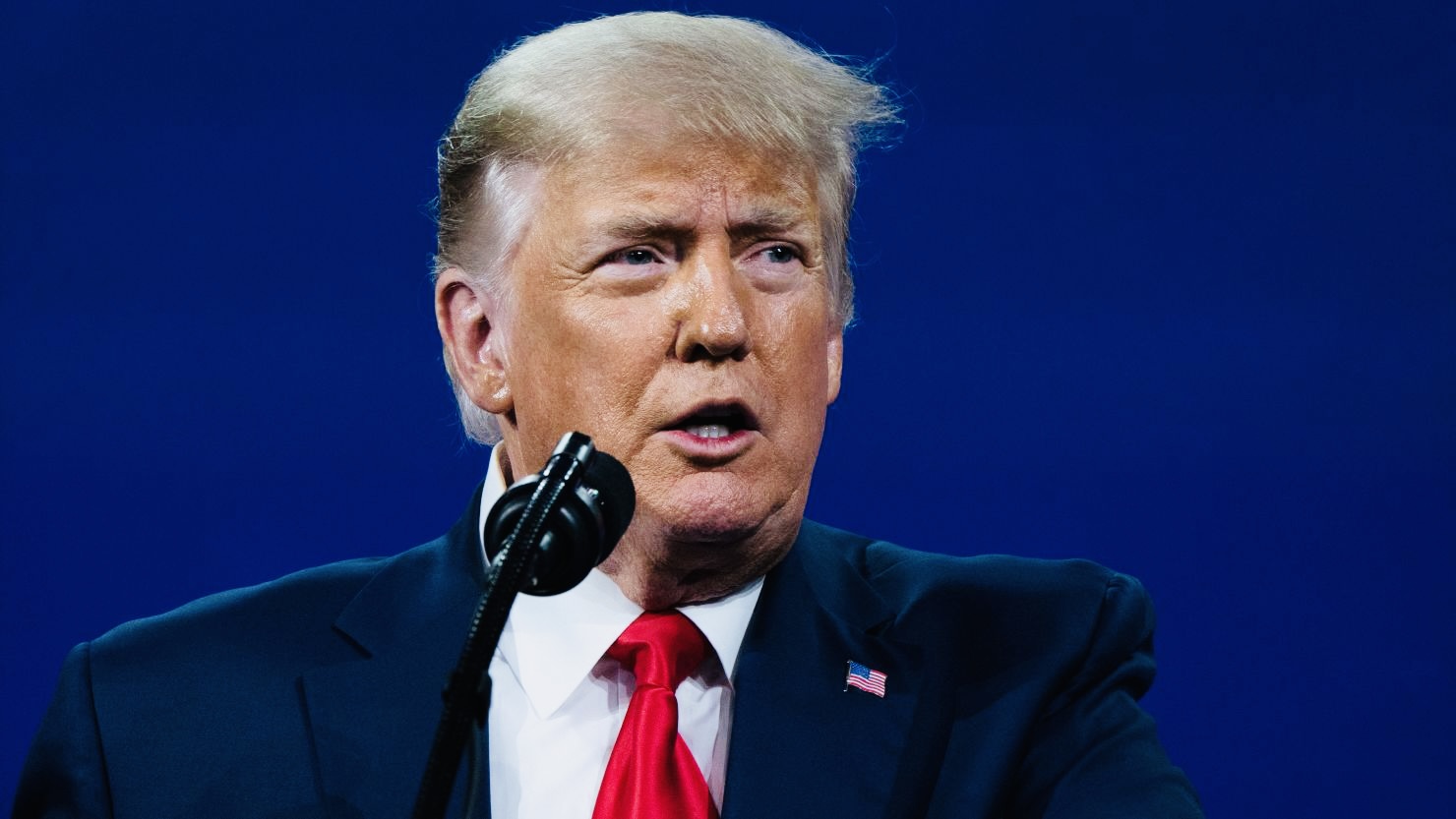
President Donald Trump: Image Supplied
By GoodWill Mathebula: The drama began before dawn in Caracas and ricocheted across the globe by lunchtime: the United States launched an overnight strike in Venezuela, captured President Nicolas Maduro, and set off the most explosive international-law confrontation in years—one that South Africa now wants hauled, urgently, before the United Nations Security Council.
At the centre of the storm was President Donald Trump, who emerged at a 3 January press conference to proclaim not only victory, but a bold—and incendiary—new posture for Washington in Latin America: the US would “run” Venezuela.
The operation, Trump said, toppled Venezuela’s long-serving leader in an “overnight operation on Saturday,” in what many diplomats are already calling Washington’s most direct regional intervention since the 1989 invasion of Panama. Standing at his Mar-a-Lago resort in Florida, flanked by top officials including Secretary of Defence (War) Pete Hegseth and Secretary of State Marco Rubio, Trump hailed the mission in sweeping terms.
“This was one of the most stunning, effective and powerful displays of American might and competence in American history,” Trump said.
He added that Maduro was now in custody—and that American officials would move from raid to rule.
“We’re going to run the country until such time as we can do a safe, proper and judicious transition,” he said. “We can’t take a chance that someone else takes over Venezuela who doesn’t have the interests of Venezuelans in mind.”
Yet even as Trump projected command, the reality inside Venezuela appeared far murkier.
It remains unclear how Trump plans to oversee Venezuela. Despite a dramatic overnight operation that knocked out electricity in part of Caracas and captured Maduro in or near one of his safe houses, US forces have no control over the country itself, and Maduro’s government appears to still be in charge.
With Maduro gone, the stakes now turn to what comes next—and who, if anyone, can actually govern.
The removal of Maduro, who led Venezuela with a heavy hand for more than 12 years, potentially opens a power vacuum in the Latin American country. Venezuelan Vice President Delcy Rodriguez — Maduro’s presumptive successor — is in Russia, four sources familiar with her movements said, stoking confusion about who is next in line to govern the South American country. Russia’s foreign ministry said the report that Rodriguez is in Russia was “fake.”
Analysts warn that any vacuum in a nation of 28 million could transform a lightning raid into a grinding crisis. Any serious destabilisation in the nation of 28 million people threatens to hand Trump the type of quagmire that has marked U.S. foreign policy for much of the 21st century, including the invasions of Afghanistan and Iraq – which were also premised on regime change.
“Narco-state” claims, oil suspicions—and a familiar Latin American scar
The US has not made such a direct intervention in its backyard region since the invasion of Panama 37 years ago to depose military leader Manuel Noriega over allegations that he led a drug-runningoperation. The United States has levelled similar charges against Maduro, accusing him of running a “narco-state” and rigging the 2024 election.
Maduro, a 63-year-old former bus driver handpicked by the dying Hugo Chavez to succeed him in 2013, has denied those claims and said Washington was intent on taking control of his nation’s oil reserves, the largest in the world.
While Trump celebrated, Pretoria sharpened its legal response.
The South African government has called on the United Nations Security Council to convene urgently to address the US military strike on Venezuela.
In a statement that framed the strike not as strategy but as a breach of bedrock global rules, Pretoria called the attack and the capture of Maduro and his wife Cilia Flores a “manifest violation of the Charter of the United Nations, which mandates that all Member States refrain from the use of force against the territorial integrity or independence of any state.
“Furthermore, the Charter does not authorise military intervention in matters that are essentially within the jurisdiction of a sovereign nation,” the Department of International Relations and Cooperation (Dirco) said in a statement.
Dirco spokesperson Chrispin Phiri said that SA’s ambassador Liseko Maseko and the rest of the embassy staff in Caracas were safe after the US military strike in the early hours of Saturday. President Trump used his own social media platform Truth Social to announce the military strike and to say Maduro and Flores had been captured and taken to the US.
Brazilian President Luiz Inacio Lula da Silva said the attack and capture of Maduro had crossed “an unacceptable line.” “Attacking countries, in flagrant violation of international law, is the first step toward a world of violence, chaos, and instability, where the law of the strongest prevails over multilateralism,” Lula wrote on X. He said the attacks recalled the “worst moments of interference” in Latin American politics, threatening peace across the region. “The international community, through the United Nations, needs to respond vigorously to this episode,” he said.
Neighbouring Colombian President Gustavo Petro posted on the social media platform X that Colombia “rejects the aggression against the sovereignty of Venezuela and of Latin America.” He later announced the deployment of forces to the Venezuelan border.
Cuban President Miguel Diaz-Canel, in a post on X, accused the US of conducting a “criminal attack” on Venezuela, which he described as “state terrorism” directed not only at Venezuela but at America more broadly.
Chilean President Gabriel Boric Font and Mexican President Claudia Sheinbaum also condemned the US in posts on X, as did Iran’s Ministry of Foreign Affairs. Iran’s Supreme Leader Ayatollah Ali Khamenei separately posted, in apparent reference to concerns that the US might attack his country, that, “We won’t give in to them… we’ll bring the enemy to its knees.” In 2025, the US bombed Iran’s nuclear facilities.
Russia’s foreign ministry also condemned the “act of armed aggression,” reaffirmed Russia’s “solidarity with the Venezuelan people,” and called for dialogue to resolve the crisis. Western countries were markedly less critical of the US.
British Prime Minister Keir Starmer said his country was not involved in the United States’ strikes on Venezuela and that he wanted to speak with Trump to establish the full facts, adding that the UK believed “we should all uphold international law.”
EU High Representative for Foreign Affairs and Security Policy Kaja Kallas posted on X: “The EU has repeatedly stated that Mr Maduro lacks legitimacy and has defended a peaceful transition.” But she added that “Under all circumstances, the principles of international law and the UN Charter must be respected. We call for restraint. The safety of EU citizens in the country is our top priority.”
In a statement to AFP news agency, Germany’s foreign ministry said it was “monitoring the situation in Venezuela very closely and following the latest reports with great concern.”
For Pretoria, the message was not merely diplomatic—it was a warning drawn from history.
Dirco’s statement also said, “History has repeatedly demonstrated that military invasions against sovereign states yield only instability and deepening crisis. Unlawful, unilateral force of this nature undermines the stability of the international order and the principle of equality among nations. South Africa calls on the UN Security Council, the body mandated to maintain international peace and security, to urgently convene to address this situation.”







