Subtotal R0,00

International News/ 27 February 2025, 1:20pm/ Staff Writer
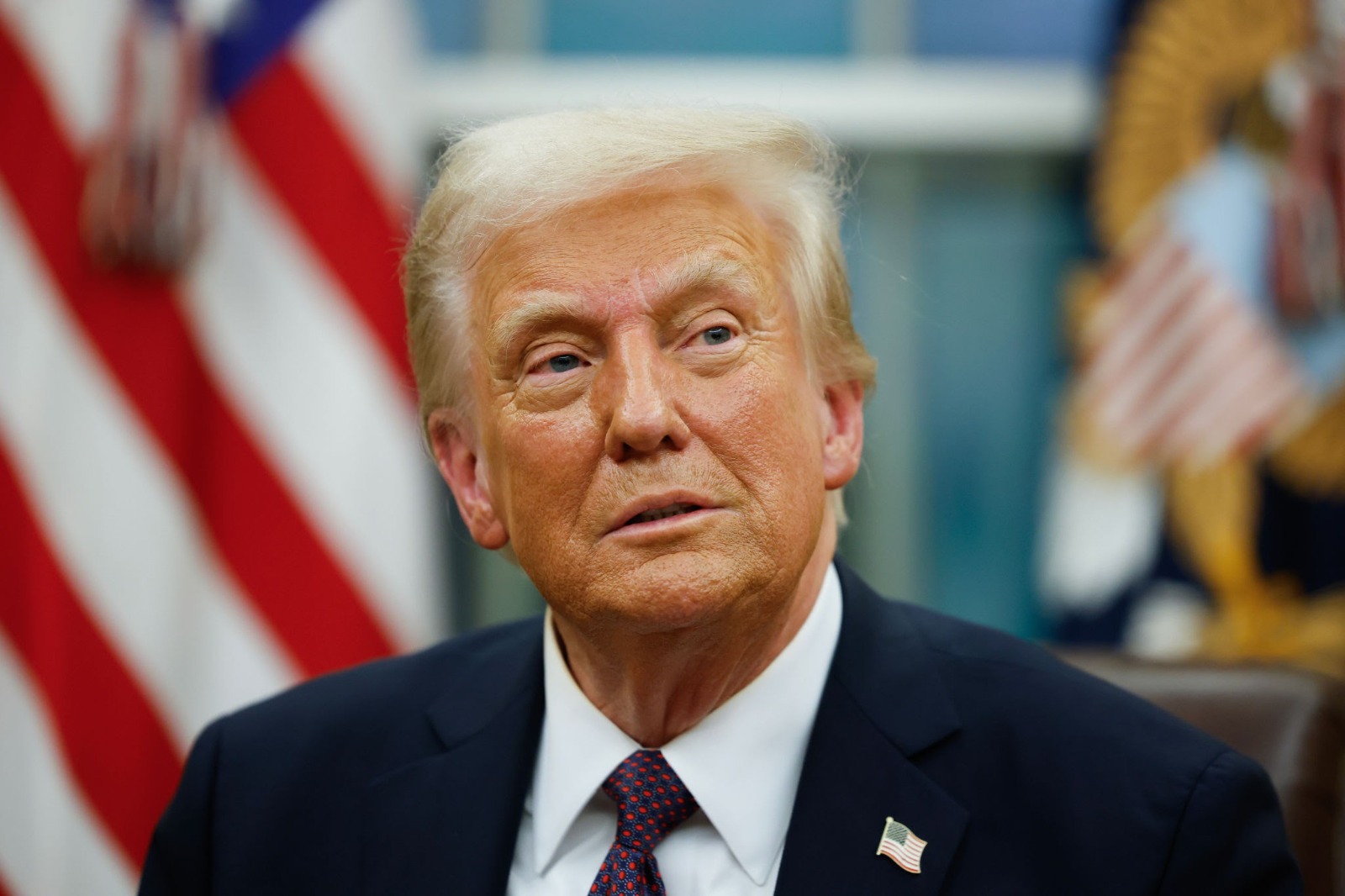
US President Donald Trump discusses new tariffs during a cabinet meeting, announcing 25% duties on European Union products and upcoming tariffs on Canada and Mexico: Image Supplied
By Staff Writer: In a significant shift in trade policy, US President Donald Trump announced on Wednesday that tariffs on products from the European Union (EU) will be set at 25 percent. He also indicated that duties on imports from Canada and Mexico are expected to take effect in early April.
During a cabinet meeting, Trump characterized the EU, an entity historically supported by the United States, as an organization formed to undermine American interests. “Look, let’s be honest, the European Union was formed in order to screw the United States,” he stated, emphasizing his administration’s intent to confront what he perceives as unfair trade practices.
When pressed about the specifics of the tariff levels for the EU, Trump confirmed, “We’ll be announcing it very soon, and it’ll be 25 percent, generally speaking.” He noted that this would particularly impact automotive products, arguing that the EU has “really taken advantage of us.”
The announcement comes amid Trump’s broader strategy to implement “reciprocal tariffs” against US trading partners to counter “unfair and unbalanced” trade. He has previously discussed imposing extensive tariffs on imports of various goods, including automobiles and pharmaceuticals.
Since taking office in January, Trump has fluctuated on tariff implementation regarding Canada and Mexico, initially announcing and then pausing blanket tariffs related to issues like illegal immigration and fentanyl smuggling. Clarifying his stance, he mentioned, “The tariffs go on, not all of them, but a lot of them,” with the expectation that levies will be effective starting April 2.
As global markets reacted to Trump’s tariff declarations, Asian markets displayed volatility on Thursday. Investors sought to gauge the implications of Trump’s latest trade measures, which created uncertainty regarding their timing and scope. The Hong Kong market stood out, with the Hang Seng Index recording a remarkable 20 percent year-to-date gain, surpassing 24,000 points for the first time since 2022, buoyed by strong performances from Chinese tech companies.
Despite the optimistic gains in Hong Kong, other markets experienced fluctuations as traders adjusted their positions. Analysts expressed concerns over Trump’s mixed messages regarding tariffs on Canada and Mexico, questioning whether he might delay or dilute his proposed measures.
The escalation of trade tensions comes on the heels of a memo Trump signed last weekend, aimed at restricting Chinese investments in critical sectors such as technology, healthcare, and energy.
While some economists, like those at Schroders, remain cautious, they noted that the potential economic impacts of Trump’s trade policies could be less severe than previously anticipated. Their analysis highlighted that an “Aggressive Trump” scenario—featuring high trade tariffs and mass deportations—could lead to stagflation in the US economy and a global recession.
However, they also identified emerging positive factors, such as advancements in artificial intelligence and renewed macroeconomic reforms as potential drivers for growth. The analysts suggested that significant drops in oil prices could help alleviate inflation pressures later in 2025.