
Subtotal R0,00

News/22 July 2026, 08:03am/GoodWill Mathebula

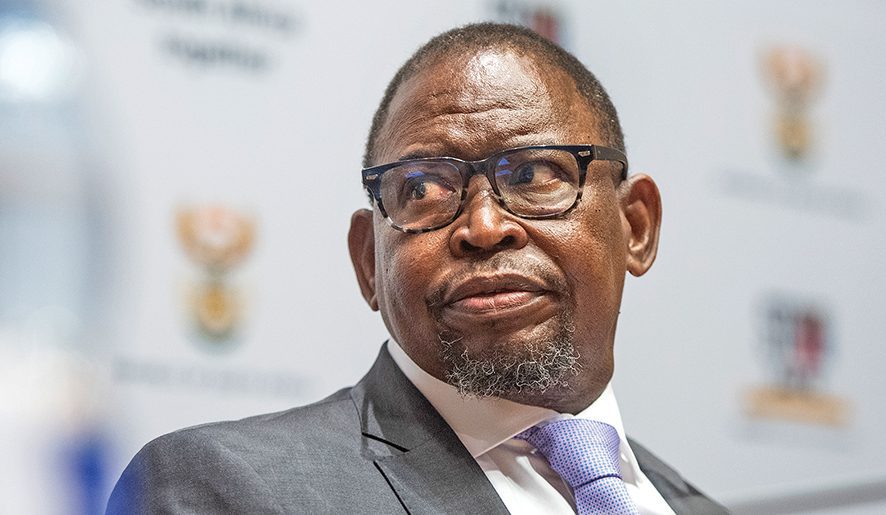
Enoch Godongwana: Image Supplied
By GoodWill Mathebula: South Africa’s worsening local government crisis has taken a dramatic new turn, but a leading civil society organisation says the state may be targeting the symptoms while ignoring the disease.
The Alternative Information and Development Centre (AIDC) has come out swinging against the National Treasury’s move to withhold billions of rands from dozens of municipalities, describing the intervention as a “false solution” that could leave poor households paying the highest price.
Treasury had temporarily stopped the July 2026 Local Government Equitable Share (LGES) transfers to 69 municipalities, a decision affecting roughly R13.5 billion of the R110 billion allocated for the 2026/27 financial year. The move, was framed as an effort to enforce fiscal discipline, tackle financial mismanagement and improve accountability among municipal officials and office-bearers. Although some municipalities have since had their funding reinstated after complying with Treasury’s conditions, others remain cut off.
But the AIDC argues that the crackdown, far from solving the problem, exposes a much deeper failure in the way local government is funded.
In a statement issued on Tuesday, the organisation said corruption and poor governance are real issues in many municipalities, but insisted these are only part of a far wider structural crisis. At the heart of the problem, it said, is a financing model that expects municipalities to generate nearly 90% of their own revenue through property rates and service charges under a full cost recovery system.
According to the AIDC, that model has buckled wherever it has been rolled out at scale. The result, it says, has been a familiar spiral: rising municipal debt, ageing and collapsing infrastructure, more service disconnections, and an ever-widening gap between wealthier and poorer municipalities.
In a country scarred by high unemployment and entrenched poverty, the organisation said it is unrealistic to expect municipalities to survive mainly on what residents can afford to pay for water, electricity and other basic services.
The AIDC warned that freezing equitable share funding could have immediate and painful consequences for vulnerable communities, especially households that rely on municipalities for free basic services. It said the decision threatens access to essentials such as water and electricity, while doing little to stabilise municipal finances in the long term.
The group also pushed back against the idea that financial distress is always a sign of incompetence. It argued that even municipalities with clean governance records are battling to stay afloat simply because they do not have enough revenue to begin with.
One of the clearest warning signs, the AIDC said, is the shrinking reach of the social protection system at municipal level. The number of households receiving free basic services has reportedly dropped from 3.6 million in 2016 to 2.8 million by 2023. It also claimed there is a serious mismatch between the number of households Treasury budgets for under free basic electricity programmes and the number who actually receive support.
On the politically explosive issue of Eskom debt, the AIDC said Treasury’s narrative is too simplistic. Municipal debt to Eskom, it argued, is not merely the product of weak financial discipline, but also reflects a brutal affordability crisis among households and businesses facing steep electricity and water tariff increases.
The organisation said municipalities now keep far less of the tariff income they collect than they once did, with the bulk of that revenue flowing straight to suppliers such as Eskom and water boards. Punishing municipalities for unpaid Eskom bills without confronting poverty and unaffordable tariffs, it warned, will only intensify energy poverty and trigger more service disconnections, especially as further electricity sector reforms loom.
The AIDC also drew on evidence presented to Parliament by the Financial and Fiscal Commission (FFC), saying the numbers tell a more complicated story than Treasury’s hardline stance suggests. While the 69 affected municipalities reportedly owe about R97.4 billion to creditors, they are themselves owed around R217.9 billion by households, businesses and other organs of state.
For the AIDC, that means municipalities are not simply reckless debtors. They are also major unpaid creditors trapped in a system where non-payment, poverty and institutional weakness feed off one another.
The organisation further questioned whether Treasury’s action is legally sound. It pointed to comments by FFC chairperson Dr Patience Nombeko Mbava, who reportedly called the intervention a “blunt instrument” because it fails to distinguish between municipalities facing very different financial realities.
Mbava also reportedly argued that unconditional equitable share allocations can only be halted by Parliament, not by the executive acting alone. That, the AIDC said, raises serious questions about whether Treasury’s move is consistent with the Constitution and the Division of Revenue Act.







