Subtotal R0,00

Economy/ 06 March 2025, 13:15pm/ Lijeng Moruthane
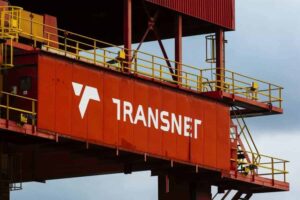
Transnet’s financial struggles and wage negotiations spark tensions with unions: Image Supplied
By Staff Writer: Transnet has tabled a new three-year wage offer in the midst of growing tensions with its two largest trade unions, the SA Transport and Allied Workers Union (Satawu) and the United National Transport Union (Untu). The state-owned rail and port operator’s proposal, which offers wage increases linked to the Consumer Price Index (CPI) plus 1%, has been met with strong opposition from the unions, who argue that it falls far short of their demands.
The company’s revised offer, presented on Wednesday, includes a 4.5% increase in the first year (CPI + 1%) and 5% increases in the second and third years (CPI + 0.5%). This increase would apply to salaries as well as benefits such as 13th cheque, pension contributions, medical aid subsidies, and housing allowances.
However, both unions are pushing for much higher raises and a freeze on retrenchments, with Satawu demanding a 17.5% increase over three years and Untu calling for a 12% hike in the first year alone, along with higher allowances and a guarantee of no job cuts.
Transnet’s proposal comes amid significant financial pressure for the company, which is grappling with a massive debt load of approximately R137 billion, much of which was accumulated during the era of state capture. The company is struggling with monthly debt payments exceeding R1 billion, making it difficult to meet the unions’ wage demands without jeopardizing its financial stability.
The company has defended its offer, arguing that it is reasonable given its current financial and operational challenges. Transnet stresses that a three-year wage agreement would provide the stability necessary to help the company improve its operational performance, reduce debt, and position itself for future growth. The company has stated that a failure to reach a wage agreement could derail its recovery efforts, particularly since labor costs make up two-thirds of its operating expenses.
The unions, however, are not backing down. Untu has pointed out the inconsistency in Transnet’s approach, noting that the company rejected CPI-linked increases in 2022 when inflation was at 7.8%, but is now willing to accept the same formula with inflation at a much lower 3.2%. The unions argue that workers deserve a greater share of the profits, especially given the rising cost of living.
Negotiations are ongoing, and while Transnet has emphasized the importance of a swift resolution to focus on its strategic priorities, Satawu has already threatened strike action if a deal is not reached. The unions have made it clear that they are determined to secure better pay and job security for their members.
With Transnet’s workforce having shrunk significantly from a peak of 67,000 employees in 2015 to about 50,000 today, the stakes are high. The company is targeting a return to profitability in 2025, driven by improved rail volumes and reduced debt. However, given that rail volumes are still down by a third compared to 2018 levels, Transnet faces a tough road ahead.
In addition to negotiating with unions, Transnet has also been in talks with the government, requesting a R100 billion bailout and asking for the government to assume R61 billion of its debt. These requests, however, are likely to face resistance as the government struggles to balance its budget amid competing priorities.