
Subtotal R0,00

News/11 May 2026, 11:39am/ Linda Mgomezulu

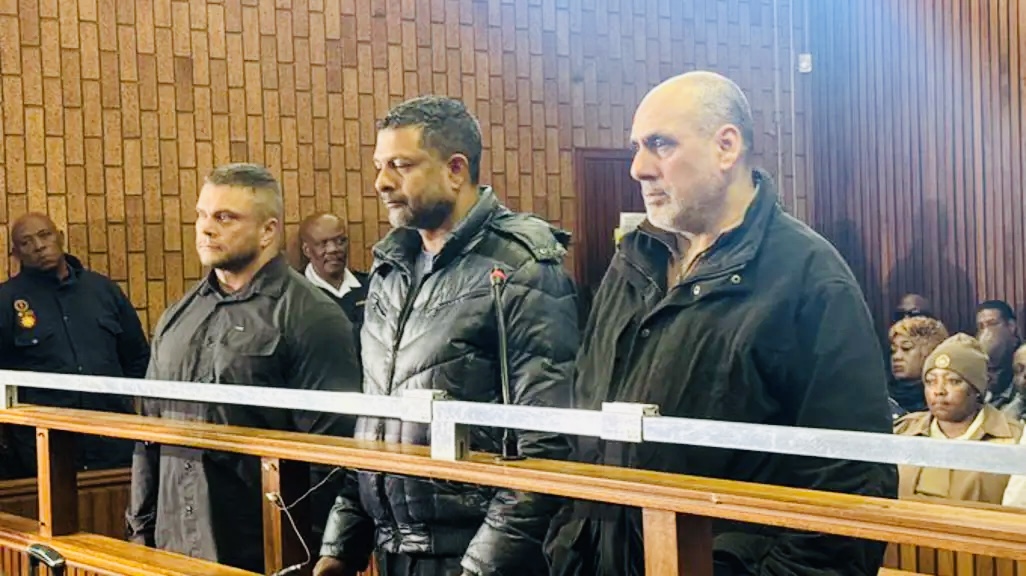
From left to right: Tariq Downes, Feroz Khan and Ebrahim Kadwa: Image Supplied
By Linda Mgomezulu: South Africa’s fight against corruption has been thrust into the spotlight once again after two senior SAPS major-generals, Feroz Khan and Gauteng Hawks head Ebrahim Kadwa, were granted bail alongside businessman Tariq Downes in a case that has rattled confidence in the country’s law enforcement leadership.
The three men appeared briefly in the Kempton Park Magistrate’s Court on Monday after being arrested over the weekend in connection with alleged illegal dealings in precious metals.
Their arrests, carried out by the Political Killings Task Team, mark a stunning development in a matter that now places senior police leadership at the centre of allegations involving both unlawful possession of precious metals and the obstruction of justice.
Khan, Kadwa and Downes each face two charges, including contravention of the Precious Metals Act and defeating the ends of justice. Despite the seriousness of the accusations, the State did not oppose bail, and each accused was released on R20,000 bail.
Their freedom, however, comes with strict conditions. They may not interfere with investigations or contact witnesses. They are also required to hand over their passports to the investigating officer on or before 12 May. In addition, the trio must inform the investigating officer within 72 hours should they wish to travel.
The case stems from a 2021 incident in which Downes was allegedly found in possession of an unwrought gold bar. According to investigators, he claimed at the time that he was an undercover agent. Khan and Kadwa were then allegedly contacted and are said to have confirmed that Downes was a police spy, resulting in his release.
But later police investigations painted a sharply different picture. Authorities allegedly found that Downes was not an informer at all and was never meant to be released.
Police spokesperson Athlenda Mathe said the allegations were deeply disturbing, especially because they involved senior officers entrusted with upholding the law.
“We then realise that at the time he was not an informer because for you to become an informer you must be registered with SAPS [South African Police Service] and you must have a handler.”
That statement has become central to the controversy, suggesting that the explanation used to secure Downes’ release may have had no lawful basis.
Khan’s arrest on Sunday followed a high-profile raid at his Houghton apartment, reportedly part of a wider operation aimed at dismantling an alleged illicit precious metals syndicate. The dramatic nature of the raid has only heightened public interest in the matter, with growing questions around whether criminal networks may have benefited from protection at senior levels.
Speaking outside court, Mathe acknowledged the damage such cases do to the image of the police service, but insisted the arrests demonstrate SAPS’ willingness to confront corruption within its own ranks.
“But it shows that as an organisation we are committed to integrity, transparency and rooting out wrongdoing and corruption within our ranks. We always maintain that no one is above the law.”
That message is likely to resonate strongly in a country where public trust in policing has repeatedly been tested by allegations of corruption, political interference and abuse of power.
While the accused have now secured bail, the legal battle is far from over. The case has been postponed to 14 July 2026 for further investigations.







