Subtotal R0,00


Politics/ 06 October 2025, 10:46am/Mathews Wilson
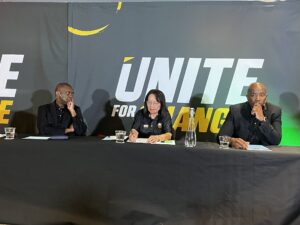 Rise Mzansi Leader Songezo Zibi, Good Party Leader Patricia de Lille and BOSA Leader Dr Mmusi Maimane: Image Supplied
By Mathews Wilson: In a move set to reshape the country’s political landscape, Build One South Africa (BOSA), the GOOD Party, and RISE Mzansi have joined forces under a single banner: Unite for Change. The ambitious initiative is aimed at transforming local governance ahead of the 2026 Local Government Elections, offering voters a fresh alternative to the status quo.
From Johannesburg’s bustling streets to the corridors of power, the announcement signals more than a merger. It marks a deliberate reimagining of how parties collaborate to tackle municipal challenges, with leaders insisting that this is not a coalition born of convenience but a coming together of equals who put South Africa first. “There is one name, one platform, and one purpose,” they proclaimed, unveiling a nationwide project designed to contest the 2026 municipal elections as a unified movement.
The new party intends to register with the Electoral Commission of South Africa (IEC) and has already opened its doors to like-minded political parties, civil society groups, and individuals who want to help shape a more capable, honest, and responsive local government. In the founding statement, Unite for Change stressed that “this is not a coalition of convenience” and stressed that a genuine consolidation had occurred, with leaders who have heard the nation’s call and are “putting South Africa first.”
At the helm of Unite for Change is a Leadership Council featuring prominent national figures who blend experience with a refreshed, community-centered ethos. The council includes Dr Mmusi Maimane MP, Patricia de Lille MP, Songezo Zibi MP, Nobuntu Hlazo-Webster MP, Vuyiswa Ramokgopa MPL, and Brett Herron MPP. Together, they form a leadership collective grounded in unity, accountability, and a shared vision for a just and functioning South Africa.
The party’s agenda centers on five urgent priorities designed to reshape local governance. Capable and ethical leadership stands at the core, followed by a focus on local economic recovery, dignity through basic services, safety and justice, and digitisation—using technology to drive smart governance and eliminate corruption. The platform emphasizes practical steps to restore trust in local institutions and to deliver tangible improvements in residents’ daily lives.
A cornerstone of Unite for Change is a merit-based candidate selection process. The party pledges to prioritise local leaders who are deeply embedded in their communities, ensuring that those who stand for election truly understand the unique needs of their municipalities. This locally rooted approach aims to foster trust and accountability, aligning leadership with the realities faced by residents every day.
To translate its lofty aims into real-world impact, Unite for Change plans a nationwide tour beginning in October. Town halls and community dialogues will form the backbone of this grassroots push, providing a space for residents to voice concerns, share ideas, and help shape a policy platform grounded in local experience. The tour also signals an intent to build a broad-based, participatory movement rather than a top-down political project.