Subtotal R0,00

News/ 17 October 2025,15:28pm/GoodWill Mathebula
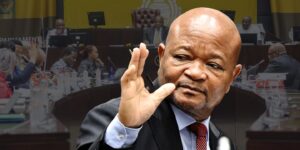 Suspended Police Minister Senzo Mchunu: Image Supplied
By GoodWill Mathebula: In a heated session before Parliament’s ad hoc committee probing allegations of police corruption, suspended Police Minister Senzo Mchunu faced interrogations that laid bare a web of tensions, whispers, and recorded conversations allegedly tying him to broader political meddling in the justice system. The committee has been scrutinizing claims that Mchunu is part of a political network seeking to influence critical policing and accountability.
The central drama revolves around cautions and purported threats surrounding the disbandment of the Political Killings Task Team (PKTT), a unit set up to probe politically sensitive crimes. At issue is whether Mchunu instructed his chief of staff, Cedrick Nkabinde, to record conversations with KwaZulu-Natal Police Commissioner Lieutenant General Nhlanhla Mkhwanazi after Mkhwanazi issued repeated requests for a meeting on high-stakes policing matters — a meeting that, investigators say, never materialized.
During questioning led by Evidence Leader Advocate Norman Arends, Mchunu offered a window into his decision-making process amid escalating tension. He described his initial reluctance to meet with Mkhwanazi privately, a reluctance he attributed to the threats and “inside” pressures that had begun to surface around the PKTT dispute.
“I wanted to meet General Mkhwanazi privately, but it just did not happen,” Mchunu told the committee.
A key element of the testimony concerned a WhatsApp voice recording that allegedly involved Nkabinde and Mkhwanazi, in which threats were said to have been exchanged. Mchunu acknowledged the existence of the recording but declined to detail its full content, noting that the audio did not reference the specific allegations he had raised.
Mchunu described a climate in which the rhetoric of retaliation could translate into real consequences for those involved in policing and oversight. He recounted that Nkabinde first flagged the presence of threats, prompting his own wariness about direct engagement with Mkhwanazi.
ALSO READ:
NPA Fires Back as CAT Matlala’s Bail Appeal Goes to High Court
“He kept on saying to me that it was a threat,” Mchunu said.
Explaining the broader context, Mchunu asserted that the remarks could be construed as weapons designed to deter lawful and constitutional actions. He said: “It was also a promise that somebody will go back and say, ‘What did I do wrong when I was MEC, Minister, or Premier?’ I have no problem with that — I have no problem with people wanting to check what I did wrong from day one. But in this context, it becomes a weapon to say, ‘Don’t do this,’ even if it’s correct, lawful, and constitutional. ‘Because I don’t like it, if you do it, I’ll go back and dig up what you did wrong.’ I don’t think people should take it for granted that anything I did was unlawful — it just isn’t.”
Pressed about whether Nkabinde routinely recorded conversations, Mchunu clarified that the threat of retaliation specifically prompted the recordings. He offered that, as tensions rose, the possibility of compromised discussions increased, and thus the decision to record was contemplated as a guard against missteps.
“At some point, as the tension heated up, I felt things were developing fast, and it looked like an inside threat. When the chief of staff mentioned this, I thought there might be a need to record,” he said. “I told him to consider recording the discussions because it sounded like a compromise — but if that compromise becomes a threat, it creates a difficult environment.”
The minister’s testimony, he insisted, must be understood against the backdrop of a broader dispute over the PKTT’s future. General Mkhwanazi has testified that the minister ordered the disbandment without what he described as adequate briefing and misjudged the unit’s significance. The PKTT’s remit, its investigative reach, and its potential to influence politically sensitive cases have been at the heart of a national conversation about policing, accountability, and the separation of powers.
Mchunu, who is currently on special leave as investigations unfold, maintained that his actions were lawful and within his mandate. He argued that the steps he took were justified given the circumstances and should not be construed as unlawful overreach.