
Subtotal R0,00

News/12 May 2026, 08:23am/Linda Mgomezulu
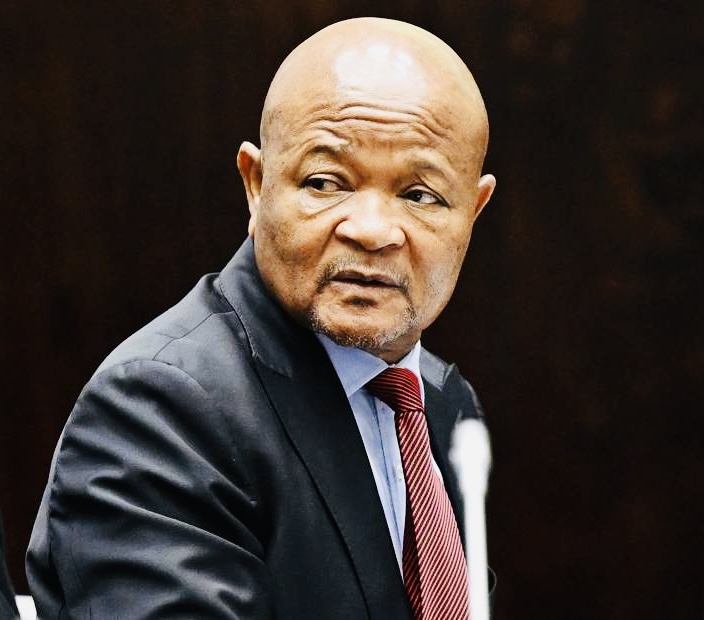
Senzo Mchunu: Image Supplied
By Linda Mgomezulu: What was meant to be a temporary administrative arrangement has evolved into a test of President Cyril Ramaphosa’s leadership, political judgment and appetite for accountability.
Nearly 10 months after Police Minister Senzo Mchunu was placed on special leave, the controversy is no longer centred only on his absence from office. It is now increasingly about the President, the pace of decision-making in the Union Buildings, and whether political calculations are prolonging a costly impasse.
Mchunu was removed from active duty in July 2025 following allegations of serious corruption and interference in police investigations. Since then, he has remained on full pay while Professor Firoz Cachalia has served as acting Minister of Police, reportedly also receiving a full ministerial salary. The result is what the DA has called a “double burden” on taxpayers, with the public purse carrying the cost of both the sidelined minister and his stand-in.
At stake is not only the approximately R2,69 million annual salary Mchunu continues to receive — about R224,166.67 per month, with a 3,8% increase from April 2026 — but the political message sent by allowing the arrangement to continue for almost a year.
The special leave was introduced to allow Mchunu to prepare for and testify before the Madlanga Commission of Inquiry, which is examining allegations of political interference in the South African Police Service, especially in relation to the disbandment of the Political Killings Task Team (PKTT). That task team had been investigating political killings, and its collapse has become one of the most explosive issues before the commission.
Mchunu’s troubles intensified after KwaZulu-Natal Police Commissioner Lieutenant-General Nhlanhla Mkhwanazi alleged in 2025 that criminal syndicates had infiltrated law enforcement agencies and linked Mchunu to the disbandment of the PKTT. Mkhwanazi also accused him of interfering in police operations and shielding people under investigation. Mchunu later appeared twice before the Madlanga Commission in early December 2025 to challenge those claims and defend himself.
But while the commission continues — with testimony expected to run until August — Ramaphosa has indicated that any final decision will follow the completion of the inquiry. That approach may be procedurally cautious, but critics say it is politically convenient.
Mchunu is not just another Cabinet minister. He has long been regarded as one of Ramaphosa’s most valuable allies inside the ANC. He was highly instrumental in helping Ramaphosa secure support during the ANC’s 2017 elective conference, using his influence to rally branches against the Jacob Zuma-backed faction. In KwaZulu-Natal, where Ramaphosa has historically struggled to command strong personal backing, Mchunu has served as a trusted organiser, loyalist and political anchor.
This history has fuelled the suspicion that the delay is about more than due process.
Political analyst Professor Andre Duvenhage said it was difficult to justify paying a double minister’s salary.
“He is a strategic weapon for the survival of Ramaphosa. Ramaphosa will keep him there as long as possible,” he said, adding that this has become a burden for the ANC.
That assessment shifts the spotlight firmly onto Ramaphosa: is he waiting for the commission, or shielding an ally until it becomes politically unavoidable to act?
Even Mchunu’s own posture has added to the complexity. After the allegations surfaced, he offered to step aside from ANC party duties. Yet in March he announced he was ready to return to the ANC’s National Executive Committee work, saying his preparations for the commission had progressed sufficiently — even as he remained on leave from his Cabinet position.
Outside government, frustration is mounting.
The Organisation Undoing Tax Abuse (OUTA) has argued that although special leave is not the same as dismissal or suspension without benefits, “politics is getting in the way of this matter”.
“It is a concern that we have people on long-term suspensions throughout the government as it is. We have this far too often in various departments, just as we have it with the Presidency. This indicates an inability to hold people to account, to follow due process, and to address these issues promptly. Obviously, it is a little different when it comes to cabinet members, but in this case, with Mchunu, we believe the President is taking far too long,” said OUTA CEO Wayne Duvenhage.
Opposition parties have been sharper still. The EFF condemned the arrangement as a “flagrant abuse of state resources” and an “indefinite paid holiday”, while the DA says taxpayers are effectively financing two ministers for one portfolio.







