Subtotal R0,00

News/ 30 October 2025, 10:27am/ Ayanda Shezi
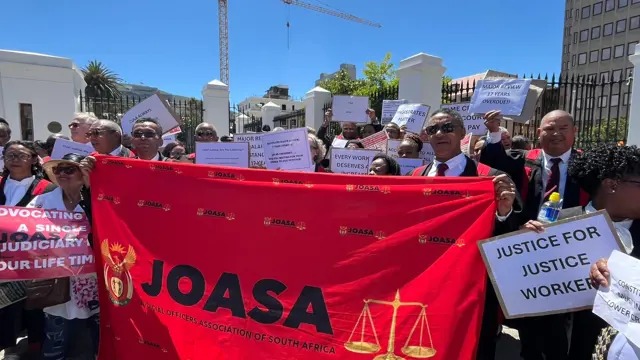
Magistrates Rally for Fair Pay, Citing 17-Year Delay in Salary Adjustments. Image Supplied
By Ayanda Shezi: South Africa’s magistrates have intensified their calls for President Cyril Ramaphosa to expedite the long-overdue review of their salaries and benefits, arguing that the current system unfairly disadvantages them compared to their counterparts in the higher courts.
On Wednesday, dozens of magistrates gathered outside Parliament in Cape Town, holding placards and voicing frustration over what they described as a 17-year delay in salary adjustments. The demonstration, organized by the Judicial Officers Association of South Africa (JOASA), aimed to draw attention to what they say is a persistent disparity between magistrates and judges — despite both groups possessing similar qualifications, experience, and legal responsibilities.
According to JOASA, the power to adjust judicial officers’ salaries lies solely with the President and the Independent Remuneration Commission, both of whom the magistrates accuse of failing to act for nearly two decades. The association said repeated attempts to engage the relevant authorities have yielded little progress, forcing magistrates to take their grievances to the public.
Magistrates are demanding not only fair pay but also equal benefits and improved working conditions. They are asking for benefits like those enjoyed by judges — including lifelong salaries, comprehensive state-funded medical aid, and enhanced personal security measures. Many say that without these, they continue to shoulder heavy workloads under increasingly difficult conditions.
Magistrate Denni Leppan, who participated in the protest, described the situation as “unsustainable” and said that many magistrates feel overworked and undervalued. “We do not have judges’ assistants or registrars to help us research or write our cases. Now, nationally, our computers are down, and we work on our private computers to draft our judgments. We often work after hours,” she said.
Leppan’s remarks highlight the growing frustration among magistrates who feel neglected by the state despite their critical role in the judicial system. Unlike judges, magistrates typically handle higher caseloads in lower courts, dealing with both criminal and civil matters that directly impact the daily lives of ordinary South Africans. Yet, they say their working conditions and compensation have not improved to reflect their responsibilities.
The magistrates’ protest also focused on the chronic shortage of staff and unfilled vacancies within the magistracy. Many courts across the country are reportedly operating with limited personnel, forcing sitting magistrates to take on additional duties, which they argue compromises the quality and efficiency of justice delivery.
JOASA representatives say the lack of progress in resolving these issues undermines morale within the judiciary and may discourage young legal professionals from joining the magistracy. “We are expected to uphold justice, yet the system does not treat us justly,” one protester remarked during the demonstration.
The association has repeatedly called for the establishment of a single judiciary, a unified system that would place judges and magistrates on an equal footing. This proposal has gained traction over the years, with supporters arguing that it would eliminate pay gaps and ensure consistency in working conditions across all levels of the judicial system.
Currently, South Africa’s judiciary is structured in a way that creates distinct hierarchies — with magistrates positioned below judges. Magistrates argue that this system is outdated and fails to recognize their professional expertise and the critical role they play in maintaining the rule of law.
According to JOASA, aligning magistrates’ salaries and benefits with those of judges would not only correct a long-standing injustice but also strengthen the judiciary. The association maintains that adequate remuneration is key to safeguarding judicial independence, preventing corruption, and ensuring that those tasked with administering justice can do so without financial strain or external pressure.
The protest outside Parliament drew attention from several civil society groups and members of the legal community, who expressed support for the magistrates’ cause. Some observers noted that the demonstration underscored broader issues of inequality within South Africa’s public service — particularly in sectors where critical workers, such as teachers, healthcare professionals, and now magistrates, have long complained about stagnant salaries and deteriorating working conditions.
In response to the growing pressure, government officials are expected to meet with JOASA representatives in the coming weeks to discuss the status of the salary review process. While the President’s office has not yet issued a formal statement on the matter, magistrates say they are determined to continue advocating until concrete action is taken.