
Subtotal R0,00

Mpumalanga / 27 January 2026, 04:20am/ Mpho Mokoena
By Mpho Mokoena: Residents living downstream of the Senteeko Dam have been told to leave immediately after officials declared the structure dangerously unstable in the wake of severe weather and flooding.
The Department of Water and Sanitation (DWS), working with the City of Mbombela, issued an urgent evacuation notice following a high-level inspection that raised fears of a sudden, catastrophic release of water.
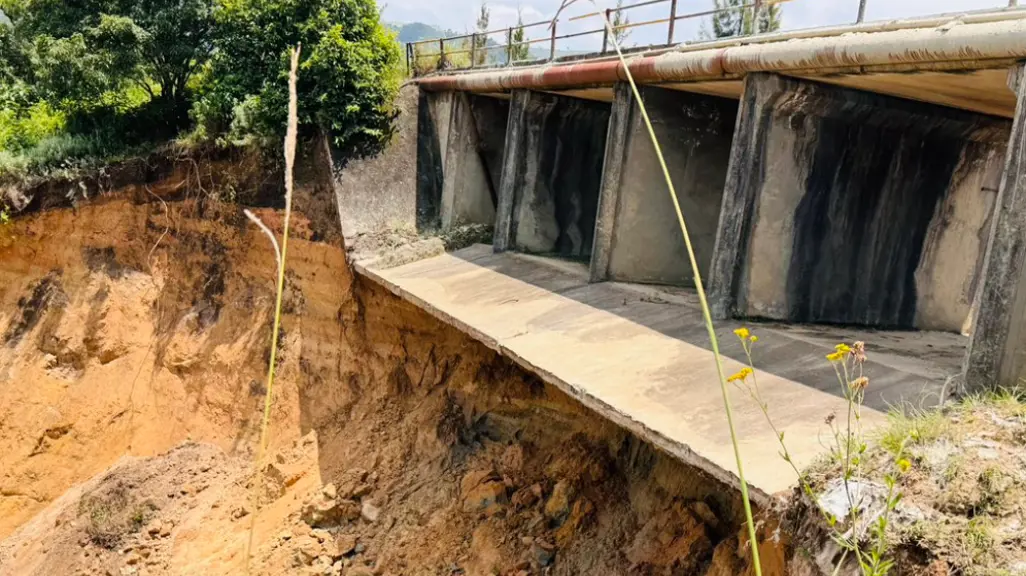
According to the department’s Wally Ramokopa, a key component of the dam’s safety system has been badly hit. The spillway slab, he said, has suffered extensive damage, and recent floods have pushed it closer to failure, leaving downstream communities exposed to what authorities describe as an extreme risk.
The dam—officially registered as My Own Dam but widely known as Senteeko Dam—lies in the Die Kaap River catchment near Barberton. It is owned by the Shamile Communal Property Association (CPA) and is used primarily for irrigation.
DWS describes it as a medium-sized dam, 26 metres high and capable of holding about 1.8 million cubic metres of water. But an emergency safety assessment by the department’s Dam Safety Office, detailed in a statement issued on Friday, concluded that conditions have worsened to a critical point.
“The dam’s spillway structure has suffered severe and irreversible deterioration, including advanced erosion and undercutting, leading to structural instability,” the department said. It warned that “failure of the dam is imminent and may occur without further warning.”
Officials say an uncontrolled release is now a real possibility—one that would create an immediate threat to downstream communities, infrastructure and the environment. For that reason, all people living or working downstream have been instructed to evacuate flood-prone areas without delay.
The department added that public access to the dam site is strictly prohibited and that emergency interventions are already under way.
The City of Mbombela has echoed the alarm, describing the situation as volatile and under constant scrutiny as engineers monitor the dam wall. In an interview, municipal spokesperson Joseph Ngala said the latest findings show the risk remains elevated.
“The latest assessment of the dam wall is that it is continuing to slowly but surely crack a bit, so the risk is still a bit high,” said Ngala
Engineers were deployed after reports of structural problems—particularly following heavy rainfall in the area—but officials soon concluded that the impact of a failure could extend far beyond the immediate vicinity of the dam.
“Had it broken its walls, it would have affected the tributaries that go down to a number of rivers and subsequently to the Crocodile River that goes as far as Mozambique,” he said.
While landowners closest to the dam moved quickly to get people out of the direct danger zone, the municipality expanded its alert system to ensure communities further downstream were warned.
“Along that valley, there are quite several communities that had to be alerted to the fact that there would be an added amount of water as a result of the dam collapse,” Ngala said.
Ngala also weighed in on who carries responsibility in situations involving high-risk water infrastructure.
“The principal owner of any water resource is the National Department of Water and Sanitation,” he said.
He said the department acted promptly once the danger became clear, dispatching engineers to assess the threat. However, he stressed that the Senteeko Dam is privately owned, with primary responsibility resting with the CPA, along with “adjacent landowners and companies that benefit from the dam.”
According to Ngala, cooperation from those linked to the dam has been solid.
“As we speak, they’re actually on site. Their teams are monitoring the situation,” he said.
But beyond the immediate crisis, the repair bill and the long-term future of the dam are expected to be daunting.
“The initial assessment runs into millions,” Ngala said, adding that the CPA intends to approach government for funding once the danger has passed.
He also cautioned that if the dam does fail, assigning liability could become complicated.
“The dam owner is obviously aware of those obligations, but I guess even the adjacent landowners who are beneficiaries of the dam being there would obviously have to bear some cost towards that eventuality.”







