
Subtotal R0,00

Free State/24 September 2026, 06:20am /Mpho Mokoena
By Mpho Mokoena: Parliament’s public accounts watchdog is pushing for tougher scrutiny of struggling municipalities after finding that weak leadership, collapsing infrastructure and a culture of impunity are leaving communities without reliable basic services.
Parliament’s Standing Committee on Public Accounts (Scopa) is sharpening its focus on local government, warning that financial failures and the absence of consequences for wrongdoing are undermining service delivery in municipalities across the country.
The committee wants to intensify oversight of municipalities and broaden scrutiny to include provincial governments and municipal public accounts committees — institutions that are meant to hold councils and officials accountable.
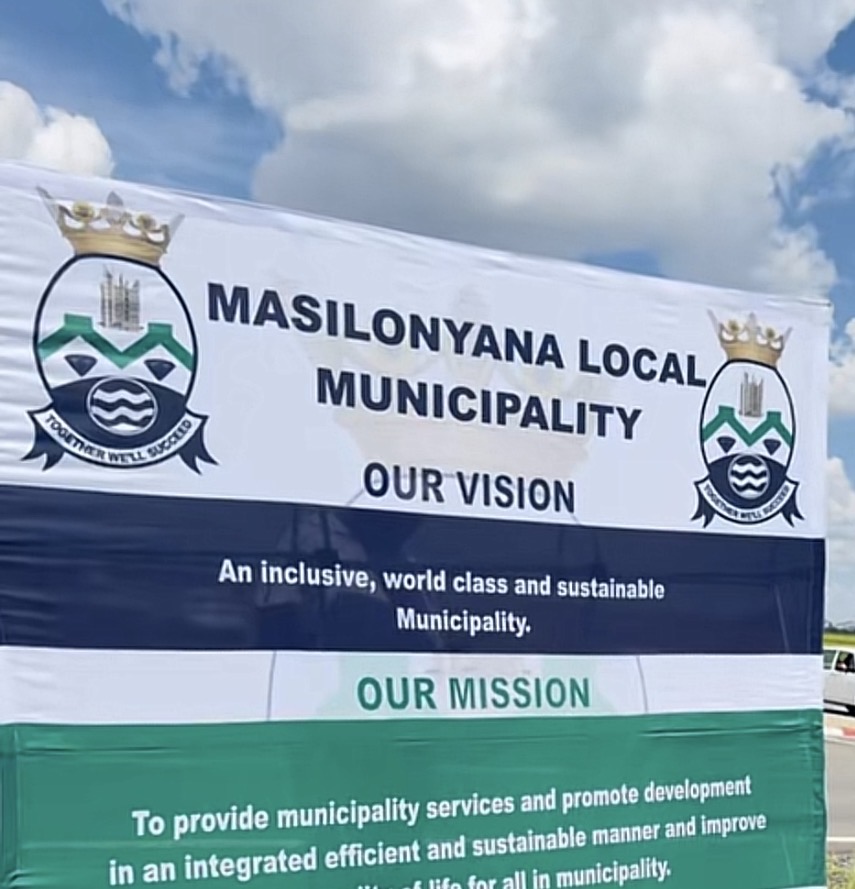
Its latest intervention follows oversight visits to Msunduzi Local Municipality in KwaZulu-Natal and Masilonyana Local Municipality in the Free State, where MPs found deep-rooted operational, financial and governance failures.
Both municipalities are struggling with poor revenue collection, escalating debts and non-compliance with supply chain management rules. The failures have contributed to growing levels of unauthorised, irregular, fruitless and wasteful expenditure, while residents continue to experience deteriorating water, sanitation, electricity and refuse-removal services.
“Operational delivery is heavily crippled by crumbling, poorly maintained infrastructure, leading to utility distribution losses in both water and electricity,” reads the committee’s report drafted after the oversight visits.
The findings expose a familiar pattern: leadership vacancies remain unfilled, employees do not always meet minimum qualification requirements, and disciplinary processes drag on for years — often with no final action taken against those implicated in wrongdoing.
At Msunduzi, the committee acknowledged an improvement in the municipality’s audit outcome for the 2024/25 financial year. But MPs said the improved audit opinion did not erase serious shortcomings in financial management, compliance, performance reporting and infrastructure delivery.
The Auditor-General of South Africa had earlier told Scopa that Msunduzi spent 88% of its 2024/25 budget but achieved just 57.9% of its basic service-delivery targets.
The figures paint a troubling picture. Only 7% of mainline water bursts were repaired against a target of 60%, while just 10.9% of sewer blockages were resolved against the same 60% target. A planned reservoir was not constructed during the financial year, with the contractor only handed the site in June 2025.
Grass-cutting services reached 17 of the 30 targeted wards, while refuse removal was provided to 4 765 of the planned 5 100 households.
“In addition, the municipality had also targeted to construct one reservoir during the financial year under review, and this has not been met, as the contractor was only handed the site in June 2025. Grass-cutting services were provided to only 17 of the targeted 30 wards, while refuse removal services were provided to only 4 765 out of 5 100 households.
“The municipality reported that these targets were not met due to operational constraints, including widespread vehicle and machinery breakdowns combined with staff shortages and vacant positions,” reads the report.
Msunduzi’s financial pressures have been compounded by a steep rise in fruitless and wasteful expenditure. The municipality recorded R114.060 million in such expenditure in 2024/25 — a dramatic increase from R25 million in the previous financial year.
Interest charged on late payments, mainly to Eskom and Umngeni Water, accounted for R87.017 million. The other contributors included R6.026 million in overpayments to senior officials, R1.187 million in overpayments to other employees, and R10.350 million paid to former Premier Soccer League club Royal AM.
During the same period, Msunduzi Council wrote off R126.088 million as irrecoverable.
Scopa raised particular concern about disciplinary cases that are not concluded timeously. MPs heard that some employees remain on paid suspension for prolonged periods, while others resign or retire before hearings can be finalised — leaving alleged wrongdoing effectively unpunished.
The municipality told the committee it sometimes moves suspended officials to other units while investigations continue, in an attempt to avoid the costs associated with suspensions lasting longer than six months.
But even this approach has been complicated by intimidation. Scopa heard that investigators, evidence leaders and presiding officers had received death threats, forcing the municipality to seek external investigators and South African Local Government Association panels to conduct disciplinary proceedings.
Masilonyana, meanwhile, remains trapped in a cycle of dysfunction that Scopa says has changed little since Parliament last visited the Free State municipality in August 2022.
The municipality was placed under administration in February because of governance failures, financial distress and an inability to meet its statutory service-delivery responsibilities.
Scopa’s assessment was blunt: Masilonyana is “characterised by severe administrative dysfunction, poor record-keeping, and financial instability”.
MPs said the same concerns raised during their May visit were largely identical to those identified by the previous committee nearly four years earlier.
“The committee found serious weaknesses in governance, financial management, service delivery, record-keeping, project management, revenue collection, supply chain management, and consequence management,” it said.
For Scopa, the two municipalities have become examples of why oversight cannot end with audit reports, recovery plans or promises of reform.
The committee is now pressing for stronger intervention by provincial authorities, functional local public accounts committees and faster disciplinary action — measures it believes are essential if public money is to translate into the basic services residents have long been promised.







