Subtotal R0,00

National News/ 22 October 2024, 11:30am/ Lijeng Moruthane
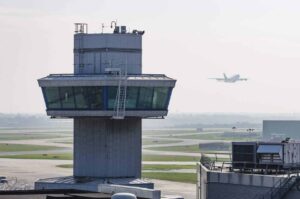
By Lijeng Moruthane: An ongoing investigation has revealed significant safety threats in South Africa’s airspace, stemming from issues such as understaffing, air traffic controller fatigue, unmaintained equipment, and various operational challenges.
Air traffic control operations in the country are facing critical problems that could endanger flight safety. Current and former air traffic controllers from Air Traffic and Navigation Services (ATNS) report that the organization is severely understaffed.
For instance, shifts that should have six controllers are often covered by only two or three, leading to significant staff turnover. “The tower just lost four people last month. The pool is sitting with less than 50% of its required complement,” noted one source.
South African air traffic controllers are highly sought after globally, with recruiters from Australia actively seeking them and many moving to a booming Middle Eastern market. “Salaries are often almost double elsewhere,” a controller commented. “We have not had an increase since pre-Covid.”
The shortage of personnel has forced a consolidation of airspace sectors, significantly raising the workload for each controller. This increased workload can lead to fatigue, which heightens the risk of missed clearances, improper separation between aircraft, and frequent go-arounds due to missed or untimely instructions.
“There are aircraft not being cleared properly for approach and not being handed over. That’s where the safety issue lies,” another controller explained.
Typically, a second controller is present to monitor the primary controller’s actions and catch any errors, but due to staffing shortages, this essential “second pair of eyes” is often absent.
“We are a top-heavy organisation,” one controller said. “Seventy percent of ATNS comprises administration staff who can earn much more than operational staff, yet we are responsible for the safety of millions of people.”
ATNS spokesperson Mphilo Dlamini declined to answer specific inquiries but stated that the organization has made significant progress since launching an intensive instrument flight procedure maintenance program in July.
“While we acknowledge that this programme has had a substantial impact on our operations and those of airspace users, we have, consistently, been providing regular progress updates to keep all stakeholders informed,” he said.
Dlamini added that the maintenance program has been “successfully fast-tracked” and is essential for ensuring safety in South Africa’s airspace, complying with international standards.
In the face of these challenges, controllers have had to rely on manual vectoring to manage air traffic, directing aircraft through specific headings due to outdated or poorly maintained equipment that hinders the use of automated flight paths.
This increased reliance on manual control results in more frequent communication with pilots rather than using automated systems. “Sometimes after takeoff, an aircraft has to level off first to give extra time to hand over between controllers,” one source mentioned.
Additionally, ATNS has had to shut down several airports due to outdated procedures, forcing aircraft at other locations to go around or take longer routes, which are attributed to poor procedural management. An employee claimed that ATNS’s operational inefficiencies lead to increased fuel consumption, impacting airline costs.
During South Africa’s thunderstorm season, the situation becomes particularly challenging. “If you ask a pilot, more often than not during thunderstorm season, they are already low on fuel and could become fuel critical,” a source noted. “Now, you’ve got to manually manage them, and they go around because of basic mistakes, because you’re understaffed… it’s a safety risk.”
There have also been instances where aircraft disappear from radar or experience system freezes lasting up to 30 seconds. While these occurrences are rare, they pose significant dangers when managing fast-moving, high-altitude traffic.
“It all boils down to lacklustre maintenance,” one staff member said. Communication issues also arise, as not all radio equipment functions reliably. “When you cannot talk to a pilot during flight, it becomes dangerous,” another controller emphasized.
Compounding these problems are allegations of stolen radio equipment and navigation beacons, often targeted for their copper components, further complicating air traffic management.