
Subtotal R0,00

KwaZulu-Natal /30 January 2026,05:15am/ Linda Mgomezulu
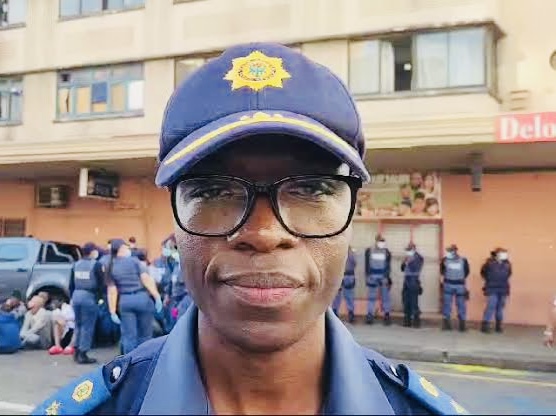
KwaZulu-Natal police spokesperson Colonel Robert Netshiunda: Image Supplied
By Linda Mgomezulu: A heated confrontation outside a Durban police station has erupted into a national flashpoint after a video went viral showing a woman directing what the South African Police Service (SAPS) has labelled “discriminatory and offensive remarks” at KwaZulu-Natal police spokesperson Colonel Robert Netshiunda.
The incident unfolded during a protest on 28 January 2026, where demonstrators had gathered in support of March and March leader Jacinta Ngobese-Zuma, who handed herself over to police after she was allegedly wanted for inciting violence.
In the now widely shared recording, the woman is seen confronting Netshiunda and accusing him of failing to communicate with her in isiZulu—before referring to him as a “kwerekwere”, a slur widely understood as a derogatory label for someone perceived to be a foreigner.
According to the exchange captured on camera, the woman alleges she has been struggling to get help in a case involving her child, claiming an investigator linked to the matter had previously approached her. As tensions rise, she repeatedly challenges whether Netshiunda can hear or understand her when she speaks isiZulu, asking whether he needs a translator.
The confrontation escalates further when she tells him he is “in the wrong place” if he cannot speak isiZulu, then demands that he return to where he came from and allow Zulu-speaking people to do his job.
Throughout the encounter, Netshiunda responds calmly—speaking in English—despite the verbal barrage. The footage has since ignited fierce debate online, drawing both public condemnation and pointed discussion about language, identity, and belonging in South Africa.
SAPS, however, has come down decisively on the matter.
In a statement, the police service said it “condemns in the strongest possible terms the discrimination and offensive remarks directed at one of its dedicated, hardworking and highly qualified spokespersons, who executes his duties with diligence and professionalism”.
National SAPS spokesperson Brigadier Athlenda Mathe said the service noted with concern the “derogatory and tribalistic slurs” captured in the video. She confirmed that Netshiunda was born and raised in Limpopo—one of South Africa’s nine provinces—and that his home language is Tshivenda, one of the country’s 12 official languages.
“His presence in KwaZulu-Natal reflects the diversity and unity that define the SAPS,” Mathe said.
She warned that discrimination rooted in culture, language, or race is not only unacceptable, but directly clashes with the foundations of South Africa’s constitutional democracy. “The province of KwaZulu-Natal is home not only to isiZulu-speaking communities but to people from diverse racial, cultural and linguistic backgrounds,” she said.
Mathe added that SAPS promotes integration and inclusivity within its ranks and across communities, stressing that diversity strengthens operational effectiveness.
The backlash did not stop with SAPS.
The Pan South African Language Board (PanSALB) also weighed in, condemning the woman’s conduct and saying her behaviour amounted to discrimination based on language. While acknowledging that people may feel frustrated when they are not assisted in their preferred language, the board said frustration is never a justification for discriminatory attacks.
“Section 9 of the Constitution of the Republic of South Africa prohibits unfair discrimination by the state or any person on grounds of language, among others,” the board said.
PanSALB further cautioned that using derogatory language against an officer is unacceptable and may cross into criminal territory. “This behaviour violates constitutional principles and undermines the dignity of a public servant who responded calmly and professionally despite provocation,” PanSALB said.
The board also urged citizens to protect South Africa’s multilingual democracy, pointing to constitutional safeguards. It called on the public to uphold the values of multilingualism in Section 6 of the Constitution, which promotes equal treatment and parity of esteem for all official languages.
“We must actively challenge and dismantle lingering attitudes rooted in colonial and apartheid-era divisions that pit language communities against one another,” it said.
Mathe echoed that call, warning that public hostility toward officers based on language or identity harms social cohesion and the ability of police to serve communities safely and fairly.
“It is both unfair and disappointing for any member of the public to display such behaviour towards a police officer who is highly qualified and dedicated to serving and protecting all who live in this country,” she said.
She urged South Africans to promote tolerance across cultural and linguistic lines, adding: “Our police stations are staffed by members from a wide range of cultural and ethnic backgrounds, reflecting the rich diversity of South Africa.”
In the midst of the controversy, Mathe also highlighted Netshiunda’s achievements, congratulating him on being named Administration Officer of the Year at the recent KwaZulu-Natal Provincial Commissioner’s Excellence Awards—a note, SAPS supporters say, that underscores his professional standing amid the online storm.







