Subtotal R0,00

North West/ 28 November 2024, 15:00pm/ Lijeng Moruthane
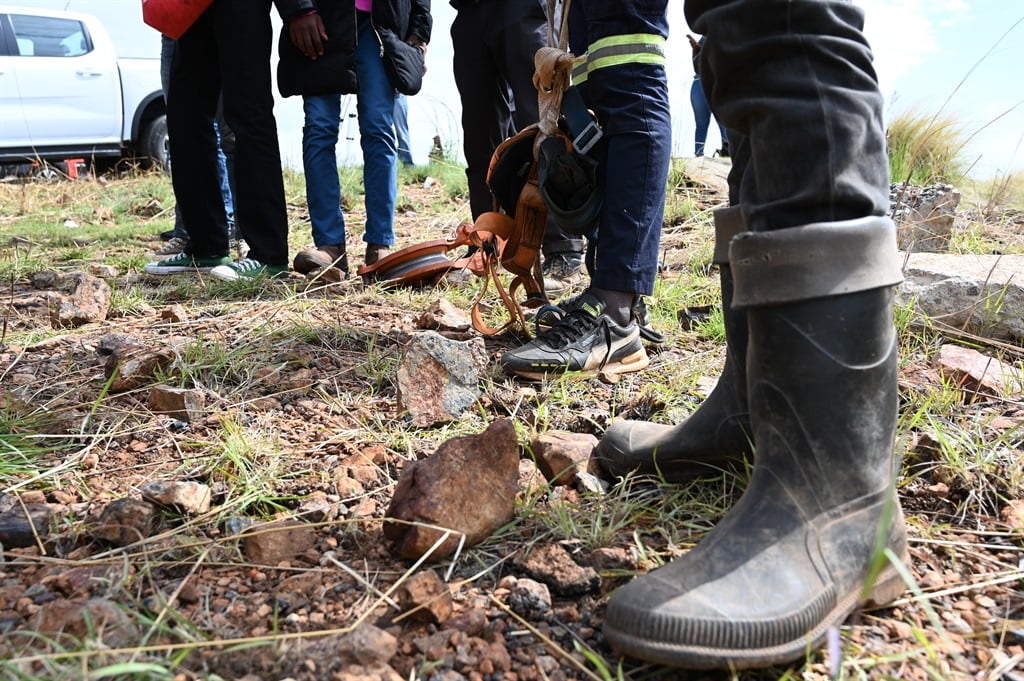
Some volunteers wearing safety boots, while others in casual clothes went inside the abandoned mine to rescue trapped illegal miners: Image Supplied
By Lijeng Moruthane: The South African Police Service (SAPS) has allegedly been aware for years of the sophisticated operations of zama zamas, yet the ongoing crisis in Stilfontein appears to expose the devastating human toll of what some are calling their prolonged inaction.
Recent developments show the crisis now involves vulnerable populations, with the North West provincial Department of Social Development confirming the arrest and detention of 96 undocumented children as part of the illegal mining operation.
The children, suspected to be from Mozambique, Namibia, Zimbabwe, and Lesotho, were arrested during a crackdown on the zama zamas, who have turned disused mines into heavily fortified underground strongholds.
An anonymous source revealed that published photographs highlight that SAPS has known about the operational complexity of zama zamas for years, including their use of improvised explosive devices (IEDs) and military-grade weaponry.
However, despite this intelligence, law enforcement remains poorly equipped to tackle the growing crisis. The Stilfontein crisis is said to not be a sudden escalation but a result of years of ignored intelligence.
“Photos from as early as 2006 show that SAPS had gathered detailed information about the zama zamas’ operations, including their ability to circumvent mining companies’ attempts to seal off disused shafts. Experts have criticized SAPS for failing to evolve its strategies despite these warnings.”
“The SAPS has had the tools and intelligence to deal with this crisis for years,” said Willem Els, an intelligence expert at the Institute for Security Studies (ISS). “But a reactive, rather than proactive, approach has allowed the situation to spiral out of control, putting lives at risk.”
Amid the crackdown, the Department of Social Development has stepped in to ensure the welfare of the 96 undocumented children arrested during the Stilfontein operation. Many of these children, believed to be victims of trafficking or exploitation, are now in the department’s care.
“Based on the outcomes of court proceedings, we seek to place all identified and legally declared undocumented children in accommodation and provide for their basic needs while they are processed under the Child Justice Act,” said Bathembu Futshane, spokesperson for the department.
Futshane emphasized that the department is working with the embassies of Zimbabwe and Mozambique to facilitate the repatriation process. In the meantime, health services and cultural mediation are being provided to address language barriers and ensure the children’s rights are upheld.
The plight of these children highlights the broader scope of the crisis, experts say zama zamas are no longer just small-scale illegal miners but key players in a R47 billion-per-year international dirty gold trade.
Their use of military-grade weapons and IEDs, combined with their ability to evade law enforcement, has transformed illegal mining into a form of asymmetrical warfare.
Critics have slammed the SAPS for its inflexible response, which has only exacerbated the crisis. Despite possessing technology like teleoperated robots and advanced surveillance systems, police have relied on traditional, confrontational methods that have put both officers and vulnerable populations at risk.
The Stilfontein crisis has exposed severe flaws in South Africa’s law enforcement and legislative frameworks. Current laws only allow for minor charges like trespassing unless illegal miners are caught with gold-bearing material. This loophole, experts argue, undermines efforts to combat organized crime.
Furthermore, SAPS’s handling of the crisis has drawn criticism from the highest levels, with President Cyril Ramaphosa reportedly admonishing police and Minister-in-the-Presidency Khumbudzo Ntshavheni for their rigid approach.
The Department of Social Development has pledged to support the undocumented children throughout the legal and repatriation process. “We will continue to provide the necessary care and protection until the process is concluded,” said Futshane.
The department’s response has been praised as a crucial step in addressing the humanitarian side of the crisis.