
Subtotal R0,00

Free State/19 May 2026, 08:30am/ GoodWill Mathebula
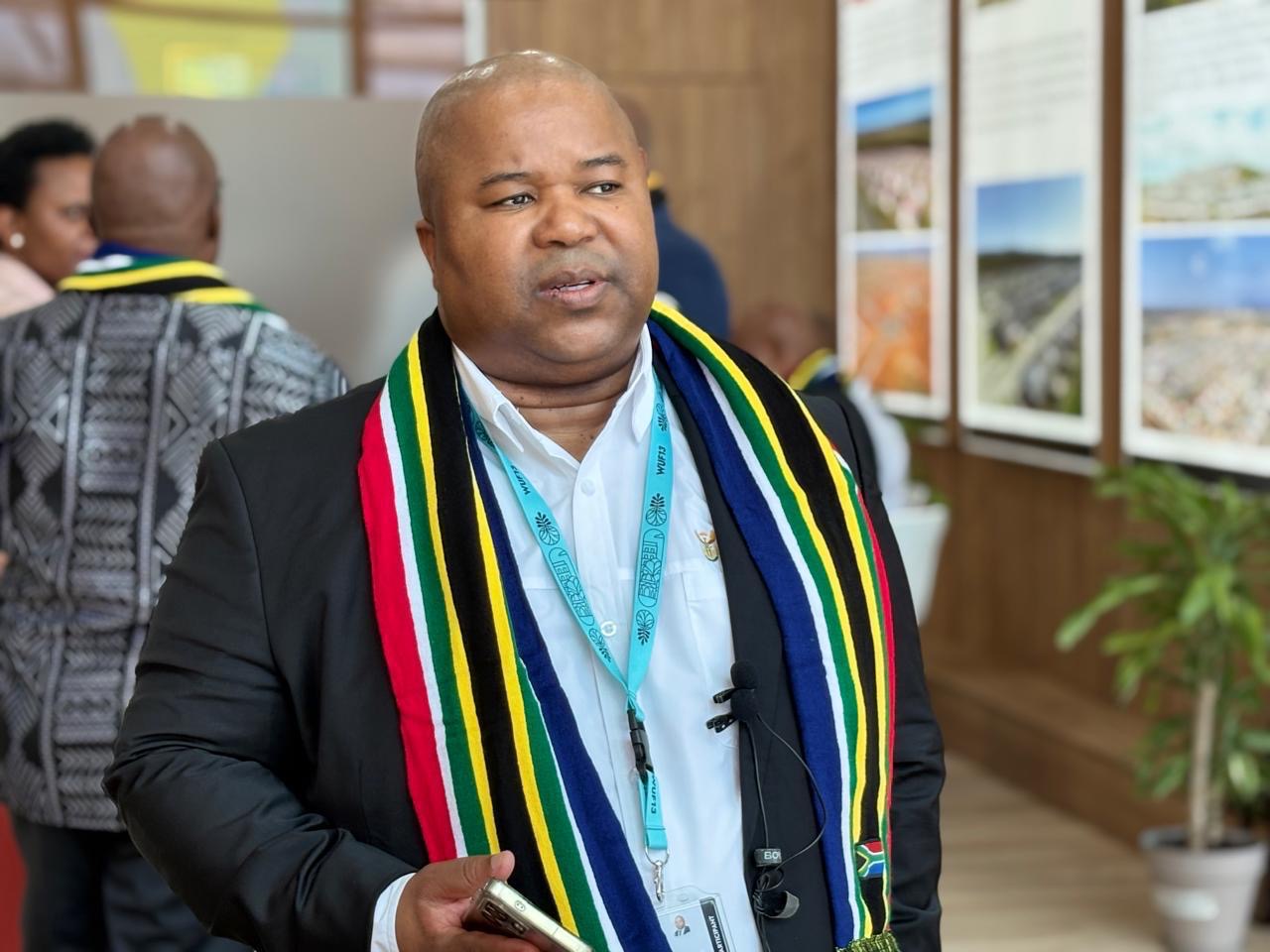
Saki Mokoena: Image Supplied
By GoodWill Mathebula: The global spotlight has turned to the Republic of Azerbaijan, where the Thirteenth Session of the World Urban Forum (WUF13) is underway from 17 to 22 May 2026 at the Olympic Stadium under the banner, “Housing the World: Safe and Resilient Cities and Communities.”
As the world grapples with deepening housing shortages, rapid urbanisation and mounting pressure on public infrastructure, WUF13 has emerged as a critical platform for governments, planners, academics, business leaders and civil society to confront one of the defining issues of our time: how to build cities that are not only bigger, but safer, fairer and more resilient.
Convened by UN-Habitat, the World Urban Forum is regarded as the leading global conference on sustainable urbanisation. This year’s gathering is expected to shape international thinking on housing, human settlements and the future of cities at a time when millions across the globe continue to live without secure, adequate shelter.
South Africa is among the countries participating in the high-level discussions, with the national delegation led by Minister of Human Settlements Thembi Simelane.
Also forming part of Team South Africa is the Free State MEC for Cooperative Governance, Traditional Affairs and Human Settlements, Saki Mokoena, who is expected to amplify the province’s housing realities while engaging international partners on practical solutions.
At the heart of the forum is a shared recognition that housing is more than a roof over one’s head — it is the bedrock of dignity, safety, inclusion and opportunity. For South Africa, the stakes are especially high.
The country will use the platform to contribute to global policy debates and share its experience in housing delivery and urban development policy implementation.
It will also advocate for the transformation of informal settlements, promote the use of Innovative Building Technologies (IBTs) to speed up delivery, and showcase its progress in localising and implementing the New Urban Agenda.
For Mokoena, the forum comes at a crucial moment.
In his recent Budget Vote Speech, the MEC painted a sobering picture of the pressures facing the province, noting that informal settlements remain one of its greatest challenges, now home to more than 84,000 households.
He warned that rapid urbanisation — driven by movement from farming communities, migration from neighbouring provinces and the rise of younger families forming independent households — continues to intensify demand for housing and strain urban infrastructure.
“Informal settlements are not just a housing issue; they are a human dignity issue,” said Mokoena. “When thousands of families live without reliable access to water, sanitation, electricity and proper roads, we are confronted with the urgent need for bold, practical and inclusive solutions.”
He said the province hopes to draw valuable lessons from the global forum that can be adapted locally.
“WUF13 gives us an opportunity to listen, to learn and to share,” Mokoena said. “We are engaging with cities and governments from across the world because the pressures of urbanisation are not unique to us. But the solutions must be grounded in the lived realities of our communities.”
Mokoena is also expected to push for stronger focus on the upgrading of informal settlements as a pathway to resilience and social inclusion.
“We must move beyond seeing informal settlements as temporary spaces of neglect,” he said. “They are communities full of potential, and with the right investment, planning and partnerships, they can be transformed into places of safety, dignity and opportunity.”
A key part of South Africa’s message in Baku will be the importance of innovation in accelerating delivery. The country is championing Innovative Building Technologies as a way to respond faster to housing demand while also building climate-smart, sustainable settlements.
“We cannot solve a modern housing crisis with outdated methods alone,” Mokoena said. “Innovation must become part of the mainstream if we are serious about delivering quality human settlements at the speed and scale required.”
The MEC also stressed that global conversations must ultimately produce local impact.
“Our participation here must translate into real change back home,” he said. “The people in our informal settlements are not waiting for policy language — they are waiting for services, for houses, for infrastructure, and for hope.”
As WUF13 continues in Baku, the forum is expected to generate renewed momentum around international cooperation on sustainable urban development, inclusive housing and innovative human settlements strategies.







