Subtotal R0,00

National News/ 14 August 2024, 12:10pm/ Staff Writer
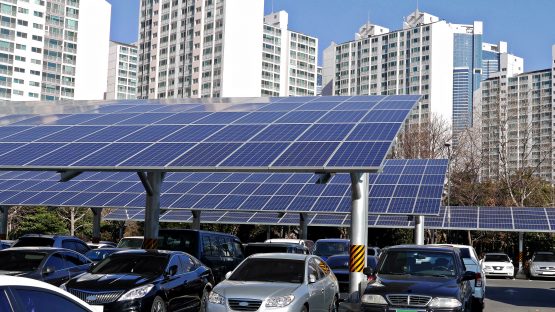
The country’s shift to renewable energy ‘remains an integral driver of fixed investment’: Image Supplied
By Staff Writer: Despite a significant jump in announced capital expenditure projects, South Africa’s fixed capital formation for 2024 is expected to decline by 2.5%, according to Nedbank. This follows a 4.2% decline in 2023.
The Nedbank Capital Expenditure Project Listing for 2024, which records major capital projects undertaken within South Africa’s borders, has reported over R790 billion in capital expenditure projects announced in the first half of 2024. This is a substantial increase from the R193.2 billion announced in 2023.
The project listing, one of Nedbank’s flagship publications, includes only projects that have been publicly announced and are valued at R20 million or more.
However, despite the surge in project announcements, Nedbank economist Crystal Huntley warns that the decline in fixed capital formation for 2024 can be attributed to the generally weak state of the South African economy.
Huntley also points out the lag between project announcements and actual implementation. Nedbank anticipates that the impact of this increase in capital expenditure plans will only begin to materialize in 2025.
“Even so, the risks to the outlook remain to the downside, given a fragile global economy and delays in local economic reforms, which could result in cancellations or postponements of some announced project plans,” Nedbank states.
Jason Lightfoot, portfolio manager of the Futuregrowth Infrastructure and Development Bond Fund, echoes this sentiment. While he acknowledges that the increase in announced projects is a positive sign, he remains sceptical about the actual implementation.
“The government is great at making plans, but it comes down to execution. The proof will be whether or not these plans materialise,” Lightfoot says.
Nevertheless, there is growing optimism among investors regarding the new government of national Unity (GNU) and its ability to implement structural reforms. Huntley suggests that if this positive sentiment takes root, the private sector, which has been holding back on expansion projects, might begin to invest more actively rather than just maintaining current production levels.
In its latest project listing, Nedbank reveals that the government has overtaken the private sector as the primary driver of capital expenditure plans. Government-announced projects amount to an annualized R393.3 billion, accounting for 50% of all new projects in the first half of the year.
Notable projects include public housing and community development programmes valued at R104 billion, and R36 billion allocated for phase 2 of the Rooiwal wastewater project.
Public corporations, such as Eskom and Transnet, have also announced significant projects worth R194.4 billion, representing 24% of the total. This is a notable increase from the R34.7 billion announced in 2023 and includes projects in energy infrastructure, health facility refurbishments, airport infrastructure, special economic zones, road rehabilitation, and water desalination plants.
However, this figure still falls short of the R219 billion worth of projects announced in 2021, which included large undertakings by Eskom, the Passenger Rail Agency of South Africa (Prasa), and the South African National Roads Agency (Sanral).
The private sector’s announced plans account for 26% of the total value, with projects amounting to R206 billion. The largest of these is the Bankenveld District City development, valued at R18 billion, a mixed-use development by Calgro M3 and Eris Property Group in Johannesburg.
Around R113 billion of private sector announcements are energy-related, with the Risk Mitigation Independent Power Producer Procurement Programme (RMIPPPP) making up 69% of this total, indicating the ongoing shift towards renewable energy in the country.
However, Lightfoot warns that the private sector’s investment in renewable energy projects could be hampered by a lack of grid capacity.
Years of underinvestment in the electricity grid are limiting efforts to integrate renewable energy into South Africa’s energy supply.
In 2022, inadequate grid capacity in regions with the best solar and wind resources led to the cancellation of many renewable energy projects. Lightfoot emphasizes that while new rounds of renewable energy projects are encouraging, resolving grid capacity issues is crucial for their success.