Subtotal R0,00

Limpopo/ 16 September 2025, 08:56am / GoodWill Mathebula
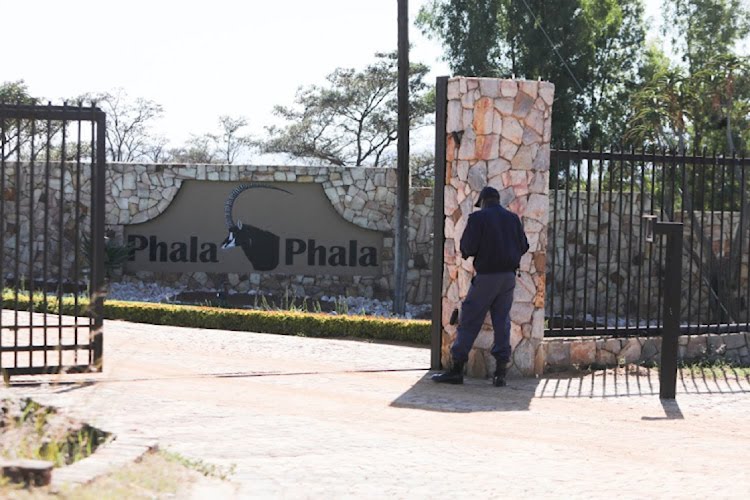
By GoodWill Mathebula: The trial of three accused linked to a dramatic, much-publicized break-in at President Cyril Ramaphosa’s Phala Phala Farm in Bela-Bela began this week at the Modimolle regional court. The case, which has reverberated through political and legal circles, centers on the February 2020 theft of a large sum of foreign currency from the farm.
Immanuela David and siblings Floriana and Ndilinasho Joseph stand charged with a series of offenses stemming from the alleged break-in. The state contends they were involved in conspiracy to commit house breaking with intent to steal, two counts of house breaking with intent to steal and theft, and money laundering—applicable to Immanuela David in particular.
At the heart of the prosecution’s narrative is the claim that the trio orchestrated or participated in a crime that involved the theft of $580,000, an amount valued at roughly R10.4 million at contemporary exchange rates. The case unfolds against the broader backdrop of a high-profile investigation into security lapses and related inquiries at one of the country’s most scrutinized presidential properties.
During the proceedings, state prosecutor Nkhetheni Munyai requested that the identities of witnesses be concealed, citing fears of reprisal linked to the case’s high-profile nature. Munyai argued that revealing witness identities could jeopardize the integrity of testimony moving forward.
“If the identities of witnesses are revealed, it may increase the likelihood of future witnesses adjusting their evidence to match that of those who testified before them,” Munyai told the court.
The defense contended that witnesses’ identities were already public, but the state maintained that the two categories of participants—accused and witnesses—occupied different spheres of public interest. The prosecutor asserted that while the trial is a matter of public record, the witnesses’ personal details should remain shielded from exposure.
Advocate Koena Matala, representing Immanuela David, countered that the circumstances were not so easily drawn apart. He argued that the defendant’s image and family could be put at risk, pointing out that “the situation is similar” to the protection of other parties. Matala also stated that media coverage had already exposed the witnesses’ names, and that the state’s application did not carry sufficient weight. He asserted that there was “no risk or prejudice” expected for the witnesses.
Counsel for the Joseph siblings offered a similar defense. Ultimately, the court ruled that witness identities would not be shielded, noting that the defense had not raised objections in earlier proceedings.
Following a brief adjournment, the wariness surrounding the case gave way to testimony from the former Phala Phala lodge manager, who became the first witness in the new phase of proceedings. He shared details about events surrounding December 2019, including his account of a cash purchase for 20 buffaloes.
According to the witness, the cash purchase amounting to R8 million was unusual for the farm, where transactions typically occur through banking channels. He testified that he prepared an invoice and provided a receipt acknowledging payment to an identifiable party, Mustafa, and that he was responsible for moving the cash from the safe to a couch within the lodge.
The witness described his fear of leaving the money inside the safe, given that the room housed sensitive documents and keys for multiple areas of the farm. He explained that he ultimately moved the funds into the house of Ramaphosa, reasoning that the presidential residence would be a safer harbor due to its security measures, including cameras.
“After putting the money under the sofa, I removed the cushions that were on top of the sofa, took out the money inside the bags and placed that money on that sofa,” he recounted.
The narrative progressed to late December 2019, when Ramaphosa, returning from another farm and en route to Cape Town for a holiday, passed through Phala Phala and was briefed on the situation. The lodge manager testified that Ramaphosa indicated he would address the matter upon his return from leave, and that the general manager would need to be consulted.
By January 2020, the money remained at the lodge, according to the testimony. The witness claimed that on February 10, while at a sister Phala Phala farm, he received a call from a housekeeper at the main house urgently requesting his presence. Upon arrival, he found a broken window with a scratch mark, moved cameras, and an opened sliding door, all of which led him to the conclusion that the money was no longer in the stashed location.
Concurrent with these courtroom developments, a parallel administrative decision related to governance of security and investigations at Phala Phala unfolded in another arena. Presidential Protection Services head Major-General Wally Rhoode has been cleared of wrongdoing by the SAPS following the conclusion of a disciplinary hearing connected to findings raised by Public Protector Kholeka Gcaleka more than two years ago.
Acting Police Minister Firoz Cachalia stated that Rhoode faced a disciplinary hearing under SAPS regulations and was found not guilty of misconduct connected with the Public Protector’s finding of an illegal investigation into the Phala Phala affair. Cachalia described Rhoode as still an active SAPS member and the head of Presidential Protection Service.
The decision comes in response to a parliamentary inquiry regarding disciplinary actions stemming from Gcaleka’s report, which had asserted that Rhoode conducted an improper investigation into the incident at the Phala Phala Farm in February 2020.