
Subtotal R0,00

News/13 February 2026, 08:27am/Mpho Mkoena
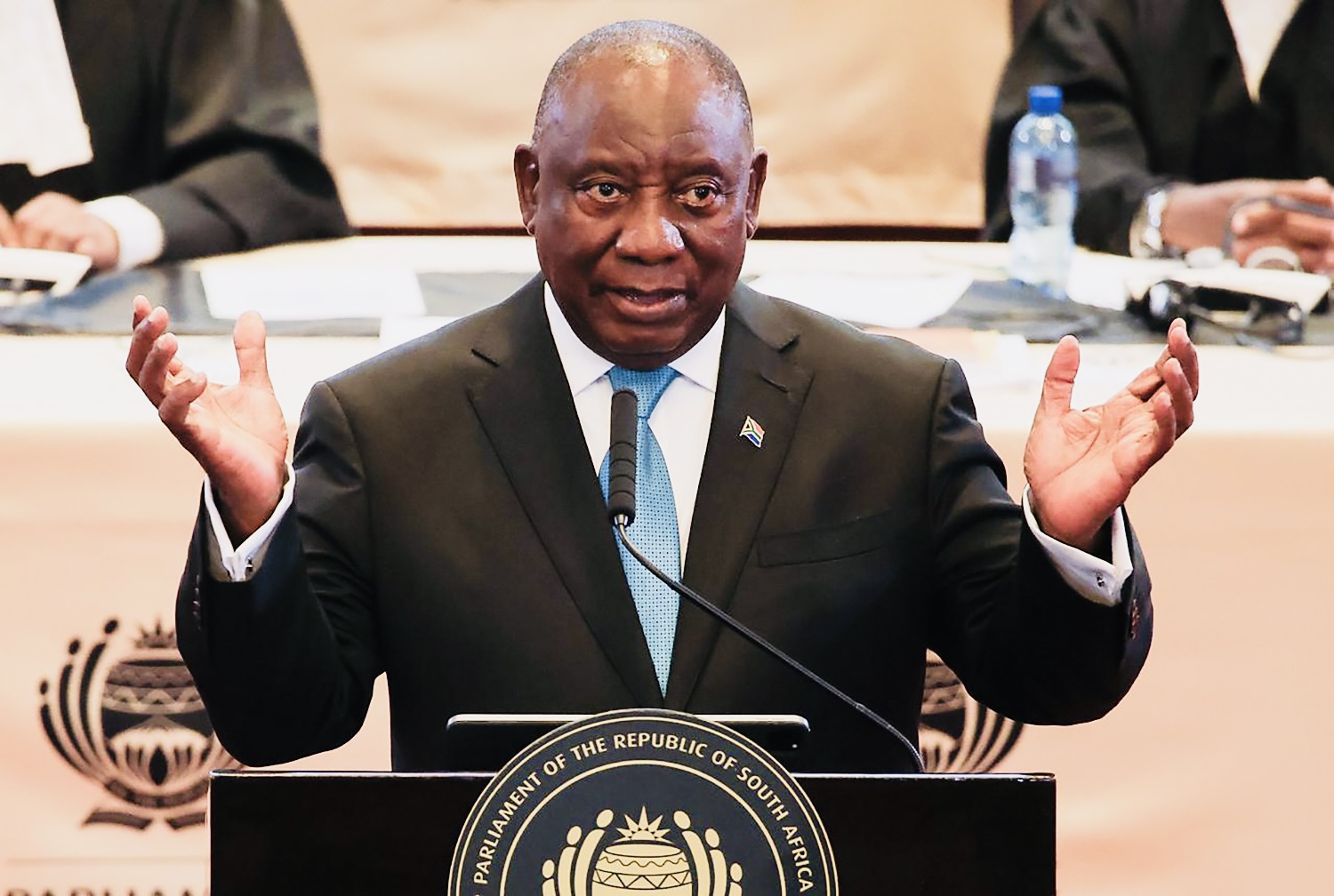
President Cyril Ramaphosa: Image Supplied
By Mpho Mokoena: President Cyril Ramaphosa used his State of the Nation Address (SONA) on Thursday night to project an image of a country regaining its footing—economically sturdier, more confident, and, by his telling, increasingly capable of taking on the crises that still stalk daily life.
But instead of the usual election-season comfort blanket of promises and projections, one part of the address landed with the force of an alarm bell in Parliament and across the policing world: Ramaphosa announced that the State Security Agency (SSA) will be vetting senior police officials.
The announcement arrives in the middle of a politically charged and deeply unsettling national conversation—sparked by revelations emerging from both the Madlanga Commission of Inquiry and Parliament’s ad hoc committee—about whether the country’s crime prevention architecture has been compromised from within.
The two processes, running in parallel, are investigating possible criminal infiltration in the sector tasked with protecting South Africans from precisely that threat.
The reaction was immediate. Economic Freedom Fighters (EFF) leader Julius Malema, who sits on Parliament’s ad hoc committee, welcomed the move, framing it as vindication rather than mere reform.
“That is a confirmation of the evidence that we were able to lead in the ad hoc committee and in the Madlanga Commission. It looks like majority of police are corrupt and that’s why they need the necessary vetting from an independent structure which is not conflicted.”
For Malema and others on the committee, the decision is less a new policy than a reluctant concession: an acknowledgement that the allegations laid before Parliament and the commission have become too serious—and too public—to ignore.
ActionSA member of Parliament (MP) Dereleen James, also a member of the ad hoc committee, echoed that view, tying the vetting decision to testimony that has raised questions about how senior policing appointments are made.
“We’ve heard witnesses coming forward. We’ve heard about these appointments where people aren’t even interviewed or vetted properly so it’s definitely welcome – we really need that.”
Yet the political undertow is unmistakable. Some opposition parties believe President Cyril Ramaphosa’s order for a fresh round of vetting for senior South African Police Service (SAPS) and metro police officials is an admission of corruption within law enforcement.
In other words, what the Presidency is selling as a clean-up may be read by critics as confirmation that the house is already dirty—and that it has been for some time.
Still, Ramaphosa’s framing in the chamber was broader than internal governance. He placed organised crime at the centre of the country’s national security challenge, declaring it the most immediate threat to the country’s democracy, society and economic development.
It was a striking choice of words for a head of state delivering the nation’s marquee annual address—language that signals the problem is no longer confined to police stations and court dockets, but is now viewed as a threat to the state itself.
In that context, the President outlined a second major intervention: the army is now set to be deployed to gang-ridden areas of the Western Cape and Gauteng.
Ramaphosa said he has set the acting Police Minister Firoz Cachalia to work to decide where the troops should be stationed.
Drawing a direct parallel to previous deployments, he argued that, in the same way in which the army was used to quell illegal mining, he wants the defence force to assist with gangsterism.
However, key details remain outstanding. He’s yet to inform Parliament of the number of troops to be deployed and what it will cost. The absence of numbers did not soften the urgency of his argument: crime, he said, is being felt in the loss of life, the sense of fear and the reluctance of businesses to invest—an explicit link between safety on the street and confidence in the economy.
“I have directed the Minister of Police and the SANDF [South African National Defence Force) to develop a tactical plan on where our security forces should be deployed within the next few days in the Western Cape and Gauteng, to deal with gang violence and illegal mining.”
For communities terrorised by extortion, gun violence and organised syndicates, the language of “tactical plans” and “deployment” may sound like long-overdue urgency. For civil liberties watchers and policing experts, it raises familiar questions: what does success look like, how will soldiers be governed in civilian spaces, and what happens when the troops leave?
What made the security announcements even more politically potent is that they were delivered alongside an upbeat assessment of the national balance sheet.
President Cyril Ramaphosa says the South African nation is stronger than it was a year ago and this is clear from economic growth that is gathering pace.
Speaking to a joint sitting in Cape Town, he said the country has recorded four consecutive quarters of GDP growth in the last year, and insisted South Africa is also on a clear path to stabilising the national debt.
The juxtaposition was deliberate: a President pointing to macroeconomic improvement while acknowledging that the lived experience of millions has not caught up.
Ramaphosa conceded that for too many people, life remains difficult, listing crime, service delivery and joblessness as major concerns.







