
Subtotal R0,00

News/01 May 2026, 07:23am/ Mpho Mokoena
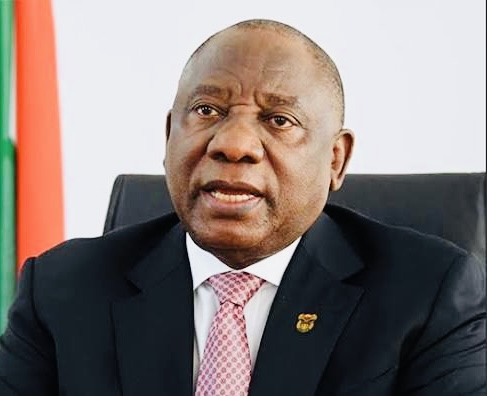
Cyril Ramaphosa: Image Supplied
By Mpho Mokoena: President Cyril Ramaphosa has officially fired the starting gun for South Africa’s 2026 local government elections — but behind the political timetable was a far more urgent message: municipalities are not only heading into a fierce battle for votes, they are also losing billions of litres of water before it ever reaches residents.
Speaking on Thursday at the Birchwood Hotel in Boksburg during a meeting of the Presidential Coordinating Council, Ramaphosa announced that the local government elections will take place on Wednesday, 4 November 2026 — a day that will be declared a public holiday for voting.
“As 2026 is the year in which the local government elections are held, they should be held on a Wednesday, which is the middle of the week, on a date that I now determine as 4 November 2026,” he said.
The declaration now clears the way for Cooperative Governance Minister Velenkosini Hlabisa to formally gazette the date, a move that will officially launch the scramble by political parties to win over voters across the country.
The timing had long been anticipated, with the elections expected sometime between November and January, within 90 days after the end of the 2021 term of office. Now that the date is fixed, preparations are accelerating.
The Electoral Commission of South Africa has already scheduled the first voter registration weekend for 20 and 21 June, while a second registration push is expected between July and August to boost turnout before the November poll.
And turnout could prove crucial.
The 2026 local elections are widely expected to become one of the most hotly contested municipal races in recent memory, particularly in key metros such as Johannesburg, Ekurhuleni and Tshwane, where parties have already begun unveiling mayoral hopefuls and sharpening their campaign messages.
Yet while the election announcement provided the headline, Ramaphosa used the same platform to shine a spotlight on what may become one of the defining issues of the campaign trail: South Africa’s deepening water crisis.
The president said he is troubled by the sheer scale of water being lost before it can even be billed to consumers. According to figures cited at the meeting, the country’s eight metropolitan municipalities are losing at least 34% of water before it reaches households in a form that can generate revenue.
The main culprit, he said, is the persistent failure to deal with leaks in major pipelines — a problem worsened by municipalities not repairing them quickly enough.
Addressing leaders at the council, Ramaphosa stressed that municipalities must urgently improve the way they operate and manage this crumbling infrastructure.
His warning signals mounting pressure on local government not only to promise better service delivery during election season, but to prove it can stop the collapse of basic systems.
In response to worsening shortages, Ramaphosa said he has already established a national water crisis committee to coordinate action.
The committee, he said, has begun work and includes municipal mayors, MECs, ministers and water boards in what he described as a united response to a national emergency.
Ramaphosa added that a central priority is to strengthen municipalities’ ability to manage water infrastructure properly and improve the collection of revenue linked to water services.
“Revenue generated from water services must be ring-fenced to support the operation, maintenance, upgrading and long-term sustainability of those services. If infrastructure is allowed to deteriorate while revenues are diverted to other functions, the water crisis will only deepen.”
In one of the clearest signals yet that government sees water as the next major national challenge, Ramaphosa said the same determination used to confront load shedding and the energy emergency will now be directed at fixing water shortages.
That means the road to the 2026 elections may not only be about coalitions, councillors and campaign posters.
It may also become a referendum on leaking pipes, failing municipalities and whether local government can still deliver the most basic promise of all: turning on the tap and finding water.







