Subtotal R0,00

International News/ 06 June 2025, 06;19am/ Mpho Mokoena
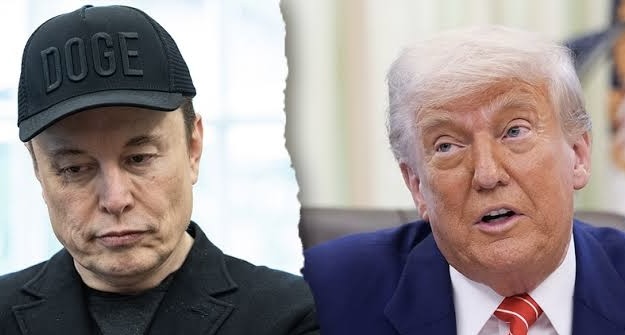
Donald Trump and Elon Musk: Image Supplied
By Mpho Mokoena: The once unlikely alliance between former President Donald Trump and tech billionaire Elon Musk has officially turned sour, with both men trading insults and accusations in a highly publicized social media feud. The escalation, which unfolded over the course of Thursday, signals a bitter end to what many thought was a promising relationship between the two influential figures.
The trouble began during a news conference in the Oval Office with German Chancellor Friedrich Merz, where Trump addressed recent criticisms from Musk about his signature domestic policy, the “Big, Beautiful” tax and spending bill. Trump told reporters, “I’m very disappointed because Elon knew the inner workings of this bill better than almost anybody sitting here. All of a sudden he had a problem.” He added, “He knew every aspect of this bill. He knew it better than almost anybody, and he never had a problem until right after he left. … He said the most beautiful things about me, and he hasn’t said bad about me personally, but I’m sure that’ll be next, but I’m very disappointed in Elon. I’ve helped Elon a lot.”
Musk responded almost instantly on his social media platform, X, with a stark rebuttal: “False, this bill was never shown to me even once and was passed in the dead of night so fast that almost no one in Congress could even read it!” He further accused Trump of ingratitude, posting, “Without me, Trump would have lost the election,” and lamented, “Such ingratitude.”
The relationship between the two billionaires had been unusual from the start. Musk had endorsed Trump last July following an assassination attempt in Pennsylvania, and he reportedly funneled approximately $290 million into efforts to support Trump’s bid to regain the presidency. Musk’s influence was believed to have contributed significantly to last November’s Republican victory, as he claimed in a series of posts: “Without me, Trump would have lost the election, Dems would control the House and the Republicans would be 51-49 in the Senate.” He added, “Such ingratitude.”
Throughout the day, Musk’s social media activity intensified, with posts questioning Trump’s leadership and policies. He even posed a provocative poll to his followers: “Is it time to create a new political party in America that actually represents the 80% in the middle?” Musk also reposted a tweet calling for Trump’s resignation, argued that Trump’s global tariff plan would trigger a recession, and, without evidence, suggested Trump’s involvement in unreleased files related to Jeffrey Epstein, the late sex offender.
Trump responded with characteristic fiery rhetoric on Truth Social, asserting that Musk “just went CRAZY” and proposing that his companies—Tesla, SpaceX, and Starlink—should have their government subsidies and contracts terminated. “The easiest way to save money in our Budget, Billions and Billions of Dollars, is to terminate Elon’s Governmental Subsidies and Contracts,” Trump wrote. “I was always surprised that Biden didn’t do it!”
The White House swiftly condemned Musk’s unfounded allegations linking Trump to Epstein. Press secretary Karoline Leavitt issued a statement: “This is an unfortunate episode from Elon, who is unhappy with the One Big Beautiful Bill because it does not include the policies he wanted.”
In an immediate retaliatory move, Musk threatened to decommission SpaceX’s Dragon spacecraft, which is used to shuttle astronauts and supplies to the International Space Station. “SpaceX will begin decommissioning its Dragon spacecraft immediately,” Musk declared, a move that could threaten ongoing missions and the space agency’s operations.
The fallout from the feud was felt immediately in the stock markets. Tesla’s shares plummeted by approximately 14% within hours of the public spat, wiping out roughly $152 billion in market value and reducing Musk’s net worth by about $8.73 billion, according to the Bloomberg Billionaires Index. The sharp decline underscored the potential economic consequences of such high-profile disagreements.
The bond between Trump and Musk had been built on mutual support, with Musk endorsing Trump after the Pennsylvania incident and providing financial backing. However, Musk’s recent vocal opposition to the spending bill—calling it a “disgusting abomination”—and his increasingly political social media presence have strained their relationship. The bill itself, which is currently pending in the Senate, is projected by the Congressional Budget Office to increase the national debt by $2.4 trillion over ten years and leave nearly 11 million Americans without government-backed health insurance.
Adding fuel to the fire, Steve Bannon, a longtime Trump ally and vocal critic of Musk, suggested in an interview that there should be “a formal investigation of his immigration status because I am of the strong belief that he is an illegal alien, and he should be deported from the country immediately,” further intensifying the controversy.
The public spat has significant implications for Musk’s business empire. Tesla, SpaceX, and Starlink maintain direct contacts with the U.S. government and benefit from subsidies and tax breaks. Musk’s threats to decommission SpaceX’s Dragon spacecraft and his criticism of government spending cuts highlight the fragile relationship between private enterprise and government policy.
Here is a summary of how the rift unfolded.
- Donald Trump kicked things off during an Oval Office meeting with German chancellor Friedrich Merz. Asked about Elon Musk’s criticism of his “Big, Beautiful Bill”, the US president told reporters: “Elon and I had a great relationship. I don’t know if we will any more.”
Trump also told reporters he was “very disappointed in Elon”, telling them: “He knew every aspect of this bill. He knew it better than almost anybody, and he never had a problem until right after he left. … He said the most beautiful things about me, and he hasn’t said bad about me personally, but I’m sure that’ll be next, but I’m very disappointed in Elon. I’ve helped Elon a lot.”
Musk denied Trump’s statement on X, beginning a flurry of posts that stepped up his feud with the president. Musk wrote: “False, this bill was never shown to me even once and was passed in the dead of night so fast that almost no one in Congress could even read it!”
He went on to claim that without him Trump would have “lost the election” before bemoaning what he called “such ingratitude”.
The president followed up by threatening to terminate Musk’s government subsidies and contracts, prompting a return threat from the Space X boss to decommission the Dragon spacecraft (which brought home astronauts stuck on the ISS for months), potentially throwing US space programmes into turmoil. Hours later Musk rescinded the threat.
Musk also suggested Trump should be impeached and that JD Vance should replace Trump, warning that Trump’s global tariffs would “cause a recession in the second half of this year” and claimed Trump was in the Jeffrey Epstein files.
The White House described the Epstein assertions as an “unfortunate episode”, in a statement to CNN.
Meanwhile, Steve Bannon, a longtimeTrump ally and Elon Musk critic, suggested there were grounds to deport the tech billionaire, who has US citizenship. Bannon told the New York Times: “They should initiate a formal investigation of his immigration status because I am of the strong belief that he is an illegal alien, and he should be deported from the country immediately.”
The spectacular blowout between Trump and Musk sent Tesla shares into free fall. They dropped by about 14.2% on Thursday at market close, wiping roughly $152bn off the value of the compan7. The decline in Tesla’s share price on Thursday knocked about $8.73bn off Musk’s total net worth, according to the Bloomberg Billionaires Index. The reported $152bn dropalso decreased the value of the company to roughly $900bn.
Meanwhile, Musk’s efforts at the Department of Government Efficiency (Doge), which aimed to slash government spending, have already resulted in mass layoffs and the elimination of departments such as the US Agency for International Development (USAID). Despite claiming to have saved $180 billion, critics argue this figure is inflated and falls short of Musk’s initial $2 trillion savings target.