
Subtotal R0,00


News/16 February 2026, 16:41pm/ Mandla Nkosi
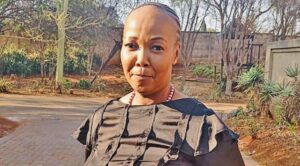
Tshidi Setai: Image Supplied
By Mandla Nkosi: A deepening political storm is ripping through the African National Congress (ANC) in the Free State after ANC national spokesperson Mahlengi Bhengu flatly denied claims that she instructed anyone to push the party into defending embattled Free State Premier MaQueen Letsoha-Mathae, who is facing corruption allegations.
At the centre of the controversy is Free State provincial government spokesperson Tshidi Setai—a figure now accused in political circles of “name-dropping” the national office to force the party’s provincial structures into public damage control.
The dispute has spilled from internal chats into the public arena, with leaked WhatsApp exchanges, competing media reports, and an official party statement defending the premier now forming part of an unfolding narrative of pressure, denial, and factional suspicion—in what sources describe as a tense election-year environment.
Bhengu: “All the questions… are rejected.”
In response to questions from Insider Chronicle, Bhengu dismissed any suggestion that she had communicated with Setai or asked her to press the ANC in the Free State to issue a defence of the premier.
She was unequivocal, and her words were sharp:
“All the questions aimed at drawing the National Spokesperson into the Free State’s internal dynamics are rejected. I have advised the provincial spokesperson to address any other provincial matter. Luthuli House does not issue directives to lower structures through third-party sources nor through government officials.”
The denial immediately raised explosive implications: If Bhengu did not instruct Setai, why did Setai cite her?
Political observers say Bhengu’s refusal to entertain the premise points to one conclusion being debated inside Free State ANC circles: that Setai invoked the national spokesperson’s name to manufacture urgency and compel the provincial party to publicly defend the premier amid mounting allegations.
The controversy unfolded against the backdrop of an ANC Free State media statement defending Premier MaQueen Letsoha-Mathae.
That defence followed an article by Insider Chronicle, which revealed that four regions within the party were pressing the premier to step down.
The calls for the premier to step down came after businessman Patrick Phuti revealed that he had given the premier and her husband, Lawrence Mathae, a bribe after Phuti secured a multimillion-rand road-construction tender.
A further twist emerged after a Step Up News article reported that the ANC statement released on Wednesday, 10 February 2025—rebutting the articles—was drafted after Setai confronted ANC provincial spokesperson Thabo Meeko over the matter.
The suggestion was that the government spokesperson—not the party—initiated the push for the party’s rebuttal, blurring the lines between state communication machinery and party discipline.
Leaked WhatsApp messages: “National Spokesperson is asking…”
Leaked WhatsApp messages seen by this publication provide the clearest window yet into the internal pressure and tone of the exchanges.
In the messages, Setai initiates contact with Meeko and explicitly references Bhengu:
“Cde Somlomo… The National Spokesperson is asking why the DCIP in the Free State is not rebutting this factional journalism… HQ says we are in an election year; we must be agile in our defence of the ANC and its leaders, and not allow media or pseudo media houses to drive a wedge among our leaders… Unfortunately, I’m in the administration; this is your turf as the spokesperson on the side of the party.”
Meeko, however, does not accept the instruction at face value. His reply is measured, procedural, and pointedly redirects Setai back to Bhengu:
“There are many matters, and for all of those we consult with leadership. There are times when we are discouraged. We request Cde Mahlengi to engage the Free State DCIP if there are instructions or guidance from the National DCIP. Advice will be processed.”
Setai responds that she would convey the message, but escalates the pressure, naming media houses and framing the coverage as an attack:
“Cde Somlomo… So are you saying that, as the ANC in the Free State, we are going to allow these two tabloids—Insider Chronicle and Central News—whose agenda is very clear: to discredit our movement and its leadership and make a mockery of the ANC’s renewal commitment in such a crucial election year?”
Again, Meeko refuses to be cornered. He repeats the same stance—Bhengu must contact the province directly—and references another figure, Khotso Morapela:
“Cde Khotso speaks on behalf of the ANC after you told me Cde Mahlengi raised concerns. She has my contacts. Tell her to call the province.”
Then the exchange takes a darker turn.
Setai accuses Meeko of acting in bad faith:
“Grand rising, Cde Somlomo… I really think you are being disingenuous… The role of the National Spokesperson is to protect the image, reputation, and integrity of the ANC… The NGC, January 8 Statement, and ANC lekgotla have made it very clear that we either renew or perish… I wish the energy you are displaying could be directed at defending the Free State ANC.”
To insiders, this is the moment when a communications issue becomes a political confrontation: not merely about whether a statement should be issued, but about who controls the message, who carries authority, and whether “defence” is being prioritised over internal accountability.
A critical question: Did Setai manufacture a mandate?
Bhengu’s public denial now collides with Setai’s WhatsApp framing, and the contradiction is what has intensified the political stakes.
If Bhengu’s statement is taken at face value, then the reference to the “National Spokesperson” in Setai’s message becomes highly problematic. It raises the prospect that Setai used Bhengu’s name—and “HQ says”—to pressure provincial party structures into responding to allegations at a time when internal calls for the premier to step down were reportedly gaining traction.
Bhengu’s line—“Luthuli House does not issue directives to lower structures through third-party sources nor through government officials.”—lands like a rebuke not only of the claim, but of the method: a government spokesperson acting as a conduit for alleged party instruction.
According to sources at the premier’s office, when Meeko did not issue a statement immediately, Setai escalated the matter to ANC Free State provincial secretary Polediso Motsoeneng.
This escalation suggests the dispute did not end with Meeko’s refusal to accept an indirect instruction. Rather, the battle moved up the chain—from spokesperson-to-spokesperson messaging to engagement with the administrative core of the provincial party.
The language in the messages points to a familiar ANC tension, sharpened by an election cycle: defend the movement at all costs—or confront alleged wrongdoing openly.
Setai frames the media reports as “factional journalism” and “pseudo media houses” seeking to “drive a wedge” among leaders. She argues that the ANC’s “renewal commitment” is being mocked.
But critics argue the opposite: that renewal cannot be defended with rebuttals alone, and that using official channels to shield leaders facing allegations risks turning the renewal message into a slogan without substance.
What is now clear is that the ANC in the Free State is not only managing a corruption-allegation story; it is also managing the optics of its own internal communications and the credibility of those who claim to speak for higher offices.
Bhengu’s denial has introduced a new axis to the saga: it is no longer only about allegations against the premier, but about whether the public defence of her leadership was driven by legitimate party processes or by coercive messaging built on the authority of a national office that now insists it never gave such an instruction.
As pressure mounts, one question hangs over the province’s political centre like a drumbeat: If the national office did not speak, who did Setai claim to speak for?







