
Subtotal R0,00

Free State/31 March 2026, 09:23am/ Mandla Nkosi
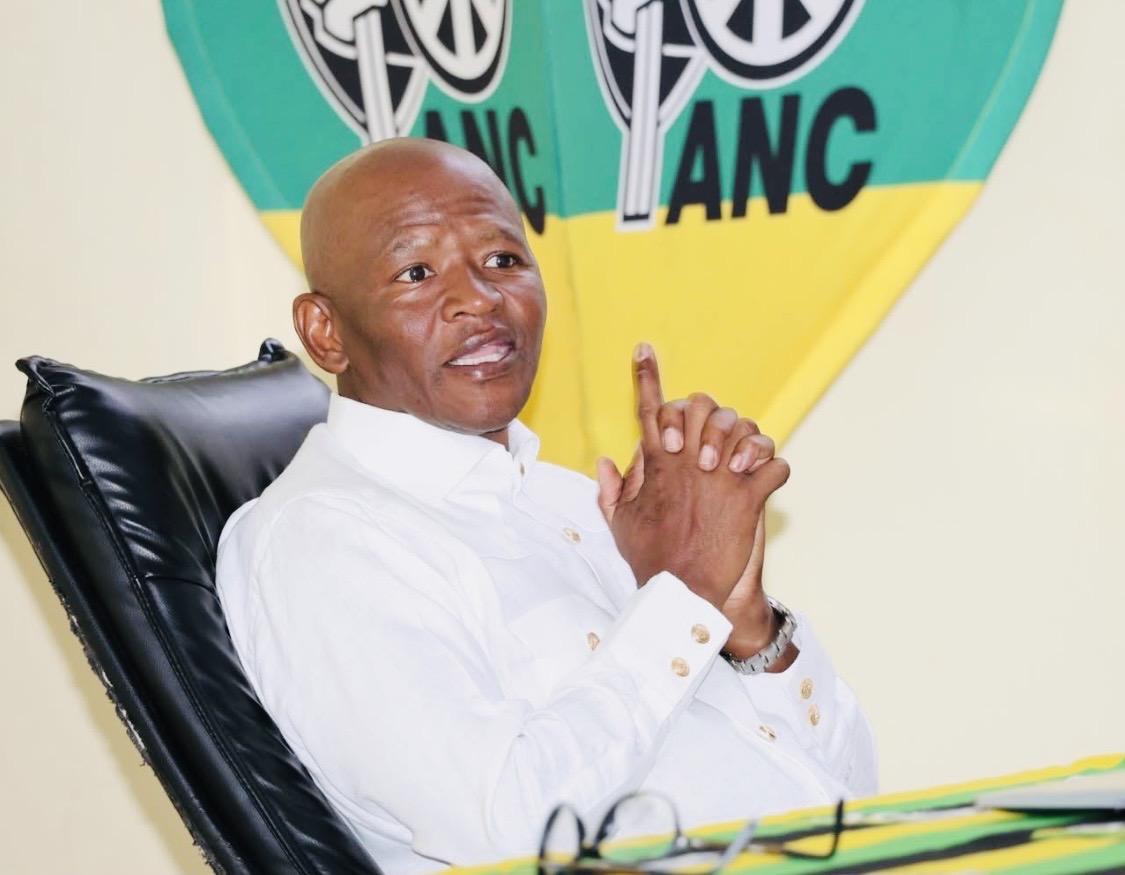
By Mandla Nkosi: ANC Free State Secretary Polediso Motsoeneng says the province is stepping into 2026 with renewed political purpose, sharpened organisational focus, and what he describes as an unshakable commitment to “fixing local government, transforming the economy, and consolidating the District Development Model as the vehicle for a people-centered society.”
Speaking after what he called a “historic and highly consequential engagement” with ANC President Cyril Ramaphosa and members of the National Executive deployed to the province, Motsoeneng said the gathering at Imvelo Safari Lodge on 26 March 2026 was far more than a routine meeting.
“This was not merely organisational oversight. It was a reaffirmation of the enduring bond between the movement and its leadership, a strategic realignment of our revolutionary objectives, and a clarion call for all of us to renew our commitment to the people of the Free State and South Africa,” said Motsoeneng.
Motsoeneng framed the meeting as a decisive turning point as the ANC enters what it has declared the “Year of Fixing Local Government and Transforming the Economy through the District Development Model (DDM).”
And, in unmistakable terms, he made it clear that the Free State intends to be at the forefront of that mission.
“The Free State has declared its readiness to lead. We are not a thoroughfare; we are a premier destination for strategic development and economic resurgence,” he said.
Motsoeneng said President Ramaphosa’s message to provincial leadership struck at the heart of ANC renewal, governance, and discipline.
“We welcomed Comrade President Ramaphosa as the captain of the revolutionary forces, a leader whose guidance continues to steer the movement through complex currents of governance and renewal,” he said.
According to Motsoeneng, the President stressed the urgent need to align the work of national, provincial and local government, while reminding leaders that “the ANC is the center of power” and that the moral standing of government is rooted in the discipline and ideological clarity of the movement itself.
Motsoeneng said rebuilding ANC structures remains “non-negotiable,” revealing that of the province’s 319 branches, 244 have already successfully elected Branch Executive Committees.
“We acknowledge that challenges remain, especially with the inconsistency of the membership system, which has not always reliably qualified branches on the basis of leadership elections. But our commitment to finalise the remaining 75 interim structures is unwavering,” he said.
“A functional ANC is measured through active branches, and we will spare no effort in ensuring that every branch is revitalised, every region is convened, and every structure is held accountable.”
For Motsoeneng, the battle to restore municipalities is central to restoring public trust.
“The quality of life of our people is determined at local level. It is in municipalities where the promise of a better life must be made real,” he said.
He spoke candidly about the damage caused by corruption, financial mismanagement and governance failures in some municipalities, including those placed under Section 139 intervention.
“These are not merely administrative failures; they are political defeats that the ANC cannot and will not tolerate,” Motsoeneng declared.
He said the province is now repositioning local government to become the “frontline of service delivery and economic activation,” in line with Lekgotla and PEC resolutions.
“We are actively repositioning our economy towards sectors that can unlock inclusive growth and sustainable employment. These include artificial intelligence and robotics, renewable energy, agro-processing, the digital economy, while consolidating agriculture as the mainstream of our economy,” he said.
Motsoeneng added that restoring confidence in the state will require firm action.
“We must end the culture of non-performance, ensure conditional grants are spent effectively, and root out corruption in procurement systems. Our municipalities must not just exist as administrative entities — they must become engines of inclusive growth and community development,” he said.
In one of the strongest messages to emerge from the engagement, Motsoeneng insisted that the Free State is ready to redefine its economic identity.
“We are moving beyond the outdated notion that the Free State is merely a corridor between Gauteng and the coastal provinces. The Free State is a go-to destination, not a go-through province,” he said.
He argued that the province is uniquely positioned to become a national economic powerhouse due to its location, transport corridors, logistics potential, and agricultural capacity.
“Our province sits at the heart of South Africa’s growth story. We are strategically located, we are central to food security, and we are building a stronger agro-processing sector,” said Motsoeneng.
He said the ANC in the province is pursuing a “coherent economic strategy” anchored in the reviewed Growth and Development Strategy, aimed at addressing unemployment, poverty and inequality.
“Our focus on industrialisation, agricultural value chains and the digital economy is about reclaiming the Free State’s historical status as the breadbasket of the country,” he said.
Motsoeneng further pledged efforts to make the province more attractive to investors.
“We are committed to reducing the cost of doing business, lowering the price of roads, creating investable local areas, and harnessing the full value of our logistics hubs, transport corridors and agricultural heartlands for the benefit of our people,” he said.
Motsoeneng also addressed progress in renewing the ANC’s internal mandate ahead of crucial organisational processes.
“The PEC has reported progress in renewing the mandate of ANC structures in the election battle, and while there has been appreciation for general adherence to guidelines, we are aware of the challenges in implementing road maps,” he said.
He said deployees to regions are expected to be more directly involved to ensure conferences are held in line with ANC constitutional prescripts while strengthening both internal unity and community cohesion.
“Regions must sit as required by the ANC Constitution and Guidelines, and this process must help forge unity among members and communities alike,” he said.
Motsoeneng also used the moment to restate the ANC Free State’s internationalist position, saying the movement remains committed to sovereignty, multilateralism, peaceful conflict resolution and international law.
“We remain a disciplined force of the left, grounded in the principles of national sovereignty, peaceful resolution of conflicts, multilateralism and respect for international law,” he said.
Reflecting on global developments, he warned against what he called “inclinations to a unipolar world,” saying such trends threaten the sovereignty of nations and could have direct consequences on everyday South Africans.
“These actions undermine the sovereignty of nations, threaten global peace, and have implications for the cost of living through increases in fuel and food prices,” Motsoeneng said.
He also highlighted the province’s mobilisation of more than 10,000 people for a protest march to Constitutional Hill in Johannesburg in solidarity with oppressed people across the world.
“This is who we are. We understand that our freedom is incomplete until the rights of all people, everywhere, are respected,” he said.
Motsoeneng concluded on a high note, describing the Imvelo engagement as “a moment of renewal, accountability and recommitment.”
“We are leaving this engagement with a clear mandate: to fix local government, to transform the economy through the DDM, and to rebuild the structures of the ANC to their former strength and revolutionary discipline,” he said.
He expressed gratitude to President Ramaphosa, the ANC National Executive Committee, deployees, and the provincial leadership for steering the province through difficult terrain.
And in a final flourish, Motsoeneng delivered the message he believes should define the province’s future:
“The Free State is not a province you pass through; it is a province you arrive at to grow, to learn, and to lead. We are a province of doers, thinkers and leaders. Under the banner of the ANC, guided by the principles of our movement, and driven by the collective will of our people, the Free State will rise,” said Polediso Motsoeneng.







