Subtotal R0,00


Gauteng/ 17 April 2025, 11:58am/ Lijeng Moruthane
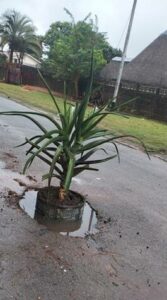
Residents in Ward 2, Pretoria North, planted trees in potholes during a protest led by Councillor Quentin Meyer to draw attention to deteriorating road conditions: Image Supplied
By Lijeng Moruthane: Planting trees or shrubs on public roads without municipal approval is strictly prohibited under Tshwane’s by-laws — a rule the metro says was violated during a recent protest in Ward 2, where residents, led by local councillor Quentin Meyer, filled potholes with vegetation to highlight frustrations over poor road maintenance.
The Roads and Transport Section 79 Oversight Committee has strongly condemned the demonstration, calling it unlawful and damaging to public infrastructure.
Committee chairperson Ngoako Seanego warned that such acts, while symbolic, amount to vandalism and could pose safety risks. “The Public Road and Miscellaneous By-law of 2004 clearly states that no person may plant trees, shrubs or any plants on a public road or sidewalk without written permission from the municipality,” he said.
“Any obstruction that interferes with pedestrian or vehicular traffic, unless formally authorised, is a violation.”
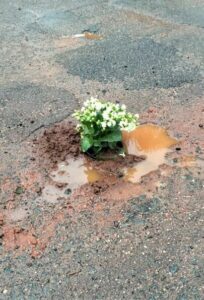
According to Seanego, the protest not only breached these regulations but also risked further deterioration of road surfaces already weakened by recent heavy rains.
“As much as we are in a free and democratic country where freedom of expression is guaranteed, this form of expression constitutes vandalism,” he said. “We are doing our utmost best with available resources to repair and maintain roads across all seven regions.”
The incident took place in Pretoria North’s Ward 2, where Meyer and residents resorted to the unconventional protest after what they describe as months of unanswered requests to city officials for urgent road repairs. Since April last year, 431 pothole-related complaints have been reported in the ward, with 357 resolved and 74 still outstanding.
Meyer defended the protest, insisting all formal channels had been exhausted. “I have sent multiple emails to the executive mayor, the director of roads, the regional head, and even the MMC of Region 1. I’ve followed up directly with the mayor’s office. Not a single response. It’s been months,” said Meyer.
“We have followed the correct procedures. This was not our first step — it was our last resort. The roads in Ward 2 are in an appalling state, and the silence from the city is unacceptable.”
While the councillor has submitted a formal letter to the mayor outlining concerns about the state of infrastructure, Seanego criticised the timing of the protest. “It was initiated before any response was given. This is a clear disregard for established municipal processes,” he said.
The metro has called on public representatives and community members to act within the law when raising concerns. “We cannot allow individuals, especially those in leadership, to act outside the law under the guise of protest,” said Seanego.
The protest has sparked widespread public interest and debate, with some residents praising Meyer’s bold approach, while others warn of the dangers of sidestepping legal protocols — even in the name of service delivery.