
Subtotal R0,00


Limpopo/29 March 2026, 09:34am/ Dakalo Mulaudzi
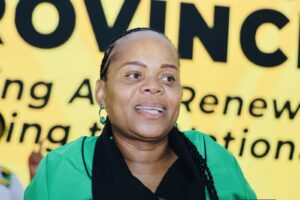
Phophi Ramathuba: Image Supplied
By Dakalo Mulaudzi: The ANC in Limpopo may have delivered a smooth, uncontested leadership outcome this weekend, but beneath the show of unity lies a province entering a delicate new political chapter.
At the centre of that transition is Premier Dr Phophi Ramathuba, who was elected unopposed as the first female provincial chairperson of the ANC in Limpopo during the party’s 11th elective conference at the Polokwane Cricket Club. Her election, secured in the early hours of Saturday, was presented as a triumph of consensus. Yet the conference also exposed the extent to which party leaders were determined to avoid internal conflict at all costs.
Rather than becoming a battleground, the conference unfolded as a carefully managed exercise in consolidation. A “unity slate” reportedly emerged before delegates even cast their votes, with all branch-nominated candidates elected without opposition. Ramathuba replaces outgoing provincial chairperson Stanley Mathabatha, while Polokwane Municipality mayor John Mpe was elected unopposed as deputy chairperson.
The rest of the provincial top five was also filled without resistance, further underlining the ANC’s effort to project order and discipline in one of its strongest provinces.
Chairperson: Dr Phophi Ramathuba
Deputy chairperson: John Mpe
Provincial secretary: Reuben Madadzhe
Deputy secretary: Pule Shai
Treasurer: Eddie Maila
Reuben Madadzhe returned as provincial secretary, with Pule Shai elected as deputy secretary and Eddie Maila as treasurer.
But this was not simply a story of an easy leadership transition. It was also a reminder that unity in politics is often negotiated, not spontaneous. Reports from inside the province suggest Limpopo’s five ANC regions intervened ahead of the conference to stop a potential contest between Ramathuba and Mpe. Regional leaders are said to have urged the two camps to settle on a shared slate, fearing that a divisive race could deepen fractures in a province the ANC badly needs to keep stable.
That urgency is easy to understand. Limpopo was the only ANC province to win more than 70% support in the 2024 national and provincial elections, making it one of the party’s few remaining electoral anchors. In that sense, this conference was not just about choosing leaders — it was about protecting a strategic stronghold before the 2026 local government elections.
Even before the conference formally began, however, the ANC had to survive a legal scare. Proceedings only started on Friday afternoon after the High Court in Polokwane dismissed an urgent application seeking to stop the conference.
The challenge came from ANC branch member Nhlanhla Basil Mabasa, who questioned the legitimacy of a digital verification device used during a branch general meeting in Ward 10 in the Collins Chabane region. Mabasa wanted the court to halt the conference until he had been provided with documents relating to that November meeting, including attendance registers, nomination forms and delegate records. He also asked for 10 days to submit a supplementary affidavit once the documents were received.
His complaint centred on what he described as glaring inconsistencies in the attendance figures. Mabasa claimed the electronic system stopped working after scanning 19 members, yet the final report reflected 111 members as electronically verified. He further said 67 members were recorded manually, bringing the total attendance to 86 — a figure that appeared to conflict with a preliminary report dated December 22, 2025, which reflected 111 electronically verified members.
To Mabasa, the numbers did not add up. He argued the verification process was unreliable, irrational and procedurally flawed, and that relying on it would be unlawful. The ANC, by contrast, welcomed the court’s ruling, saying it had removed the final obstacle to the conference proceeding.
Inside the conference venue, another sign of tension emerged — this time involving the ANC’s alliance partner, the South African Communist Party. During the gathering, an SACP representative was booed by delegates while delivering a message of support, a striking moment that pointed to worsening relations between the two organisations.
Ramathuba did not shy away from the issue. Speaking during a media briefing, she acknowledged openly that the relationship between the ANC and the SACP has become strained, especially since the communist party announced that it would contest elections independently.
She questioned why the SACP would choose to challenge the ANC in a province where the governing party remains relatively strong, suggesting that attention should instead be directed to provinces where the ANC is under greater pressure.
“Why now do you contest here, why are we not focusing on those that particular provinces where we have a huge challenge. And yes, we expect the ANC to briefly resolve this matter with the leadership of the South African Communist Party (SACP), because it’s not a provincial resolution; it is a resolution that has been taken at the national level. We expect it because the question you will ask is whether the relationship has been constrained. Yes, I will say it has been based on what I have just said,” Ramathuba said.







