Subtotal R0,00

News/ 31 October 2025, 12:03pm/ Ayanda Shezi
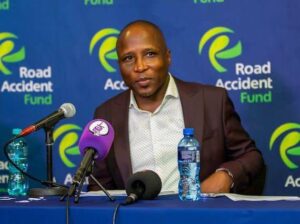
Former RAF CEO Faces Parliamentary Summons Amid Mounting Financial Scandal. Image Supplied
By Ayanda Shezi: Parliament’s Standing Committee on Public Accounts (SCOPA) has escalated its investigation into the Road Accident Fund’s (RAF) financial meltdown, resolving to subpoena former chief executive Collins Letsoalo after his repeated failure to appear before the committee.
The move, announced on Friday, marks a critical turning point in Parliament’s inquiry into what some MPs have described as one of South Africa’s “worst-managed public entities.”
For months, SCOPA has been trying to secure Letsoalo’s appearance to account for decisions made during his tenure as head of the RAF — a period marked by financial instability, procurement controversies, and an explosion in outstanding claims.
Committee chairperson Songezo Zibi confirmed that Letsoalo had ignored several formal invitations to appear voluntarily, including a final letter sent earlier this month. Following legal advice from Parliament’s senior counsel, Fatima Ebrahim, the committee unanimously agreed to invoke the Powers, Privileges and Immunities Act of 2004, which allows Parliament to compel witnesses to testify under oath.
“The information the committee seeks is within Mr. Letsoalo’s personal knowledge and cannot be obtained by other means,” Zibi said. “Fairness requires that he be given an opportunity to respond to allegations made by other witnesses.”
Zibi said he would now write to National Assembly Speaker Thoko Didiza to obtain formal approval before the summons is served by the Secretary to Parliament. Once issued, Letsoalo will be legally obliged to appear before SCOPA and answer questions under oath — failure to do so could amount to contempt of Parliament.
The subpoena comes as the RAF’s financial position continues to deteriorate, with liabilities ballooning to R518 billion against assets of only R33 billion. The fund, which is responsible for compensating road crash victims, is now widely regarded as being on the brink of collapse.
Zibi said the RAF’s condition represents not just a financial crisis but a human one. “A broken RAF means people stranded between injury and dignity,” he said. “The fund exists for victims of road accidents, not for the enrichment of lawyers and administrators.”
He warned that the RAF’s current business model — reliant on a shrinking fuel levy and lump-sum payouts — is unsustainable. “Reform is necessary if we are to restore fairness and dignity to claimants,” he said.
Letsoalo’s time as CEO of the RAF has come under intense scrutiny from both Parliament and the Auditor-General. Witnesses appearing before SCOPA have accused him of mismanagement, irregular procurement practices, and poor oversight that contributed to the fund’s ballooning liabilities and administrative chaos.
Under his leadership, the RAF faced mounting criticism for expensive office leases, prolonged court battles, and delayed settlements that left thousands of road accident victims waiting years for compensation.
According to insiders quoted in an earlier IOL investigation, titled “Inside the RAF: The R500bn Black Hole,” the fund’s leadership during Letsoalo’s term made a series of costly decisions that deepened its financial instability. Among them were disputes with law firms, high consultancy fees, and procurement processes flagged by National Treasury as irregular.
Letsoalo has previously defended his leadership, saying the RAF’s financial problems were inherited and structural, rather than the result of individual mismanagement. However, his repeated absence from parliamentary hearings has frustrated MPs across political parties, who say his testimony is key to uncovering what went wrong.
SCOPA’s decision to issue a subpoena reflects a broader effort by Parliament to reassert its authority over state entities that have long operated with limited oversight. In recent months, the committee has taken a more assertive approach toward executives accused of ignoring summonses or withholding information.
“The RAF inquiry is about accountability and transparency,” one committee member said. “It’s not just about who signed what contract — it’s about ensuring that public funds are managed in a way that serves the people they are meant to protect.”
The committee’s RAF inquiry, which began earlier this year, has already heard evidence from current executives, auditors, and whistleblowers. Several witnesses directly implicated Letsoalo in questionable financial decisions, prompting calls for his compulsory appearance.
Once Speaker Didiza signs off on the request, Letsoalo will receive a formal summons compelling him to appear before SCOPA. If he fails to comply, Parliament could initiate legal action under the Powers and Privileges Act, which provides for fines or imprisonment for those who defy summonses.
SCOPA is expected to finalise its report on the RAF early in 2026, outlining recommendations to the National Assembly on reforming the fund and restoring accountability.
Meanwhile, the RAF continues to battle legal disputes, cash flow shortages, and administrative bottlenecks. Insiders warn that unless drastic reforms are implemented, the fund could face insolvency — leaving thousands of claimants without recourse.
As Parliament tightens its oversight grip, Letsoalo’s forthcoming testimony is expected to be pivotal — not only for uncovering what led to the RAF’s collapse but also for setting a new precedent for executive accountability within South Africa’s embattled public sector.