
Subtotal R0,00

News/06 July 2026, 08:29am/ GoodWill Mathebula
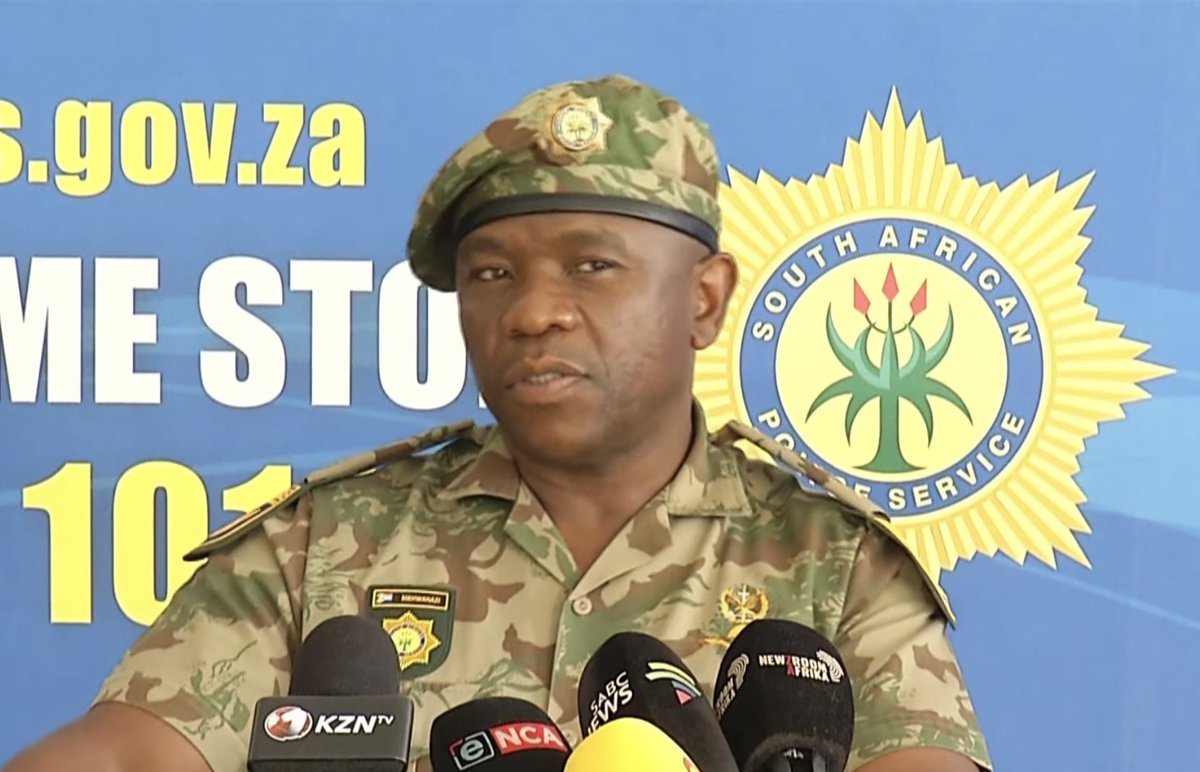
Nhlanhla Mkhwanazi: Image Supplied
By GoodWill Mathebula: A year ago, South Africa watched in disbelief as KwaZulu-Natal Police Commissioner Lieutenant General Nhlanhla Mkhwanazi dropped a bombshell that tore through the country’s political and law enforcement establishment.
What unfolded on 6 July last year was not an ordinary police briefing. It was a moment of national rupture.
Standing before the nation in SAPS combat camouflage and flanked by members of the SAPS Special Task Force (STF), Mkhwanazi painted a chilling picture of a criminal justice system under siege. His allegations were sweeping, explosive and impossible to ignore: criminal syndicates, he said, had infiltrated key state institutions, with corruption and political interference reaching into the highest levels of power.
At the heart of his claims was a warning that South Africa’s fight against crime was being sabotaged from within.
“This syndicate involves, amongst others, politicians who are currently serving in Parliament. The law enforcement officers include the members of the South African Police Service (SAPS), the Metropolice [JMPD, TMPD and EMPD] and Correctional Services. They include prosecutors in Gauteng province, the judiciary, and all these are controlled by the drug cartel as well as business people,” he explained.
The country was left stunned.
Headlines blazed. Public debate erupted. And in the days that followed, the aftershocks of Mkhwanazi’s words spread rapidly through Parliament, the Presidency and the criminal justice system itself.
His allegations did more than embarrass powerful figures — they forced the state to respond.
President Cyril Ramaphosa established the Madlanga Commission of Inquiry into Criminality, Political Interference and Corruption in the Criminal Justice System, chaired by retired Constitutional Court Justice Mbuyiseli Madlanga, with advocates Sesi Baloyi and Sandile Khumalo. Parliament, meanwhile, set up an ad hoc committee to investigate the claims and broader concerns about corruption within law enforcement.
But if the briefing was dramatic, the allegations themselves were even more damning.
Mkhwanazi accused Police Minister Senzo Mchunu and Deputy National Police Commissioner Shadrack Sibiya of being linked to the dismantling of the Political Killings Task Team (PKTT), a unit tasked with investigating politically sensitive murder cases.
He alleged that 121 case dockets were removed from PKTT (Political Killings Task Team) and left to gather dust in Pretoria — a claim that suggested justice had not merely been delayed, but deliberately buried.
He also alleged the involvement of politicians, judiciary members and business people in a criminal syndicate, pointing to a network of influence far larger than a single rogue operation.
Then came yet another twist.
Mkhwanazi revealed that evidence found on the cellphone of accused underworld figure Vusimuzi ‘Cat’ Matlala linked Mchunu to unauthorised communications through an associate, so-called political fixer Brown Mogotsi. He said Matlala, who was arrested in May 2025 for attempted murder, had been awarded a R228-million police contract.
That revelation added a fresh layer of intrigue to an already staggering story — one involving crime, contracts, political connections and allegations of state compromise.
A year later, several arrests have been made, including Matlala. Testimony before the commission has also shone a harsh light on alleged failures within the police, Crime Intelligence, the National Prosecuting Authority and parts of the executive.
The Madlanga Commission: A Quest for Truth
July 13, 2025: President Cyril Ramaphosa announced the formation of the Madlanga Commission of Inquiry. Chaired by retired Constitutional Court Justice Mbuyiseli Madlanga, the commission was established to probe the deep-seated corruption allegations brought to light by Mkhwanazi.
July 23, 2025: The National Assembly agreed to set up an Ad Hoc Committee to further investigate Mkhwanazi’s claims.
August 14 and 22, 2025: The Ad Hoc Committee defined the terms of reference for their inquiry.
September 14, 2025: Gen Sibiya was placed on immediate suspension after a failed court challenge.
September 17, 2025: The commission held its first sitting in Pretoria, where Mkhwanazi reiterated his allegations of high-level collusion with criminal figures.
October 7, 2025: The Ad Hoc Committee began public hearings, with Lt. Gen. Mkhwanazi as the first witness.
November 3, 2025: Self-proclaimed informant Brown Mogotsi survived an alleged assassination attempt.
November 6, 2025: Suspended EMPD Chief Jabulani Mapiyeye testified about fraudulent deals involving city officials.
November 11, 2025: City manager Kagiso Lerutla suspended Mkhwanazi after allegations of irregular appointments.
November 14, 2025: A witness, known as Witness D, testified about a murder cover-up.
December 5, 2025: Witness D, identified as Marius Van Der Merwe, was tragically killed.
December 12-13, 2025: Ekurhuleni HR Head Linda Gasheka and Legal Head Kemi Behari were suspended for protecting Mkhwanazi.
December 16, 2025: The commission delivered its first interim report to President Ramaphosa, detailing shocking revelations but keeping the contents confidential.
2026: A Year of Reckoning
January 30, 2026: President Ramaphosa revealed 14 names referred for criminal investigations.
February 5 and 6, 2026: Brig Rachel Matjeng testified about her relationship with Matlala.
February 13, 2026: The police investigation team made their first arrest, Brig Johannes Mkhabela.
March 9, 2026: The commission’s deadline was extended to August 2026.
March 14, 2026: Matipandile Sotheni was arrested for the murder of Witness D.
March 16, 2026: Sgt Fannie Nkosi appeared at the commission, revealing tender manipulation attempts.
March 19, 2026: MMC Morodi was suspended after being implicated for leaking tender documents.
March 24, 2026: Twelve senior police officers were arrested for fraud and money laundering.
March 27, 2026: Tshwane CFO Gareth Mnisi faced suspension over tender manipulation allegations.
A Web of Intrigue and Deception
April 3, 2026: Sgt Fannie Nkosi was arrested for multiple charges, including theft and possession of explosives.
April 18-19, 2026: Julius Mkhwanazi and Kagiso Lerutla were arrested for impersonation and justice obstruction.
April 21, 2026: Police Commissioner Gen Masemola appeared in court over public funds mismanagement.
May 10, 2026: Crime Intelligence Boss Feroz Khan and Gauteng’s Hawks Head faced arrest for corruption.
May 29, 2026: The Madlanga Commission delivered its second report to President Ramaphosa.
June 9, 2026: The commission released an application by Feroz Khan implicating Julius Malema.
June 25, 2026: Matlala sought to separate his case from other accused officials, aiming to turn state witness.
June 26, 2026: KwaZulu-Natal Hawks head Gen Lesetja Senona resigned amid investigations.
June 28, 2026: Khan survived a shooting incident ahead of his commission appearance.
June 30, 2026: Matjeng was dismissed from the SAPS for dishonesty and related charges.
July 1, 2026: A magistrate rejected Matlala’s plea deal, proposing a harsher sentence.
July 2, 2026: Matlala was subpoenaed to appear before the commission.
As the Madlanga Commission continues to untangle these complex threads of corruption and deceit, the nation watches closely, hoping for a future where justice prevails and the integrity of South Africa’s criminal justice system is restored.







