Subtotal R0,00

North West/ 21 July 2025, 09:20am/Staff Writer
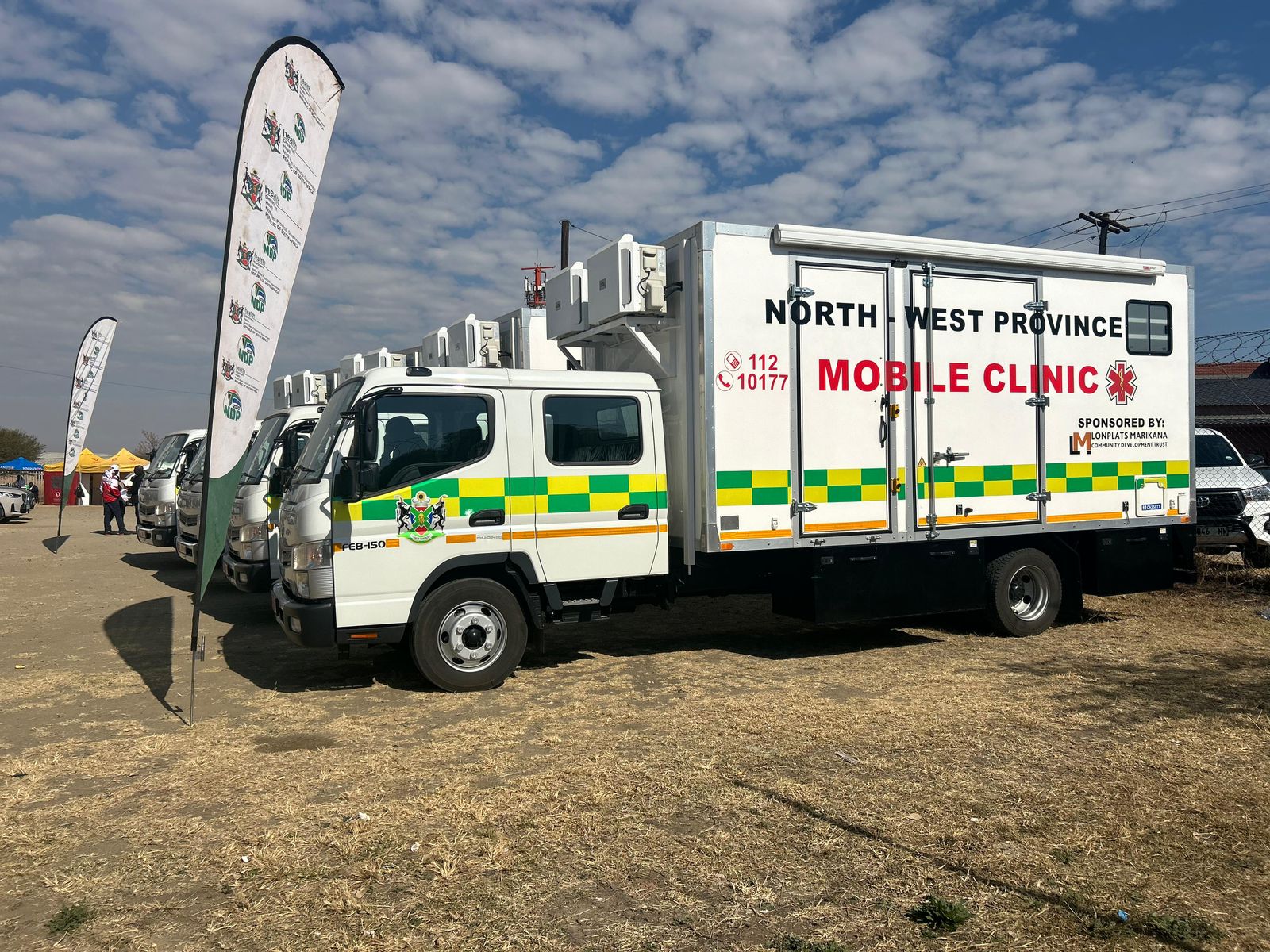
By Staff Writer: The North West Department of Health officially handed over six cutting-edge mobile clinic trucks to the Bojanala District Municipality during a heartfelt ceremony held on Friday, July 18. The event, which took place at the Mothutlong Clinic in the Madibeng sub-district, marked a milestone in the province’s ongoing efforts to bring vital health services closer to underserved communities.
Led by North West MEC for Health, Sello Lehari, the handover ceremony was part of the department’s annual Mandela Day programme—a day dedicated to community service inspired by the legacy of Nelson Mandela. The event drew a diverse crowd of community members, government officials, and key stakeholders, including Madibeng Local Municipality Mayor Dauglas Maimane, ward councillors from Wards 20 and 21, and representatives from the In Plats Community Development Trust, an initiative of Sibanye-Stillwater Mine.
The highlight of the event was the official presentation of six state-of-the-art mobile clinics, which are expected to significantly improve access to primary healthcare, especially in remote and under-resourced areas within the district. These clinics, donated through a strategic public-private partnership between Sibanye-Stillwater and the Department of Health, are equipped with modern medical facilities capable of providing a wide range of health services, from basic check-ups to maternal and child health care.
According to Tshegofatso Mothibedi, provincial health spokesperson, the mobile clinics are a game-changer for the region. “These clinics will bridge the gap for communities that have historically struggled to access consistent healthcare services. They will operate in areas where static clinics are either too far or inaccessible,” Mothibedi explained.
In addition to the distribution of the mobile units, the Mandela Day activities at Mothutlong Clinic reflected a broader commitment to community upliftment. The event saw the expansion of the clinic’s vegetable garden, which aims to promote healthy eating and self-sufficiency. The clinic’s infrastructure received a fresh coat of paint, and essential security upgrades, including new door locks, were installed to enhance safety. The organizing team also undertook reorganization of patient files to streamline service delivery.
Community members were also beneficiaries of donations, receiving clothing, sanitary towels, and toiletries—aimed at supporting the vulnerable and marginalized groups within the community.
Addressing a packed community hall near the clinic, MEC Lehari emphasized the importance of community ownership and active participation in maintaining the facilities and services provided. “We need more men and women who will go beyond just 67 minutes on Mandela Day and make lasting impacts in our society. Communities must also take ownership of these facilities and ensure they are well-maintained and used responsibly,” he urged.
Lehari’s message resonated strongly as he called on residents to embrace the spirit of service and shared responsibility that Nelson Mandela exemplified throughout his life. “When we work together, we can transform our communities and improve the quality of life for all,” he added.
Mothibedi highlighted that Mandela Day is observed across all districts in the North West Province, with the Department of Health spearheading various initiatives aimed at community development and health improvement. These projects, she said, are designed to honor Mandela’s legacy of service, compassion, and community empowerment.