
Subtotal R0,00

Politics/12 November 2026, 06:41am/Staff Writer
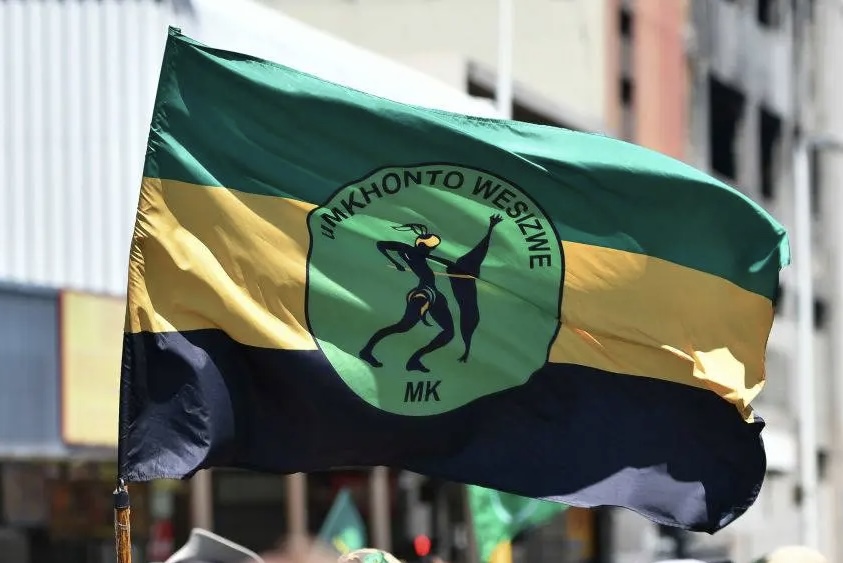
By Staff Writer: The MK Party wants coalition talks in KwaZulu-Natal to begin with a plan for services, infrastructure and township investment—not a contest for political posts—as parties negotiate control of municipalities after the 2026 Local Government Elections.
The party’s coalition negotiator, Dr Thanti Mthanti, says potential partners will have to support a programme that includes professional municipal administrations, action against corruption and efforts to turn townships and informal settlements into centres of economic production.
His comments place the party’s policy demands at the heart of negotiations in a province where it believes its support will be difficult to bypass. Mthanti said parties forming the Government of National Unity (GNU) could not collectively secure a majority in KwaZulu-Natal without the MK Party.
Asked in an interview on Newzroom Afrika whether parties could govern without it, he said: “No, it’s not going to be done this time. It’s not going to be done. I mean, the GNU parties don’t have the majority in KZN put together. So it’s not going to be done.”
The remarks come after the Democratic Alliance (DA) indicated that it would not engage with the MK Party in eThekwini. Mthanti said the DA was entitled to choose whom it wanted to work with, but maintained that his party would not abandon its political programme to secure coalition agreements.
For the MK Party, the starting point in each municipality would be an agreement on what the administration must deliver and when, Mthanti said. Only after that should parties decide who would occupy positions.
He identified service delivery, clean governance and the professionalisation of municipal administrations as priorities. The party also wants to address apartheid-era spatial planning, which separated communities and shaped where people lived and worked.
“We don’t have preconditions. What we are focused on is our programme and delivering for people,” he said.
Mthanti nevertheless made clear that the party would not support arrangements that failed to advance that programme, including its emphasis on infrastructure and communities that have received inadequate services.
He also rejected the idea that coalition negotiations should be used to keep parties in power when, in the MK Party’s view, voters had rejected them.
“I don’t think our job is to rescue political parties rejected by voters. Our primary job is to execute a people’s agenda, a people’s mandate. That is our key focus, really,” Mthanti said.
While the DA has ruled out engaging with the MK Party in eThekwini, Mthanti said his party was willing to talk to the Inkatha Freedom Party (IFP) in KwaZulu-Natal—provided the IFP supported its governance priorities.
“If the IFP subscribes to our programme, subscribes to professionalising municipalities, subscribes to spatial transformation, subscribes to developing our areas as areas of production, subscribes to all the key points in our manifesto, we’re happy to have a discussion with them,” he said.
The proposed approach would make agreement on policy central to any cooperation, rather than treating the division of municipal offices as the first order of business.
A key part of the MK Party’s pitch is its proposal to attract productive investment into townships and informal settlements. Mthanti argued that these communities should be more than places where residents live and buy goods produced elsewhere.
The party’s manifesto proposes Priority Infrastructure, Investment and Regulatory Zones, or PIRZ, under which municipalities would identify suitable areas, provide basic infrastructure and create conditions to attract manufacturing businesses and office parks.
Using Alexandra and Sandton as an example, Mthanti said businesses had established themselves in townships to sell goods and services, but that investment in production remained insufficient.
He said reliable electricity, water and waste management would be needed alongside infrastructure and appropriate zoning to encourage businesses to establish production facilities in these communities.
As coalition negotiations continue, the MK Party is seeking to translate its electoral support into governing arrangements. Its message to prospective partners is that those arrangements must first be built around a shared programme for municipalities.







