Subtotal R0,00

National News/ 04 October 2024, 14:45pm/ Lijeng Moruthane
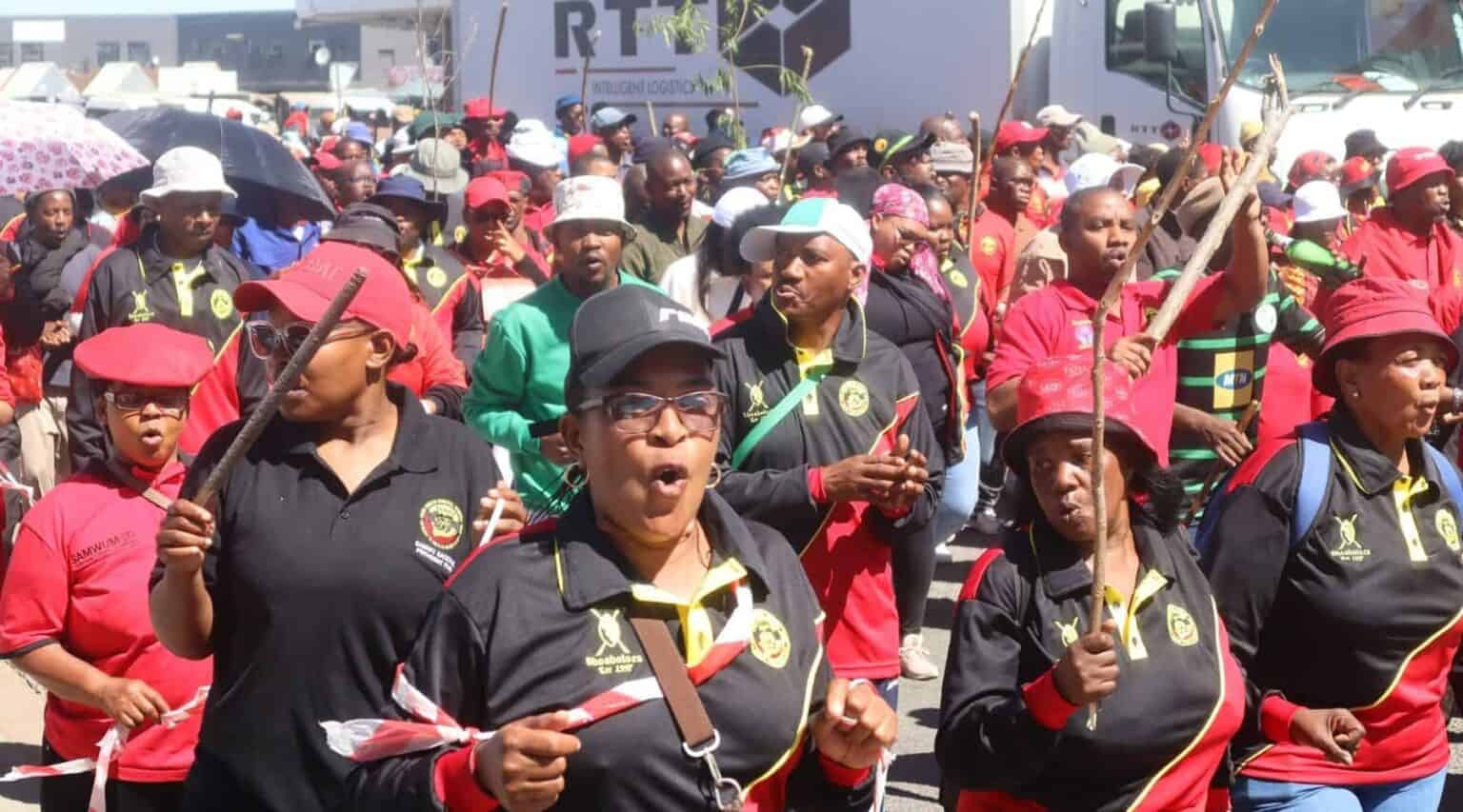
By Lijeng moruthane: The trade union federation, Cosatu, is set to lead a national strike next week in response to increasing unemployment and the rising cost of living.
This day of protest aims to spotlight critical issues such as unemployment, poverty, and income inequality, which were similarly raised last year.
Cosatu’s spokesperson, Zanele Sabela, highlighted how the socio-economic crisis continues to affect South Africa. “A year later, not much has changed regarding the economic issues facing our country. Unemployment remains persistently high,” she stated.
While there have been some positive developments, like the South African Reserve Bank’s interest rate cuts, Sabela stressed that the strike also addresses the increasing cost of living, pointing to Eskom’s proposed 36.1% tariff hike for the upcoming year.
Sabela explained that addressing issues with individual sectors or ministers can make the problems seem smaller. “That’s why this action is necessary,” she said, emphasizing that a united national action brings together various sectors to highlight the collective struggles of workers.
“It’s about raising our voices together, ensuring that the problems are recognised as widespread and serious, which compels the government and businesses to take action.”
Nomusa Cembi, from the South African Democratic Teachers’ Union, underscored their demands for better public education funding, stopping teacher post cuts, ending austerity measures, and ensuring safe environments for schools.
Similarly, the Democratic Nursing Organisation of South Africa highlighted workplace safety and called for permanent employment over the use of labour brokers for nurses.
While many Cosatu affiliates like Nehawu, NUM, Popcru, and others are participating, it is reported that Numsa and Saftu will not be joining the strike.
In an internal memo, Saftu-affiliated unions voiced their support for the strike but chose not to participate due to a lack of mandate and failure to collaborate as initially agreed with other federations.
Saftu emphasized the importance of a collective approach and criticized sectarianism, stating that other federations had not followed through with joint mobilization efforts.
Political analyst André Duvenhage noted that this strike has the potential to send a strong message to the government. However, he argued that trade unions, including Cosatu, are often seen as contributing to the country’s economic challenges by limiting investment. “They are part of the problem rather than the solution,” Duvenhage said.
Duvenhage also pointed out that while Cosatu’s influence on government policy has waned since its peak in the 1990s and early 2000s, its power now lies more with individual unions than the federation as a whole.
He predicted that some smaller unions might successfully mobilize their members, but the overall impact of the strike may not be as significant as Cosatu hopes.