Subtotal R0,00

National News/ 26 August 2024, 16:00pm/ Lijeng Moruthane
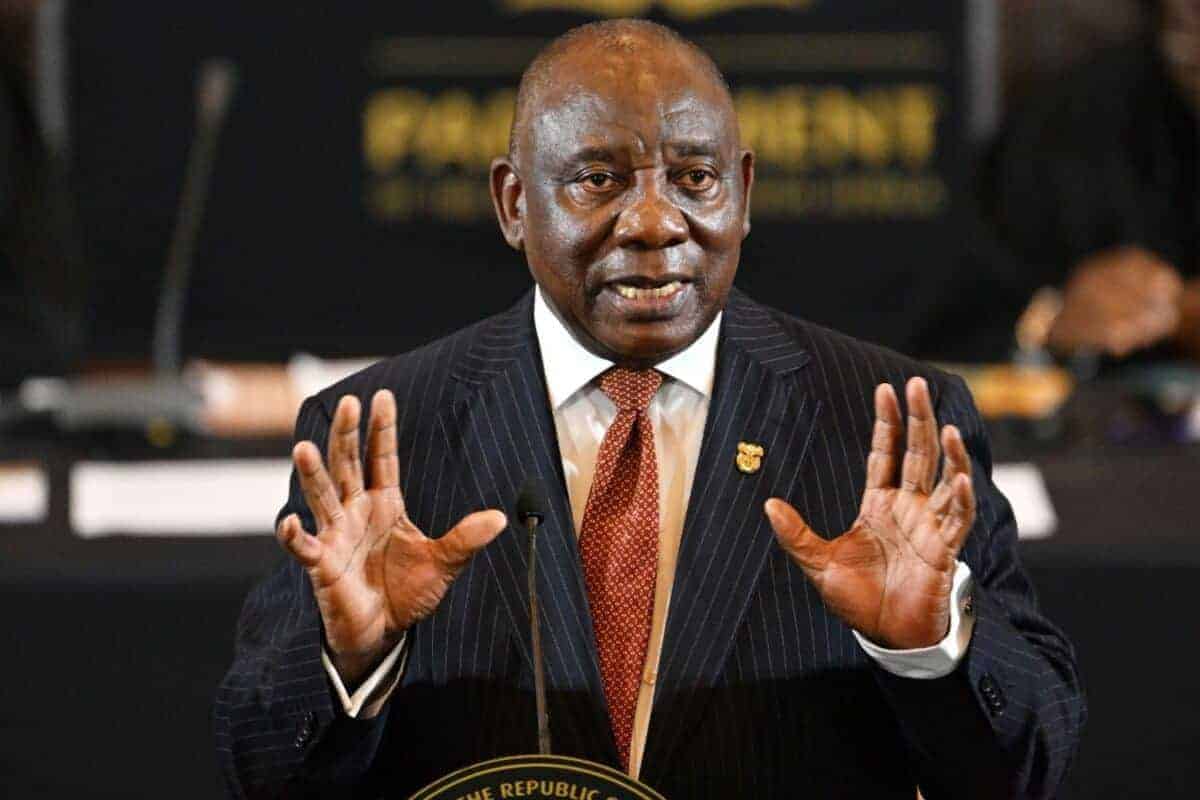
President Cyril Ramaphosa: Image Supplied
By Lijeng Moruthane: Municipalities are set to take on a larger role in the global fight against fossil fuels, as President Cyril Ramaphosa emphasized during his opening remarks at a conference on Monday.
The event focused on how local municipalities will contribute to the Just Energy Transition (JET).
The Municipal JET Conference, a two-day event, aims to bring together key players in the renewable energy sector and local government administration.
The primary objective is to implement energy policies that align with South Africa’s commitments to COP 28 and the Paris Agreement.
President Ramaphosa, in collaboration with the South African Local Government Association (SALGA), announced the initial steps toward a low-carbon future.
SALGA President Bheki Stofile revealed that R320 billion would be allocated over five years to support this transition. Stofile expressed optimism that these efforts would not only provide practical solutions but also stimulate local economies and reduce unemployment.
Electricity and Energy Minister Kgosientsho Ramakgopa reiterated the need for transparency and broad participation, stating that the conference would ensure the “democratisation of the process.”
Ramaphosa underscored the crucial role of municipalities in the effort to decarbonize the energy sector, highlighting that 165 municipalities are electricity service providers, managing half of the country’s electricity grid.
He acknowledged the challenge of existing municipal debt impacting Eskom’s operations but assured that the energy transition would not increase costs for consumers.
“The energy transition must not contribute to energy poverty,” Ramaphosa asserted. “Our citizens must see that the JET is working for them. Businesses, whether small, medium, or large, must recognize the benefits of the JET,” he added.
The President also noted the need for modernization and expansion of the current infrastructure by at least 14,000 kilometers. “Energy generation of the future requires systems that are fundamentally different in terms of design, capability, and operation,” he said.
Achieving these goals, according to Ramaphosa, will require a commitment to excellence. “The days of mediocrity, the days of doing things just because we have to and ending up with sub-optimal results, are over. They must be over for us as a nation.”
“Our people expect us to do the best. Our people expect the best we can do for them because they are inherently the best,” he declared.
Ramaphosa also praised the contributions of independent energy producers, noting the addition of 2,200 megawatts to the grid from 130 power projects across the country. He mentioned that these and upcoming projects had attracted R200 billion in investment so far.
When discussing state investment, Ramaphosa reiterated that South Africa’s energy future would be shaped by “pace, scale, and cost” appropriate to the nation’s needs.