Subtotal R0,00

Politics / 25 August 2025, 07:30am/Sipho Gumede
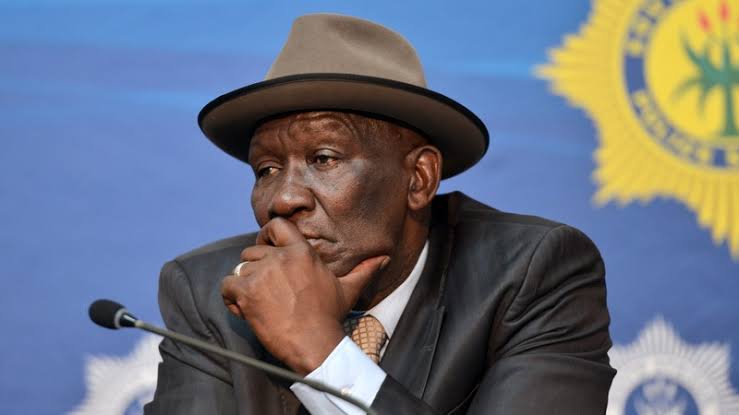
 Former Police Minister Bheki Cele: Image Supplied
By Sipho Gumede: The uMkhonto weSizwe (MK) Party is urging former Police Minister Bheki Cele to testify before Parliament’s Ad Hoc Committee, which is probing claims of corruption and criminal networks within the SAPS and the judiciary. The move comes as the committee, established earlier this year in response to explosive allegations from KwaZulu-Natal’s Police Commissioner Nhlanhla Mkhwanazi, continues to chart its path through a complex political and legal process.
The Ad Hoc Committee has been tasked with examining allegations that powerful criminal syndicates have infiltrated key state institutions. In a public sign of momentum, Parliament announced that the committee unanimously adopted its terms of reference following extensive discussions and amendments by all political parties represented in the body.
Speaking to Newzroom Afrika, MK Party MP David Skosana framed Cele’s possible appearance as a crucial element of uncovering the truth behind long-simmering problems within the police service. “These political killings, in particular in KwaZulu-Natal and in Gauteng, indeed happened during his time. And I guess he might share some important information for the Ad Hoc Committee, as well as for South Africans to know the truth,” Skosana said.
Skosana underscored the MK Party’s formal position, saying Cele’s inclusion in the witness list was not optional. “We requested that the former Minister of Police appear as well, and we agreed on that in our terms of reference,” he added, reinforcing the party’s insistence on broad testimony as part of the probe.
The MK Party’s intervention places the Ad Hoc Committee at the center of a high-stakes inquiry about the integrity of law enforcement and the judiciary, with critics arguing that the revelations could have wide-ranging implications for public trust and governance. Skosana also defended the credibility of Mkhwanazi’s accusations, insisting that the committee must treat them with seriousness and diligence.
“There was evidence which was attached by General Mkhwanazi, and it’s a fact that some of the dockets were removed. This has to be tested in the Ad Hoc Committee,” he said, invoking the need for rigorous scrutiny of the allegations and any supporting materials.
The committee’s terms of reference, adopted unanimously, set the stage for cross-party cooperation in addressing what many observers view as a watershed moment for Parliament’s oversight of security-sector institutions. Yet as witnesses and documents begin to flow, the political landscape surrounding the inquiry remains tightly contested, with competing narratives about accountability, the role of prior administrations, and the best path to safeguarding the rule of law.
Observers say the controversy around Cele’s potential testimony highlights broader questions about the capacity of Parliament to independently verify explosive claims and to translate them into concrete reforms.