
Subtotal R0,00

Economy/24 March 2026, 06:10am/ Mpho Mokoena
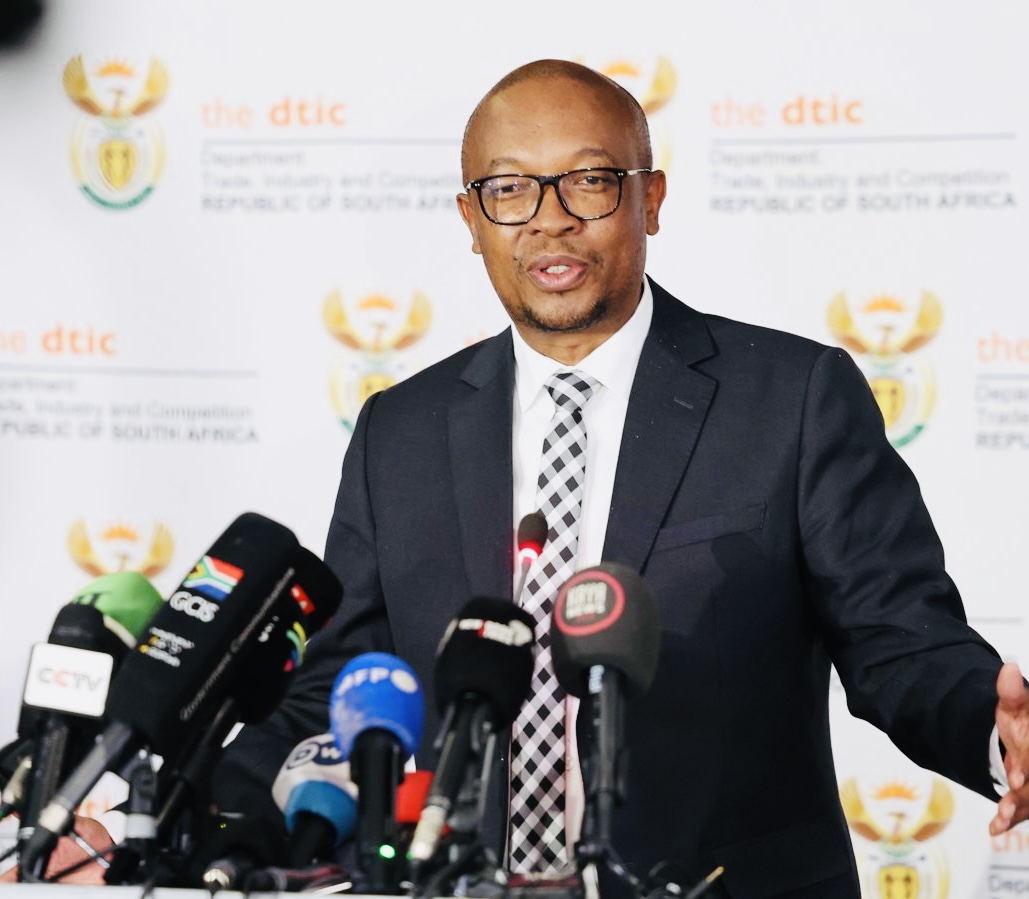
Parks Tau:Image Supplied
By Mpho Mokoena: If the original purpose of South Africa’s investment conference was to sell the country as open for business, a new purpose is now emerging: to sell South Africa as useful in a world growing more unstable by the week.
That shift in emphasis came into sharp focus ahead of the sixth South African Investment Conference, where government moved beyond the usual language of investment attraction and began making a bigger argument — that geopolitical upheaval in the Middle East could force the world to rethink trade routes, logistics planning and market priorities, with South Africa positioned to benefit if it moves fast enough.
Trade, Industry and Competition Minister Parks Tau made clear that the conflict is already affecting investor calculations. Travel plans are under pressure, announcements may be delayed and the atmosphere is more cautious than in previous years.
“We are appreciative of the reality of the impact that the war is likely to have on investment decisions going forward,” Tau said. “Some of the guests we had anticipated not only to attend, but also to make announcements, are still assessing whether they will be able to travel.”
But the more consequential part of his message lay elsewhere. Rather than dwelling only on the downside, Tau suggested that instability in traditional corridors of movement could create space for South Africa to emerge as a more valuable player in global logistics and commerce.
“When logistics are impacted in the Middle East, it means we can play a much greater role in global logistics management,” he said, “adding that the country must ensure its infrastructure is ready to support such a shift.”
That is a fundamentally different proposition from simply asking investors to put money into South Africa. It is an attempt to frame the country as part of the solution to a world of broken routes, delayed cargo and nervous capital.
In that sense, this year’s conference is about much more than speeches, delegates and pledge totals. It is also about whether South Africa can insert itself into a changing global equation — one in which reliability may become just as important as returns.
The event, launched by President Cyril Ramaphosa in 2018, has already drawn over R1.5 trillion in investment pledges since its inception. Delegates from more than 30 countries are expected this year. Yet in the current climate, the gathering is taking on a different significance. It is becoming a test of whether South Africa can market itself not merely as a destination, but as a strategic fallback in a disrupted world economy.
Tau said that despite uncertainty, international partners are still signalling support.
“For us, it’s a message of confidence,” Tau said. “There are those who are saying they remain committed to investing and partnering with South Africa, and they will participate if conditions allow.”
That confidence matters because the pressure points are real. The Middle East conflict has already contributed to higher oil prices and stress on shipping systems, both of which weigh heavily on emerging markets. South Africa is especially exposed through fuel imports and transport-linked costs, which is why government says it is closely monitoring supply risks and examining alternative sourcing options through the Department of Mineral and Petroleum Resources and other authorities.
Still, Pretoria appears determined not to let the country be cast only as vulnerable. Instead, it is leaning into a sharper narrative: that moments of global disorder often elevate countries that can offer institutional strength, market access and adaptive infrastructure.
“The opportunity is real, and the opportunity is now,” Tau said.
That sense of urgency helps explain why government is putting equal weight on implementation as on new investment promises. Officials stressed that SAIC is not only about attracting fresh pledges, but about showing that existing commitments are translating into concrete outcomes. Factories, infrastructure, energy projects and industrial expansion now matter more than symbolic numbers.
Tau insisted the investment case rests on proof.
“We are not asking investors to take a leap of faith—we are inviting them to follow the evidence,” he said.
That evidence, according to government and private sector partners at the briefing, includes reform efforts, infrastructure development and expanding opportunity in manufacturing, renewable energy and technology. It also includes the enduring pillars South Africa returns to whenever global risk rises: a stable constitutional framework, an independent judiciary and access to the African Continental Free Trade Area’s market of more than 1.4 billion people.
Development finance institutions echoed the message, highlighting their role in linking state priorities with private capital, especially in infrastructure projects meant to unlock future growth.
Analysts, however, remain wary, warning that if the Middle East conflict drags on, higher energy prices and prolonged instability could still dampen investor appetite in the near term.







