Subtotal R0,00


Free State/ 03 September 2024, 16:52pm/ Lijeng Moruthane
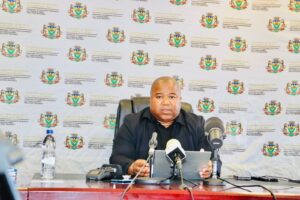
By Lijeng Moruthane: Free State Cooperative and Traditional Affairs MEC, Saki Mokoena, has raised serious concerns over the state of financial management and governance within the province’s municipalities, following the release of a critical report.
The Auditor General’s report highlights a range of persistent issues, including inadequate financial controls, reliance on consultants, and the widespread failure to comply with key legislation.
Speaking at a media briefing on Tuesday, MEC Mokoena noted, “The release of the report comes at a time when the government is working tirelessly with municipalities, supporting them to render services to our people. However, the main thrusts of the report indicate that municipalities are still not prioritizing financial management controls and daily disciplines.”
The report reveals that 90% of the municipalities had to make material corrections to their financial statements due to errors identified during audits. This is said to underscore the poor quality of financial reporting across the province.
Particularly troubling is the fact that 75% of municipalities continued to rely on consultants to prepare or review their financial statements, a situation attributed to a lack of skills and vacancies in their finance units.
“Most municipalities remain financially distressed and require intervention, but either do not have financial recovery plans in place or fail to implement them,” Mokoena stated.
He added that for more than five consecutive years, 13 municipalities (65%) have reported uncertainty about their ability to meet financial obligations as they come due.
The approval of unfunded budgets by most councils has further contributed to high levels of unauthorized expenditure.
Similarly, the MEC expressed concern over the widespread non-compliance with procurement and contract management legislation. “None of the municipalities in the province managed to comply with all key legislation, and we raised material findings on non-compliance at most. The limited accountability for procurement violations by the administrative and political leadership has enabled the abuse of state funds,” he said.
The report also highlights 58 material irregularities, including eight in the 2022-23 financial year, which have resulted in financial losses estimated at R433 million or substantial harm to the public or municipalities.
Mokoena pointed out that there was no overall improvement in audit outcomes for 2022-23, with the situation remaining unchanged due to regressions that offset any progress made.
One particularly concerning case is the regression of Mohokare Local Municipality from a qualified to a disclaimed audit opinion in 2022-23, which Mokoena attributed to instability in senior management and leadership positions.
The report further notes the ongoing struggle with preparing and publishing credible performance reports. Only three municipalities (16%) submitted reports that did not require corrections.
However, he commended Matjhabeng Local Municipality for preparing its first-ever credible performance report in 2022-23 after addressing audit recommendations from previous years. Despite this, many municipalities continue to lack adequate systems for collating and reporting on performance information.
Mokoena also addressed the issue of underspending on conditional grants for key infrastructure projects, amounting to R539.04 million, due to ineffective contract and project management, as well as a lack of monitoring. This underspending has resulted in project delays and slowed service delivery to residents.
Additionally, R619.68 million in grant funding was withheld by the National Treasury due to underspending in the previous year, with Mangaung Metro Municipality accounting for more than half of this amount.
In response to these challenges, Mokoena outlined key areas of focus, including prioritizing political and administrative stability by filling senior management positions and adhering strictly to recruitment processes.
He emphasized the importance of improving internal controls, monitoring systems, and responding to issues raised in previous audits, with the department working closely with the Provincial Treasury to address qualifying audit paragraphs.
To address grant under-expenditure and inefficiencies, Mokoena stressed the need for functionality and effectiveness in BID Committees and strict adherence to procurement plans. The department will enforce the submission of monthly reports on grant expenditure, with transferring departments playing a critical role in this process.
Mokoena also highlighted the importance of the functionality of council committees, particularly the Audit and Performance Audit Committees (AMPAC) and section 80 committees, in ensuring good governance, effective grant implementation and monitoring.
Finally, Mokoena urged all municipalities to fast-track the reset of the electricity Smart Technology Infrastructure (STI), warning that Maluti-A-Phofung Local Municipality, which has the largest number of housing units estimated at 111,000, could leave many communities in the dark if the reset is not completed.