Subtotal R0,00


Free State/ 06 June 2025, 13:30pm/Mpho Mokoena
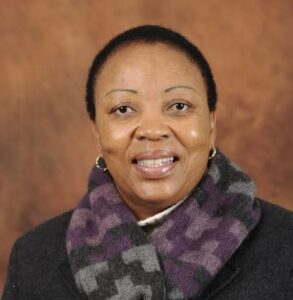
MEC for Education in the Free State, Dr Mamiki Maboya: Image Supplied
By Mpho Mokoena: The MEC for Education in the Free State, Dr Mamiki Maboya, outlined the department’s strategic priorities and financial allocations for the 2025/2026 financial year. Emphasizing a commitment to inclusive growth, quality learning, and social equity, MEC Maboya reaffirmed the department’s dedication to transforming education across the province amidst ongoing fiscal challenges.
The Free State Department of Education has been allocated a total budget of R18.889 billion for the upcoming financial year, representing a 5.45% increase from the previous year’s R17.895 billion. Looking forward, the Medium-Term Expenditure Framework (MTEF) projects further growth, with allocations of R19.632 billion for 2026/2027 and R20.498 billion for 2027/2028.
While these increases are welcomed as signs of government support, MEC Maboya stressed that the department must operate within a constrained fiscal environment, emphasizing the need for disciplined financial management, innovative service delivery, and impact-focused spending.
One of the department’s flagship priorities remains Early Childhood Development (ECD), which the President has reaffirmed as a national priority. In the 2024/2025 period, the department saw remarkable progress: enrolment surged from 72,742 to 90,873 children, and the number of ECD centres expanded from 1,410 to 1,571. Infrastructure upgrades in QwaQwa and Edenburg enhanced safety and compliance with the Children’s Act (Act 38 of 2005), ensuring safer environments for our youngest learners.
In 2024, over 1,000 ECD practitioners were trained on the National Curriculum Framework (NCF), with 291 upskilled to NQF Level 4, ensuring classrooms are led by qualified professionals equipped with modern early learning methodologies. Building on this momentum, the 2025/2026 budget allocates R335.8 million to ECD initiatives.
A central component of this plan is the Bana Pele Mass Registration Drive, which aims to register 100 new ECD centres and integrate them into the South African Schools Administration and Management System (SA-SAMS). This initiative will benefit approximately 75,705 children, many from marginalized communities, by ensuring access to early learning and nutrition support, crucial in preventing stunting and malnutrition.
Additionally, infrastructure upgrades are planned for 15 ECD centres in Thaba Nchu, Zastron, QwaQwa, and Virginia to eliminate pit toilets, paying homage to Nelson Mandela’s legacy and reinforcing the department’s commitment to dignity and quality.
The enactment of the Basic Education Laws Amendment (BELA) Act has declared Grade R as a compulsory entry point into formal schooling. In 2024, the department trained 640 Grade R teachers and assessed 565 learners for school readiness. Looking ahead, the department plans to construct 51 new Grade R classrooms across 17 schools, facilitating universal access to early childhood education.
To improve teaching quality, MEC Maboya announced plans to train 600 Grade R practitioners on perceptual skills, equip 300 teachers with structured early learning manuals, and provide specialized training in numeracy for 650 teachers. The department will also induct 20 newly appointed Grade R practitioners, ensuring that early learners receive high-quality instruction from qualified educators.
Addressing the national reading and mathematics crisis highlighted in recent international assessments, the department has prioritized foundational skills development. Initiatives include baseline assessments in over 190 primary schools, targeted training for over 7,000 educators, and the rollout of various literacy and numeracy programs.
Notably, the department will allocate approximately R6 million towards the Provincial Literacy and Numeracy Strategy in 2025/26. This effort will involve providing culturally relevant learning and teaching materials, fostering partnerships with libraries and community organizations, and conducting teacher development programs focused on effective instructional methodologies.
In the 2024/2025 financial year, the department strengthened the National School Nutrition Programme (NSNP), with 595,339 learners in 775 schools receiving nutritious daily meals. Building on this success, R592.5 million has been allocated for 2025/2026 to expand the programme, aiming to benefit 600,000 learners. This will be complemented by the placement of 3,338 Voluntary Food Handlers to ensure the consistent delivery of nutritious meals.
To promote equitable access, MEC Maboya highlighted efforts to provide safe, daily transport to over 9,500 learners from 147 farm schools and 1,200 learners from seven special schools. This initiative ensures that geography is never a barrier to education.
For the upcoming year, R112.4 million has been allocated to expand the learner transport programme. The department has also signed a new Protocol Agreement with the Department of Roads and Transport to enforce vehicle inspections and compliance standards, prioritizing learner safety.
Further, the department will open new hostels at Leboneng Special School and Oranjekrag School, offering secure, dignified accommodation for vulnerable learners, reaffirming its commitment to inclusive support for all students.
Over the past five financial years, the department has achieved unqualified audit outcomes, reflecting robust financial management. In 2025/2026, efforts will be intensified to further strengthen operational efficiency through a comprehensive skills audit in collaboration with the Provincial Treasury, aligning human resources to drive excellence and accountability.
The department has also made significant strides in youth employment through the Internship and Work-Integrated Learning Programmes. In 2024, 25 social work interns were converted into permanent employees, and over 160 interns in administration and teaching support roles were appointed across the province. These initiatives are seen as investments in the future of the nation.
In 2024/25, the EPWP created 215 work opportunities within the department, mainly benefiting communities in Xhariep. For 2025/2026, the department plans to create 173 EPWP jobs, with a focus on capacity building in the Xhariep Education District, contributing to local economic development and improved school conditions.
The department continues to implement targeted programmes to eliminate socio-economic barriers. Initiatives include agricultural training for 300 Grade 10 and 12 learners in sheep handling, animal health, and lamb rearing, with Hendrik Potgieter Agricultural School serving as a dedicated training hub. Additional centers such as Seotlong, Trio, and Unicom schools will sustain these efforts.
Furthermore, 45 Grade 12 learners will receive certificates in Arch Welding through partnerships with SA Truck Bodies, while 60 learners in tourism will receive FET certificates in Tourist Guiding through collaboration with the Sector Education and Training Authority for Tourism.
The department is also facilitating short courses in Cybersecurity, Digital Marketing, Data Analytics, ICT infrastructure, Basic Software, Hardware, and Cloud Computing in partnership with MTN and Huawei, equipping learners with skills relevant to the modern economy.
In closing, MEC Mamiki Maboya reaffirmed her department’s unwavering commitment to providing quality, equitable education for all learners in the Free State. She emphasized that while financial constraints pose challenges, they also motivate innovation, accountability, and a shared vision for an education system that empowers every child to reach their full potential.