Subtotal R0,00

News/ 30 October 2025, 15:39pm/ Ayanda Shezi
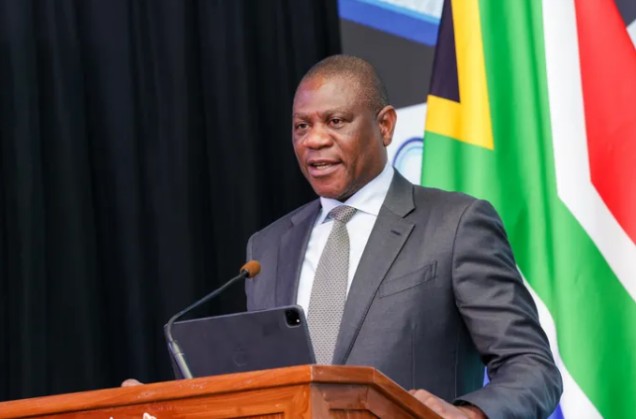
Mashatile tackles questions on service delivery, crime intelligence, agriculture, efforts to address HIV among women and girls. Image Supplied
By Ayanda Shezi: Deputy President Paul Mashatile appeared before Members of Parliament (MPs) in the National Assembly on Thursday to respond to a wide range of questions touching on service delivery, municipal governance, agriculture, and crime prevention. His appearance comes at a time when the government faces growing scrutiny over the pace of reforms and the effectiveness of its interventions across key sectors.
Mashatile’s question-and-answer session forms part of the government’s constitutional obligation for members of the executive to account to Parliament for their actions and the performance of their departments. The session provides an opportunity for MPs to demand clarity on pressing national issues that directly affect citizens — from collapsing municipalities to escalating crime and the persistent challenges in the agricultural sector.
According to the Deputy President’s acting spokesperson, Keith Khoza, the discussions are intended to provide updates on the government’s practical steps to strengthen service delivery and restore stability in struggling municipalities.
“In line with the constitutional mandate for Members of Cabinet to account to Parliament, Deputy President Mashatile will answer questions on service delivery,” Khoza said. “He will update MPs on the Government’s efforts to implement rapid response interventions on service delivery and address trouble spots in municipalities, with the aim of improving governance across the country.”
Mashatile’s appearance follows months of concern about the state of local government, with several municipalities facing financial collapse, infrastructure failures, and growing public dissatisfaction. The Deputy President is expected to outline specific initiatives designed to improve accountability and oversight at the municipal level, including support measures for underperforming councils.
Beyond service delivery, Mashatile is also fielding questions about the government’s approach to the agricultural sector, particularly considering the Competition Commission’s market inquiry into the fresh produce sector earlier this year. The inquiry, concluded in January 2025, found structural challenges that limited market access for small-scale and historically disadvantaged farmers.
Khoza said Mashatile would brief MPs on the measures government is implementing in response to those findings. “These interventions are aimed at increasing annual sales of small-scale and historically disadvantaged farmers through the National Fresh Produce Markets,” he said.
The Deputy President’s update comes as government departments face mounting pressure to expand agricultural participation and support emerging farmers, particularly in rural areas. Land reform and rural development are expected to feature prominently in the session, with Mashatile set to provide details on progress and outstanding challenges in these areas.
On the issue of crime, Khoza confirmed that MPs would also be briefed on coordinated government efforts to curb the rise of organised criminal groups. “MPs will be informed about multi-sectoral coordination and intelligence-driven strategies undertaken by government to curb the scourge of gangsterism,” he said. The update follows increasing concern over community-level violence and the role of intelligence agencies in anticipating and preventing gang-related activity.
Mashatile is further expected to respond to questions about municipal debt owed to Eskom, a long-standing issue that continues to strain the utility’s finances and affect power supply to communities. The Deputy President is likely to outline measures aimed at assisting municipalities to settle arrears while maintaining essential services.
Another issue expected to arise during the session is the government’s strategy to address the disproportionate HIV prevalence among women and girls, a persistent public health concern. Mashatile’s response is anticipated to cover ongoing health and social interventions aimed at reducing infection rates and improving access to care.
Today’s parliamentary engagement forms part of a broader effort by the Presidency to demonstrate responsiveness and transparency at a time of heightened public frustration over governance shortcomings. With multiple crises converging — from local government instability to food security and safety concerns — Mashatile’s answers are expected to signal whether the government is moving from rhetoric to measurable action.
As the session continues, MPs across political parties are expected to press the Deputy President for detailed progress reports, timelines, and accountability mechanisms — particularly on service delivery failures that continue to undermine public confidence in government institutions.