Subtotal R0,00

News/ 17 November 2025, 16:03pm/ Staff Writer
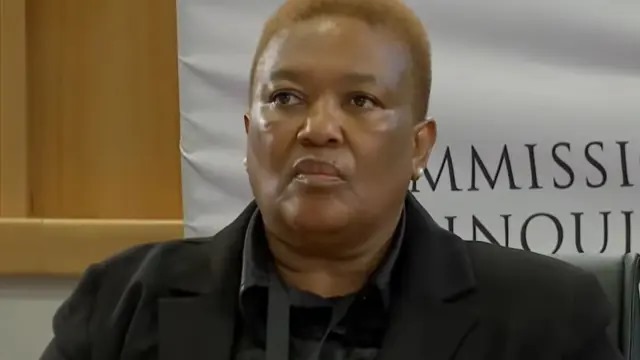
Motsepe outlines how she was not consulted before the PKTT was disbanded. Image Supplied
By Staff Writer: Major-General Mary Motsepe, who heads the SAPS component responsible for serious and violent crime investigations, has told the Madlanga Commission of Inquiry that she believes the Political Killings Task Team (PKTT) should not have been disbanded without a proper consultation process involving all relevant authorities.
Last month, suspended Police Minister Senzo Mchunu recently told Parliament that he did not meet with KwaZulu-Natal police commissioner Lieutenant-General Nhlanhla Mkhwanazi, national police commissioner General Fannie Masemola or Crime Intelligence head Dumisani Khumalo before the task team was dissolved. Mchunu argued at the time that Parliament should not make him “feel” guilty for not calling such a meeting, saying that failing to consult on this particular decision did not mean he never consulted his colleagues in general.
Speaking before the commission, Motsepe said she was not involved in the process of disbanding the PKTT, but shared concerns about how it was handled, particularly with local government elections scheduled for next year.
“Although I was not involved in the disbandment process, I agree with the view that the PKTT should not have been disbanded without proper consultation. I do not know if the minister has the authority to disband the PKTT. However, even if the minister had the authority, he had to first consult with all the relevant stakeholders, which would have included me as the component head responsible for serious and violent crimes,” said Motsepe.
She added that the timing also raised concerns due to the province’s history of politically linked murders.
“I also do not agree that the PKTT should have been disbanded before the upcoming elections. It is a well-known fact that KZN has the highest incidents of political killings and there’s usually a spike in politically motivated killings before elections. It does not make sense to disband the PKTT immediately, unless the stakeholders had advised the minister that immediate disbandment would be appropriate.”
While Commissioner Mkhwanazi had already objected to the disbandment, he also raised the issue of 121 dockets being removed from KwaZulu-Natal and sent to SAPS head office in Pretoria without his knowledge. The dockets, which were all labelled “under investigation,” were transferred on instructions from Lieutenant-General Shadrack Sibiya.
On 26 March 2025, 118 files were handed over to Lieutenant-General Khosi Senthumule. Three more followed on 10 April, bringing the total to 121. Mkhwanazi later testified that five of the cases were ready for arrest, but no arrests happened.
Motsepe told the commission that her unit could not proceed because funding for operations was not approved. She also said she was not formally informed about the dockets being moved. Instead, she heard about it informally from Senthumule in March 2025.
“She said all those dockets are coming to you. I said its fine because political killings fall within my mandate. She said they were still busy with the discussion thereof and I would be involved later,” Motsepe explained. She later received a call from Senthumule on 27 March asking her to accompany her to Crime Intelligence to collect the files. The dockets were later locked in the strongroom at head office.
Motsepe said she was later told the dockets had only been moved for auditing purposes, although no clear explanation was ever provided about why this could not be done in KwaZulu-Natal. While arrangements were being made to return the files, Mkhwanazi informed head office that he did not want them back.
“On 19 May, I was called by General Sinthumule to meet at General Sibiya’s office. General Sibiya said General Mkhwanazi refused the dockets and the national commissioner advised that he must use his discretion,” she said. Sibiya informed Motsepe that the ball was now in her court, as political killings fall under her unit.
“I think what changed the process from just auditing to investigating was that General Mkhwanazi refused the dockets. I did put myself in General Mkhwanazi’s shoes. You can’t just take dockets and say it’s for auditing processes and then return them” she told the commission.
The dockets were eventually returned to KZN on 28 August.