
Subtotal R0,00

News/26 June 2026, 08:42am/ Mpho Mokoena
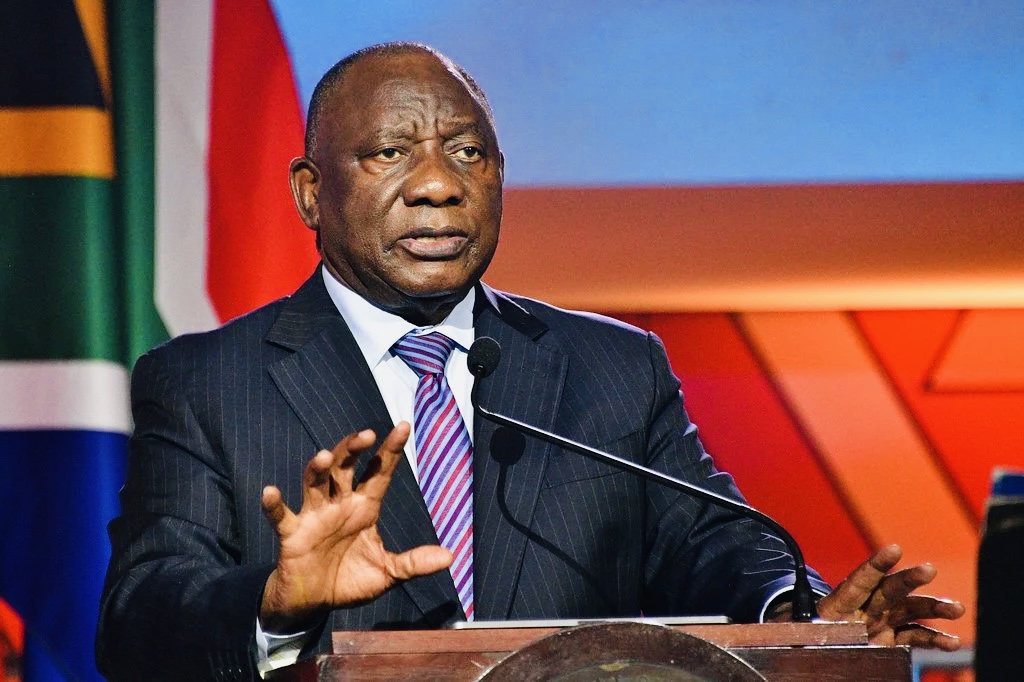
Cyril Ramaphosa: Image Supplied
By Mpho Mokoena: With tension building ahead of the planned 30 June anti-illegal immigration protests, President Cyril Ramaphosa struck a firm but calming tone in the National Council of Provinces, insisting that the state is prepared to keep Tuesday a normal working day and prevent any attempt to unsettle the country.
Appearing in the NCOP for a question-and-answer session, Ramaphosa confronted a politically charged mix of issues — illegal immigration, corruption in law enforcement, illicit trade, and the growing anxiety around next week’s March and March-led demonstrations.
His message was unmistakable: government is watching closely, security agencies are mobilised, and any threat to public order will be met with a coordinated response.
“So on the 30th, as people are saying, all manner of things will happen, we are taking measures to ensure that the 30th becomes a normal day where people will be able to work, to go about their business. Our security forces are ready. The National Joint Operational and Intelligence Structure is firmly in charge of what could happen; therefore, it is our responsibility collectively,” he said.
The looming protest has become one of the country’s most closely watched flashpoints, with more than 20 anti-migrant organisations and civil groups backing the action. The coalition has publicly vowed there will be no violence, looting, or loss of life, even as it continues demanding that undocumented foreign nationals leave South Africa by Tuesday.
At a joint media briefing, March and March leader Jacinta Ngobese-Zuma said the movement had wide support among South Africans. Among the 27 groups aligned to the protest are Operation Dudula, United South Africa, and Progressive Forces of South Africa.
The scale of the mobilisation has already triggered a major law-enforcement response. Police Minister Firoz Cachalia announced a R600 million police operation, with SAPS deployed in all nine provinces to monitor and respond to any unrest linked to the demonstrations.
Ramaphosa, however, sought to project both authority and restraint. He emphasised that Home Affairs reforms now being implemented under minister Leon Schreiber are not sudden interventions but part of a longer state process already set in motion years ago.
“It started in the sixth administration, and the work is continuing, and I should say that this is a collective work. It’s not a work of one person. A number of people and officials are involved.
“The Director-General of Home Affairs, Mr Livhuwani Makhode, is leading the whole administrative process. The policies and decisions have been taken by Cabinet some time ago, and we’re very pleased with the work that is being done,” Ramaphosa said.
He added: “And Dr Schreiber is, indeed, following in the footsteps of what had already been set in place. The process of implementing all these measures is such that we are ready to deal with whatever disruption or instability could take place. I’m a strong believer that South Africans are peaceful people.
“They are not xenophobic, they are not afrophobic as well, and they want peace. They just want every day of the week to go on on a peaceful basis without any disruption of their lives, disruption of services, and any danger to the life of anyone,” Ramaphosa said.
That appeal to national calm came alongside a warning to those who might try to exploit the protest climate.
“We should take whatever action that is necessary on a legal basis, and work with our security forces and work with our government officials. This is the responsibility that we all bear. But having said that, I’m able to say that our security forces will be ready to prevent anyone from wanting to destabilise the country,” Ramaphosa said.
The president also linked the government’s security response to a broader clampdown on illegal immigration and labour-law violations. Referring back to measures announced in his 7 June address to the nation, he said the strategy had since been reinforced at the highest levels of intergovernmental coordination.
He noted that the Presidential Coordinating Council, “which brings together all three spheres of government and our traditional leaders, was quite pleased with the approach that we are taking”.
Ramaphosa said government had also conducted briefings with faith-based organisations, traditional leaders, organised labour, and organised business as part of its campaign to crack down on breaches of immigration, labour, and related laws.
Enforcement, he indicated, is already tightening. Authorities are increasing the identification and deportation of undocumented foreign nationals, while workplace inspections are also being intensified.
“The Department of Employment and Labour is recruiting 10,000 inspectors, as I announced, and will increase penalties for employers breaching the Immigration Act. The second part of our response is to strengthen border security.
“We are directing resources to border infrastructure, technology, as well as bringing in more personnel, to guard our borders,” Ramaphosa said.
He further revealed that Cabinet has approved a revised White Paper on citizenship, immigration, and refugee protection, aimed at creating a more unified legal framework for migration management. Alongside that, “The National Labour Migration Policy, and the Employment Services Amendment Bill, will introduce quotas for the employment of foreign nationals in particular.”
On the asylum system, Ramaphosa said steps were also being taken to tackle abuse and backlogs, including the recruitment of additional advocates to serve as adjudicators at the refugee appeal authority, with ongoing support from the UN High Commission for Refugees.
Yet amid the hardline policy details, the president was careful to draw a constitutional line between legitimate protest and lawlessness.
“Our message is clear, everyone has the constitutional right to protest peacefully and within the confines of the law,” he said. “However, criminality, intimidation, violence, the destruction of property and any attempt to undermine public safety will not be tolerated.”
Inside the NCOP chamber, Ramaphosa returned repeatedly to the same assurance — that the state will not allow disruption, no matter who is responsible.
“As a government, we have put in place security and other measures to deal with any attempts to destabilise our country, whether by citizens or foreign nationals, and we will not tolerate any attempts to destabilise the country by anyone, whether marching or otherwise.
“Security forces are ready,” Ramaphosa said.







